
Academics Urge Review of Electoral System in Deliberations on Election Bill
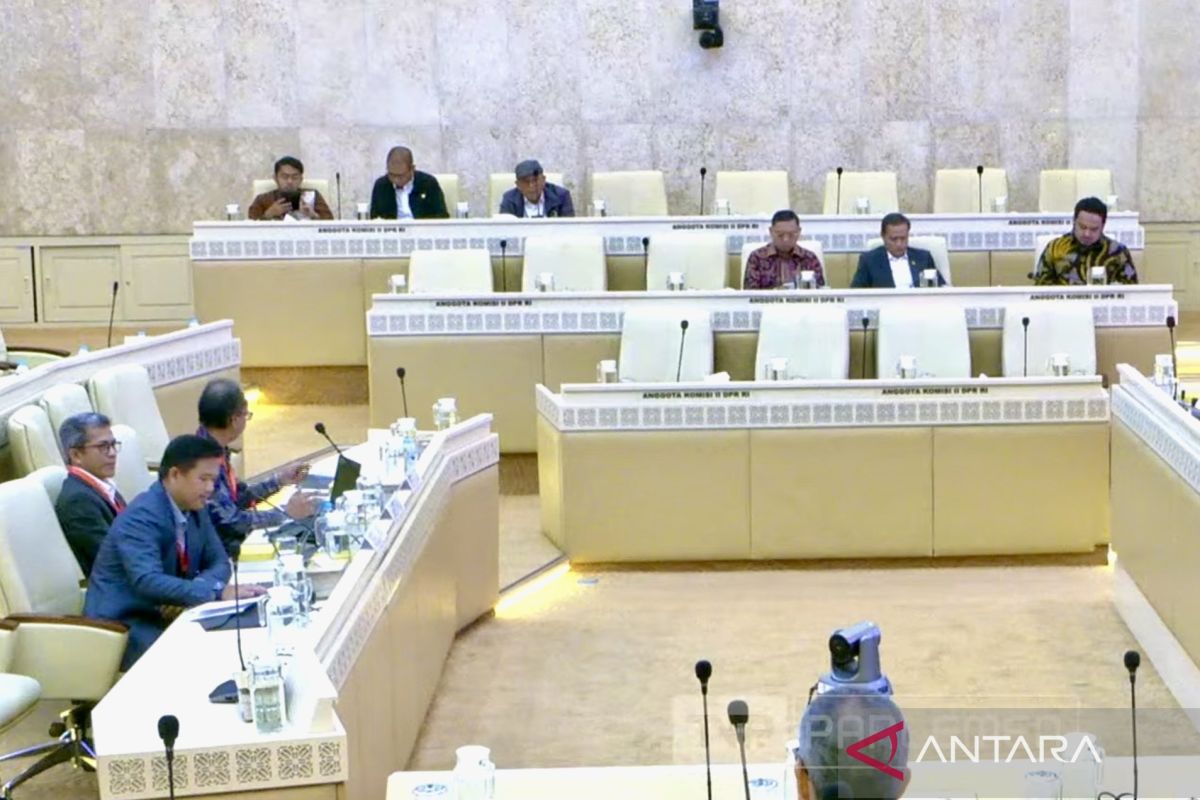
Jakarta (ANTARA) - A number of academics have proposed reviewing Indonesia’s electoral system during deliberations on the Election Bill to address problems they believe have arisen from the open-list proportional system.
At a public hearing held by the House of Representatives’ Commission II in Jakarta on Wednesday, Khairul Fahmi, a lecturer in electoral law at Andalas University’s Faculty of Law, said the open-list proportional system used in recent elections had weakened political party institutions.
Khairul said the system had prompted competition not only between political parties but also among legislative candidates from the same party. This had given rise to what he called “cannibalism” within parties.
“I have researched and studied this, and internal party cannibalism has indeed occurred. The contest is no longer between parties, but between candidates within the same party, which I believe has also weakened political party institutions,” he said.
The open-list proportional system was also seen as encouraging the dominance of individual financial resources and strengthening candidates’ personal networks as they seek public support. As a result, ideological ties between candidates and their political parties tend to weaken.
Khairul said the open-list system could be retained, but that shortcomings in its implementation needed to be addressed.
He acknowledged that no electoral system was perfect, but said measures to mitigate the risks associated with the weaknesses of whichever system was chosen should be prepared.
If lawmakers decided to change the electoral system, Khairul proposed adopting a mixed electoral system, either through a mixed-member proportional or mixed-member majoritarian model.
He added that a mixed system could offer an alternative for reducing the institutional weaknesses of political parties while accommodating representation through proportional and majoritarian mechanisms.
This phenomenon has made the public more familiar with individual candidates than with the parties that nominate them, even though political parties should play an important role in presenting programmes and policy directions to voters.
“This is something tolerated by parties; it is even regarded as a political asset for winning support among local voters, ultimately giving rise to the phenomenon of weak parties and strong individual candidates,” he said.
Kris proposed a mixed electoral system that would use closed-list proportional representation to elect members of the House of Representatives while retaining open-list proportional representation for provincial and municipal or regency regional legislatures.
In his view, closed-list proportional representation for the House could strengthen political parties at national level, including by enabling candidates to be selected on the basis of their quality, achievements and capabilities.
Meanwhile, open-list proportional representation for regional legislatures was considered capable of maintaining broader political representation while giving smaller parties the opportunity to continue developing at regional level.
Source: jawawa.id (https://jawawa.id/newsitem/academics-urge-review-of-electoral-system-in-deliberations-on-election-bill-1794398112)
Originally published by Antara (Indonesian) (https://www.antaranews.com/berita/5847075/rdpu-ruu-pemilu-akademisi-usul-sistem-pemilu-dikaji-ulang), translated from Indonesian