
Academics: Textile Revitalisation to Strengthen National Manufacturing Foundation
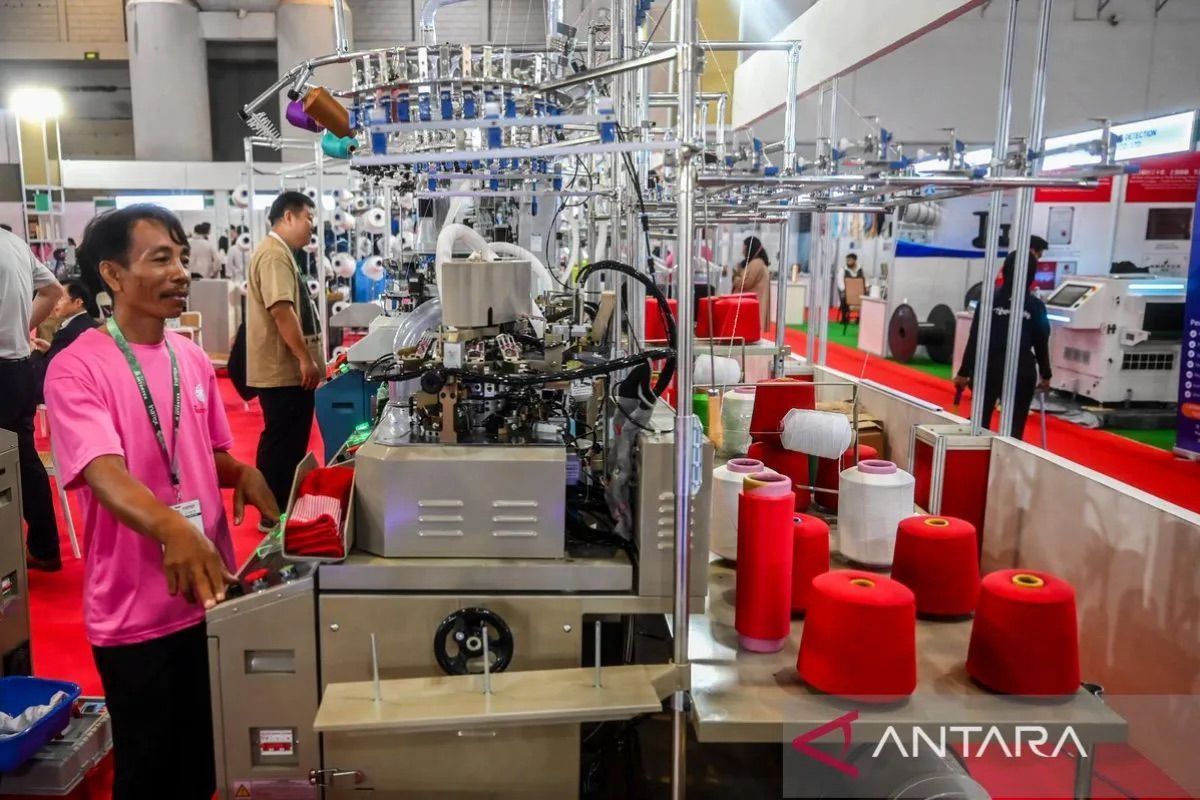
The Indonesian textile industry needs to transition towards a more productive industry.
Sarlina Sari, an academic from the Faculty of Economics and Business at Universitas Bina Sarram Informatika (UBSI), believes that revitalising the textile industry serves as a momentum to strengthen the national manufacturing foundation through technological modernisation, increased productivity, and job creation.
“The textile industry holds an important position in Indonesia’s industrialisation journey. In addition to contributing to production and export activities, this sector is linked to labour absorption, supporting industries, and economic activities across various regions,” Sarlina stated in Jakarta on Saturday.
She expressed appreciation for President Prabowo Subianto’s attention to the revitalisation of the national textile industry. This step is deemed relevant to Indonesia’s need to strengthen the manufacturing sector, enhance industrial competitiveness, expand employment opportunities, and bolster national production capacity.
According to her, the government’s focus on the textile industry should be viewed within a broader perspective as part of a strategy to strengthen the national industrial foundation.
However, in its current development, the national textile industry faces various challenges, ranging from global competition, changes in supply chains, production cost pressures, and shifts in market demand, to the need for machinery and technology modernisation.
In this situation, President Prabowo’s attention to textile industry revitalisation is seen as a step that can drive the transformation of the national manufacturing sector.
One aspect receiving attention is the role of the Daya Anagata Nusantara Investment Management Agency (BPI Danantara) in supporting investment and strengthening national strategic industries.
Sarlina noted that investment in the textile industry should not merely be directed towards increasing production capacity. She argued that investment must result in increased productivity, efficiency, product quality, technological innovation, and the industry’s ability to penetrate global markets.
Consequently, Sarlina also appreciated the attention of the Chief Executive Officer (CEO) of Danantara, Rosan Perkasa Roeslani, towards the investment agenda and the strengthening of the national industrial sector.
“Danantara holds a strategic position in driving long-term investments that can provide added value to the Indonesian economy,” she said.
She emphasised that support for the textile industry will be even more meaningful if directed towards technological modernisation, strengthening supply chains, improving human resource quality, and developing export markets.
Sarlina asserted that investment in the textile industry must produce tangible added value. The metric, she said, is not just the amount of capital flowing in, but also the improvement in productivity, efficiency, quality, exports, labour absorption, and industrial sustainability.
Historically, the textile industry was one of the vital sectors in Indonesia’s manufacturing development. Therefore, the current revitalisation of the textile industry can serve as a momentum to rebuild the sector’s strength using a more modern approach aligned with technological advancements.
She also revealed that the current challenges facing the textile industry cannot be resolved through short-term policies alone. A comprehensive transformation is required, encompassing technology, human resources, governance, financing, supply chains, innovation, and market access.
“The Indonesian textile industry needs to move towards a more productive, technology-based, innovative, efficient, and globally competitive industry,” she explained.
Beyond investment and modernisation, Sarlina emphasised the importance of governance and accountability in every large-scale investment.
She also noted that every investment must be accompanied by clear performance indicators so that its impact can be measured transparently. The success of the textile industry’s revitalisation will eventually be seen not only through increased production capacity but also through its broader economic impact.
These indicators include increased industrial productivity, job creation, increased exports, the strengthening of supporting industries, enhanced competitiveness of national products, and contributions to economic growth.
“Synergy between the government, Danantara, industry players, universities, financial institutions, and the workforce is a crucial factor in ensuring the revitalisation agenda proceeds sustainably,” said Sarlina.
In her view, the momentum for revitalisation should be utilised to build the national textile industry on a stronger foundation. With targeted investment, good governance, technological modernisation, and an orientation towards increasing productivity, the textile industry can once again become a vital part of Indonesia’s manufacturing strength.
Sarlina added that President Prabowo’s attention and Danantara’s steps are ultimately part of a broader agenda to strengthen the national industrial structure.
“The challenge is to ensure that the designed policies and investments can be translated into increased industrial capacity, competitiveness, exports, and sustainable economic benefits for the community,” she concluded.
Source: jawawa.id (https://jawawa.id/newsitem/academics-textile-revitalisation-to-strengthen-national-manufacturing-foundation-1790427578)
Originally published by Antara (Indonesian) (https://www.antaranews.com/berita/5759913/akademisi-revitalisasi-tekstil-perkuat-fondasi-manufaktur-nasional), translated from Indonesian