
Academics Support BUMN Consolidation by Danantara
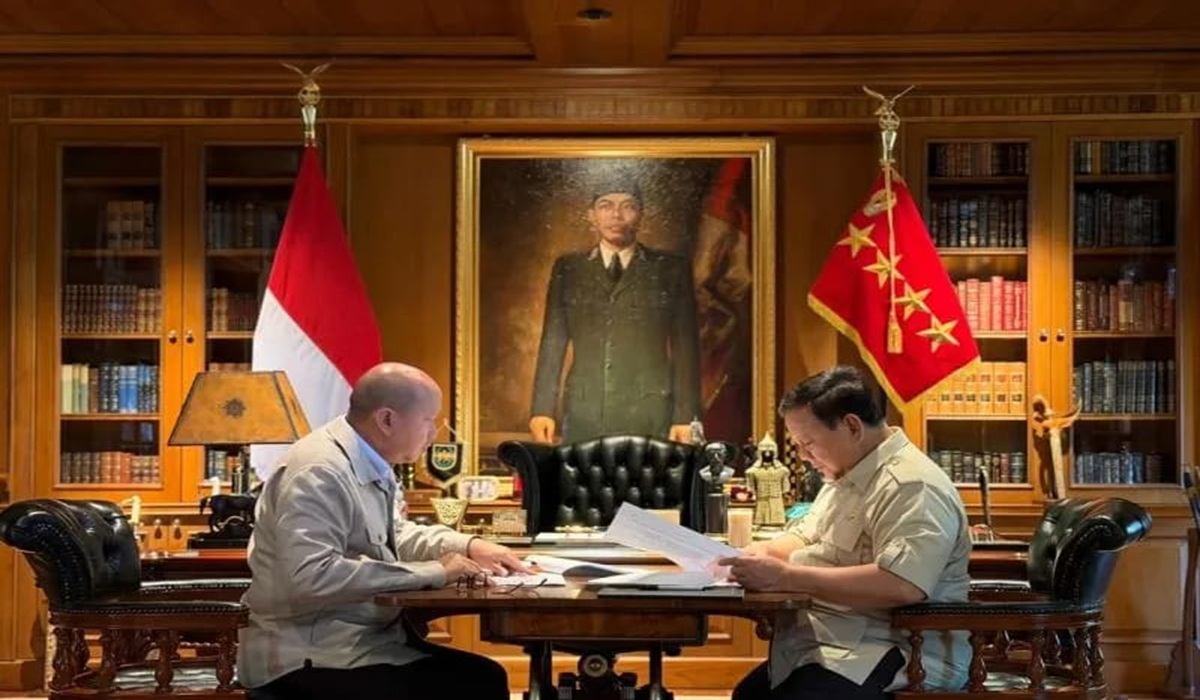
The accelerated steps for the transformation of State-Owned Enterprises (SOEs) through the consolidation of business entities, managed by the Chief Executive Officer of Danantara, Rosan P. Roeslani, have received support from the academic community. This policy is considered aligned with the directives of President Prabowo Subianto to strengthen national economic competitiveness and build a more efficient and sustainable development foundation.
Rosan previously revealed that out of a total of 1,077 SOE entities, 258 entities have successfully been consolidated. Approximately 300 other entities are also expected to follow in the next consolidation phase. This consolidation is aimed at increasing efficiency, strengthening governance, and expanding the competitiveness of state-owned companies. With a leaner structure, SOEs are expected to move faster in making business decisions and executing their strategic functions.
In addition to simplifying entities, Danantara is also discussing opportunities to develop new sectors that have the potential to become sources of economic growth. Some sectors of interest include tourism, sporting events, and the creative industry. These sectors are considered to have great potential to create new jobs, increase community business activities, and strengthen the national economic circulation.
Professor Dr Marihot Manullante, a Professor at Lancang Kuning University (Unilak) Pekanbaru, assessed that the SOE consolidation is a strategic step towards achieving more effective corporate governance. The former Rector of Simalungun University (2014–2018) noted that simplifying corporate structures can accelerate decision-making processes and reduce overlapping functions between entities.
“We appreciate this breakthrough, as the consolidation carried out by Danantara is the right step to increase operational efficiency and strengthen the competitiveness of SOEs. With a leaner and more integrated structure, SOEs will be more focused on performing their business functions and will be able to provide a greater contribution to the national economy,” Prof. Marihot stated in a media release on Wednesday.
An expert in Strategic Management, Human Resource Management, and Marketing Management, he also assessed that the development of the tourism, sports, and creative industry sectors is relevant to future economic needs. According to him, this direction aligns with economic changes that are increasingly reliant on innovation and value addition.
Similar support was expressed by Iswadi, an academic from Esa Unggul University. He stated that Danantara’s steps deserve appreciation and support from all parties as they demonstrate the government’s commitment to driving a comprehensive economic transformation.
“The President’s directive, translated through Danantara’s policies, shows a long-term vision in building a stronger national economy. SOE consolidation not only increases efficiency but also opens up healthier and more productive investment spaces,” said Iswadi.
According to Iswadi, the development of new sectors such as the creative industry, tourism, and sporting events has a significant multiplier effect on economic growth. These sectors can drive community business activities, create jobs, and increase regional income.
Academics hope that the SOE transformation through Danantara can proceed consistently by prioritising good governance principles, transparency, and an orientation towards increasing value for the community and the national economy. Through directed consolidation, SOEs are expected to increasingly serve as the engine of development and an important instrument in realising a more advanced and competitive Indonesia.
Source: jawawa.id (https://jawawa.id/newsitem/academics-support-bumn-consolidation-by-danantara-1782352218)
Originally published by Media Indonesia (https://mediaindonesia.com/ekonomi/904125/akademisi-dukung-konsolidasi-bumn-oleh-danantara), translated from Indonesian