
Academics Sue Constitutional Court, Demand Free Nutritious Meals Programme Not Included in Education Budget
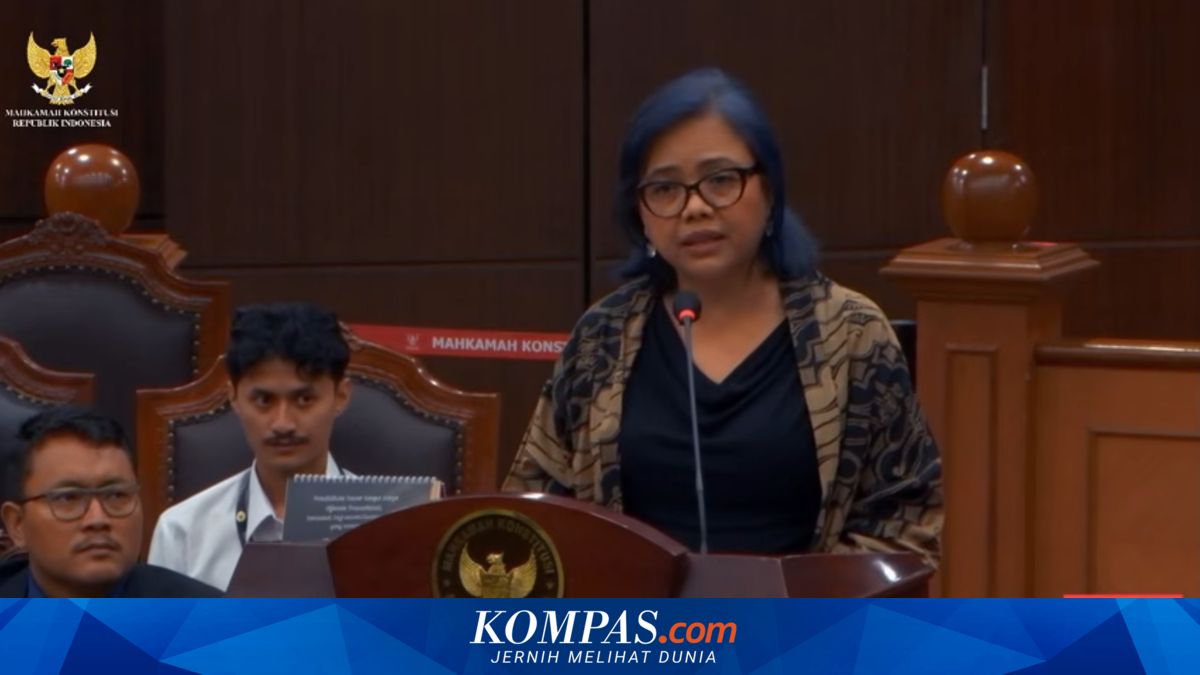
JAKARTA, KOMPAS.com - A number of academics affiliated with the Constitutional and Administrative Law Society (CALS) have requested that the Free Nutritious Meals (MBG) programme not be included as part of the education budget. This was conveyed by constitutional law expert Bivitri Susanti, representing CALS, during a hearing at the Constitutional Court on Tuesday (28/4/2026). She stressed that the case is not merely about technical budgeting but concerns the purity of the constitutional mandate. “This case involves a far more fundamental issue, namely whether the constitutional directive regarding the education budget of at least 20 percent from the State Budget (APBN) and Regional Budget (APBD) will maintain the purity of its meaning,” said Bivitri, before the Constitutional Court justices. It is not about whether it is beneficial or not, or other technical implementation matters. “The core issue is whether the MBG programme can be counted as part of the constitutionally prioritised education budget to meet the needs of national education administration. According to us, the relevant parties’ answer is no,” she asserted. Bivitri explained that CALS’s involvement in this case aims to provide an academic and constitutional perspective on the norm being tested. She noted that the norm in the 2026 State Budget Law (UU APBN) has the potential to cause legal uncertainty by opening up too broad an interpretive space. She also highlighted the explanation of Article 22 Paragraph 3 of the 2026 State Budget Law, which includes MBG as part of the education budget. According to her, this exceeds the function of explanations in legislation. “When a norm affecting the calculation of the education budget is not born in the article but smuggled into the explanation, this is a form of legal smuggling,” said Bivitri. In addition, she assessed that the policy contradicts the mandate of Article 31 Paragraph 4 of the 1945 Constitution, which requires a minimum allocation of 20 percent for education.