
Academics say certainty of electricity buyers strengthens renewable energy investment
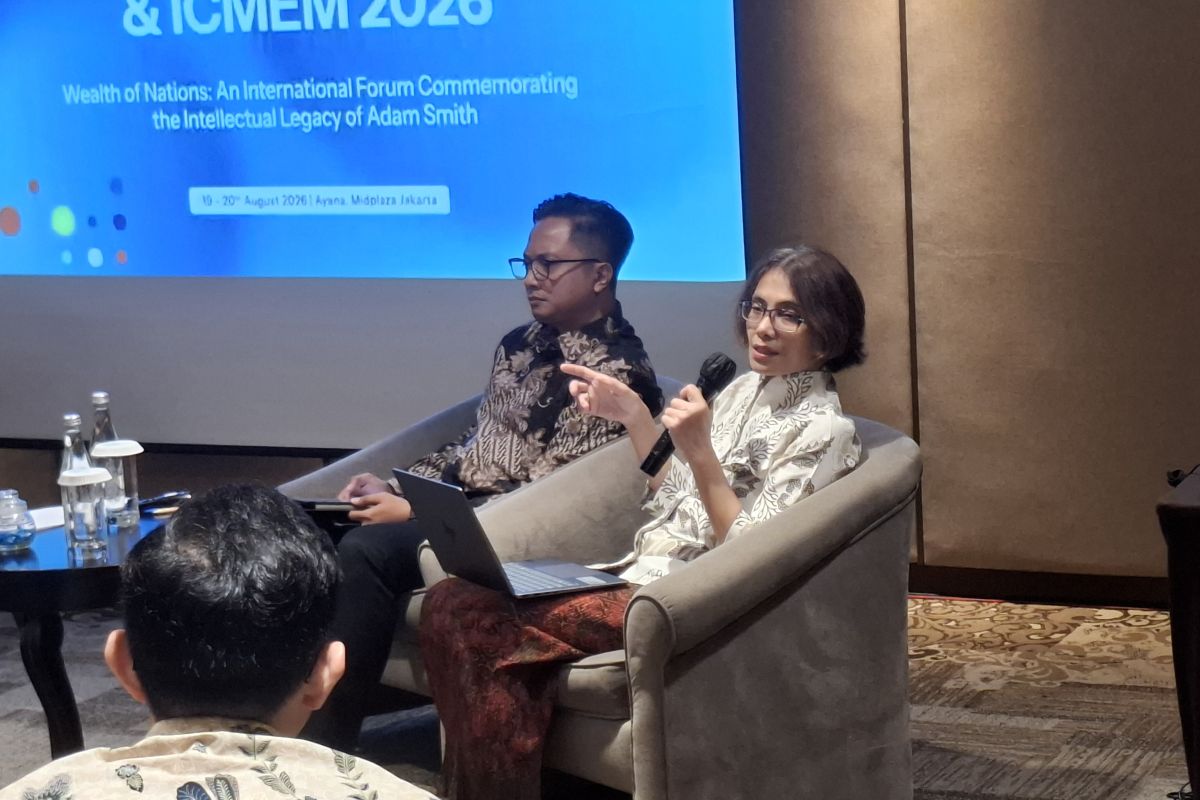
Jakarta (ANTARA) - Yunieta Nainggolan, Senior Lecturer in Sustainable Investment at the School of Business and Management, Bandung Institute of Technology (SBM ITB), has said that certainty over electricity buyers (offtakers) can strengthen the financing viability of new and renewable energy (EBT) projects.
She said market certainty is an important factor in determining the bankability of a project, or its viability in obtaining financing from investors and financial institutions.
“Because of course this becomes bankable if there is someone who can absorb the electricity generated from this renewable energy,” Yunieta said after the Renewable Energy Sector session at the Industrial Summit 2026 in Jakarta on Thursday.
According to her, the financing viability of EBT projects is also influenced by risk-sharing.
Yunieta cited the example of capital risk at the exploration stage as well as offtaker risk related to the certainty of absorbing the energy produced.
In addition to market certainty, Yunieta believes that support from investors who understand the technology can help strengthen the development of renewable energy projects, especially when there are technical risks that need to be managed.
“If possible, investors should not only provide funds, but also understand the technology,” she said.
From the funding side, she said developers can utilise a combination of financing instruments to help reduce risk and project financing costs.
“Green credit, bonds, sukuk, equity, blended finance — these are various financing alternatives available. How the combination can reduce risk or lower the cost of financing required,” she added.
According to Yunieta, financing support can also be strengthened through government policies and regulations, incentives, subsidies, foreign direct investment, and the involvement of banks in green financing.
She said grants and donor funding can be an alternative for projects with higher risk, because these financing sources can accept lower rates of return compared to private investors or banks.
With lower financing costs, she said, private investment has a greater opportunity to enter the development of various EBT sources, from wind and solar power, waste-to-energy, to geothermal.
“The goal is to keep the cost of financing low, so that the private sector is ready to invest in supporting the achievement of the net zero emission target through renewable energy investment,” she said.
The Ministry of Energy and Mineral Resources (ESDM) recorded that the EBT mix was revised down to 17 percent from 18 percent in the first quarter of 2026.
Director General of New, Renewable Energy and Energy Conservation at the Ministry of ESDM, Eniya Listiani Dewi, previously estimated that the revision was influenced, among other things, by the entry of gas-based power plants.
In the composition of the EBT mix, Fatty Acid Methyl Ester (FAME) was the largest contributor with a share of 5.2 percent, followed by hydropower at 3.5 percent and geothermal at 2.2 percent.
Solar power (solar power plants/PLTS) contributed 0.5 percent. The Ministry of ESDM hopes that the development of PLTS can increase the contribution of EBT, in line with the government’s plan to build PLTS with a capacity of 100 gigawatts (GW), with the first phase amounting to 30 GW.
Source: jawawa.id (https://jawawa.id/newsitem/academics-say-certainty-of-electricity-buyers-strengthens-renewable-energy-investment-1787212549)
Originally published by Antara (Indonesian) (https://www.antaranews.com/berita/5703176/akademisi-menilai-kepastian-pembeli-listrik-perkuat-investasi-ebt), translated from Indonesian