
Academics Provide Input to Prevent Abuse of Power in Asset Forfeiture Bill
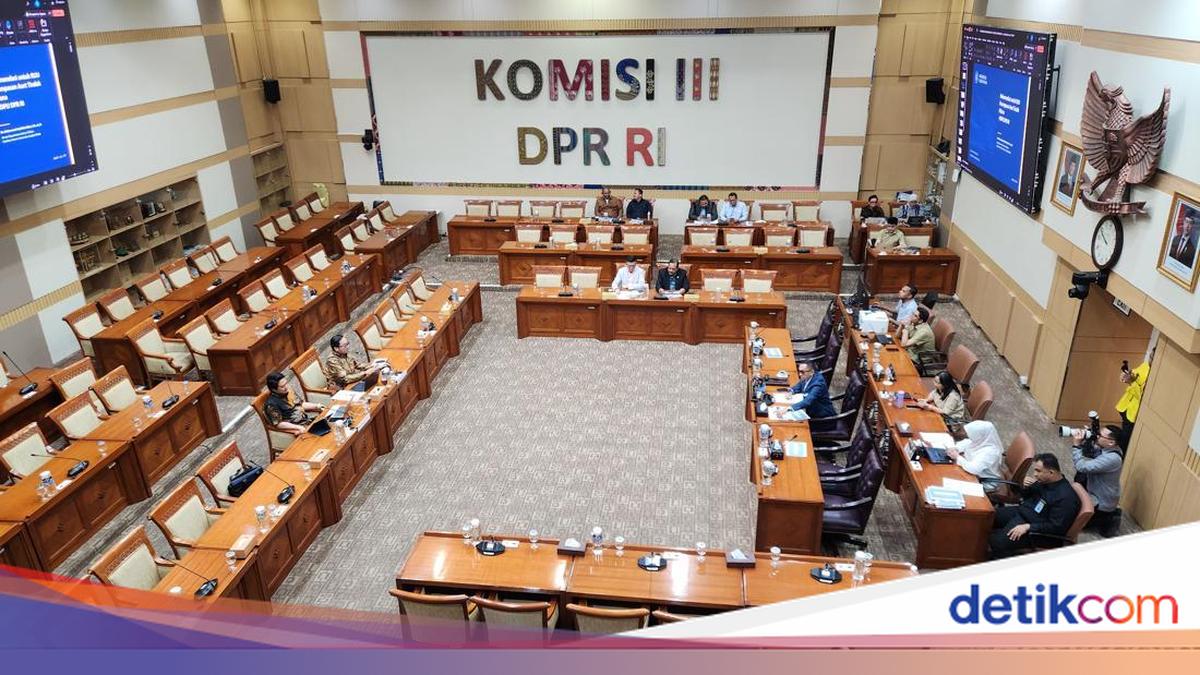
Muhammad Rusdi Anhar, an academic from Darussalam Gontor University, believes that the draft Asset Forfeulent Bill (RUU Perampasan Aset) still carries the potential for abuse of power. Rusdi highlighted the need for better protection of asset owners’ rights within the draft bill.
These concerns were expressed by Rusdi during a public hearing with Commission III of the House of Representatives (DPR) in Senayan, Jakarta, on Tuesday (6/10/2026). Rusdi noted that Article 5, paragraph (1), point b of the draft bill does not clearly define the ownership status of assets subject to seizure.
“There is currently no explanation regarding whose property these assets belong to. The owner is not necessarily the perpetrator of a crime; they could be a borrower or otherwise. This remains a potential abuse of power,” said Rusdi.
Rusdi also drew attention to Article 6, paragraph (2), regarding illicit enrichment. He questioned the discrepancies between the 2023 draft and the latest 2026 draft.
“There are rumours that it has been removed in the latest 2026 draft, even though it was still included in 2023. We are requesting clarification on whether this is true,” he stated.
Furthermore, Rusdi highlighted provisions regarding compliance with certain norms and values. In his view, several norms require further study as they may lead to legal contradictions.
Rusdi also questioned the link between the Wealth Report of State Officials (LHKPN) and the separation of assets. He argued that this needs clarification, as it pertains to the defence of parties suspected of criminal activity whose assets may have already been seized.
“The wording may appear good, but in operational practice, there is a possibility of abuse of power. This includes the removal of illicit enrichment targets, narrowing the scope, and weakening the protection of public assets, all of which require clarification, as well as the dependency on the asset owner,” he explained.
From the perspective of religious values and legal principles, Rusdi emphasised the importance of protecting an individual’s property and honour. He stated that the seizure of property must be conducted based on clear legal grounds.
“In Islam, we are taught to protect a person’s property and honour. It must not be seized except for legitimate legal reasons,” he said.
Consequently, Rusdi provided several recommendations regarding the Asset Forfeiture Bill. These include reinstating illicit enrichment provisions, limiting the reversal of the burden of proof, clarifying the institutional management of assets, and providing guarantees for the recovery of parties who have been wronged.
“We know that not all seized assets are taken by the state. Some, such as drugs and illegal alcohol, are destroyed. The limitations regarding this process need to be clearly explained,” he concluded.
Source: jawawa.id (https://jawawa.id/newsitem/academics-provide-input-to-prevent-abuse-of-power-in-asset-forfeiture-bill-1791348953)
Originally published by detikcom (https://news.detik.com/berita/d-8695999/akademisi-beri-masukan-ini-agar-ruu-perampasan-aset-tak-abuse-of-power), translated from Indonesian