
Academics Propose Limiting Reversal of Burden of Proof in Asset Forfeiture Bill
Muhammad Rusdi Anhar, an academic from the Faculty of Sharia and Law at the University of Darussalam Gontor, has highlighted concerns regarding the provisions for the reversal of the burden of proof in the Draft Law (RUU) on Asset Forfeiture. He requested that these provisions be limited to prevent imbalances within the legal process.
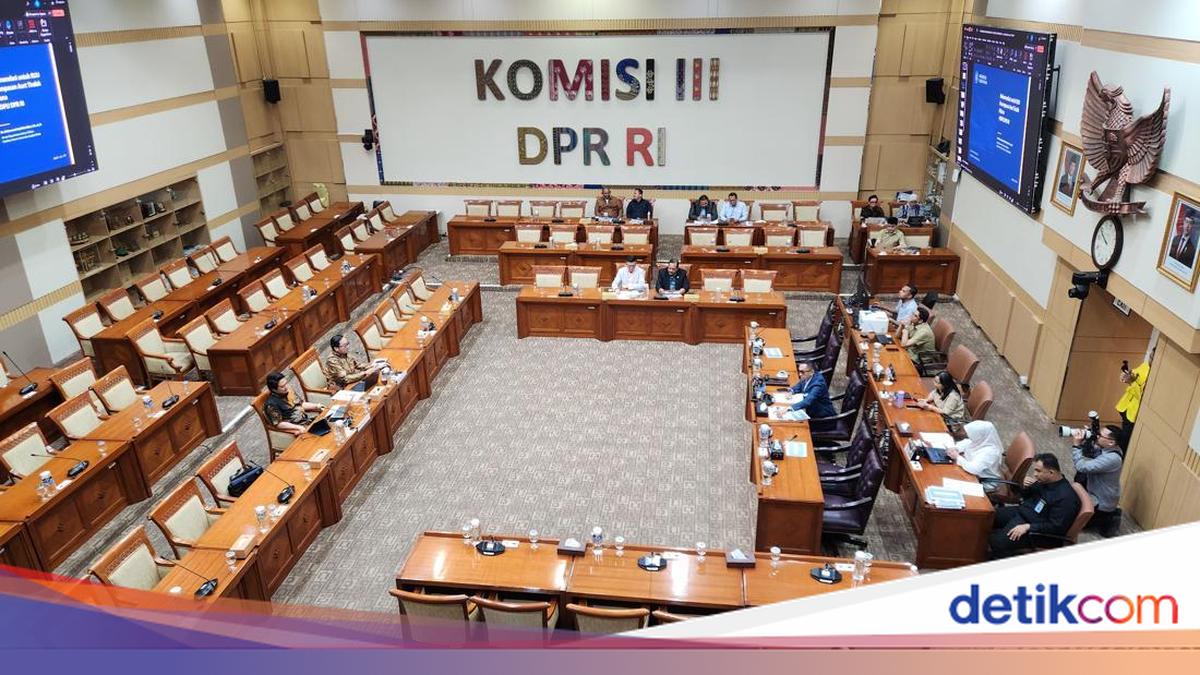
Rusdi expressed these views during a hearing with Commission III of the House of Representatives (DPR) in Senayan, Jakarta, on Tuesday (6/10/2026). He stated that applying a full reversal of the burden of proof could disadvantage defendants with limited resources, as they would be required to prove that their assets are not linked to criminal activity.
“This gap is not merely a flaw in the draft, but could potentially become a flaw in implementation that must be guarded through the principle of fairness,” said Rusdi. His recommendation is to limit the scope of the reversal of the burden of proof.
According to him, defendants with greater resources will be better equipped to navigate such a mechanism, whereas those from marginalised groups with limited resources may struggle to prove the origins of their assets, especially without adequate legal assistance.
He further noted that this method could create loopholes for the abuse of power by law enforcement officials if included in the Asset Forfeiture Bill. He pointed out that the concept of reversed burden of proof is commonly used in civil law, where a defendant has the right to prove innocence.
However, he argued that the Asset Forferess Bill also involves criminal aspects and the state’s authority to seize assets. He believes that the full application of the reversal of the burden of proof must be restricted so as not to diminish the protection of defendants’ rights and to avoid conflict with the presumption of innocence.
“This also involves ius puniendi, the state’s right to seize an individual’s property. Does this not risk an abuse of power?” he questioned.
Furthermore, Rusdi assessed that the reversal of the burden of proof could potentially clash with the values of Pancasila, specifically the first principle, ‘Belief in the One and Only God’.
He noted that in Islamic teachings, there is a principle to protect an individual’s property and honour. Therefore, the seizure of property must have a legal basis and sufficient evidence regarding its connection to criminal acts.
“There is a possibility that this could contradict the principles of protecting one’s value, dignity, existence, and honour,” he explained.
Source: jawawa.id (https://jawawa.id/newsitem/academics-propose-limiting-reversal-of-burden-of-proof-in-asset-forfeiture-bill-1791352648)
Originally published by detikcom (https://news.detik.com/berita/d-8696099/akademisi-usul-pembalikan-beban-pembuktian-dibatasi-di-ruu-perampasan-aset), translated from Indonesian