
Academics: Mangrove Ecosystem Damage Threatens Marine Life
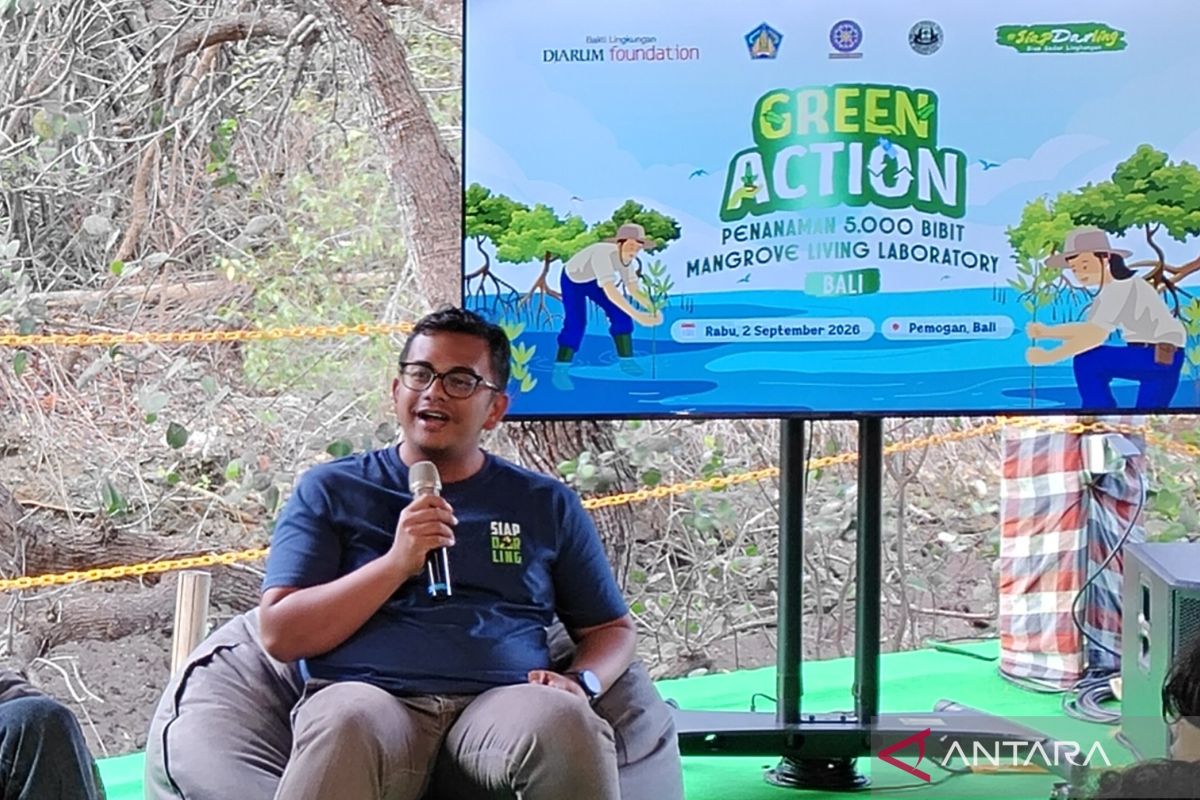
Denpasar (ANTARA) - Dr Dewa Gede Wiryangga Selangga, a lecturer at the Faculty of Agriculture, Udayana University (Unud), has warned the public that the destruction of mangrove ecosystems not only threatens human lives from natural disasters but also triggers the extinction of various marine species.
“What is at stake (if mangroves are damaged) is our dignity and our very lives. Mangroves are the first line of defence that withstands the impacts of tectonic earthquakes, liquefaction, and tsunamis to prevent the land from subsiding,” he stated at the Ngurah Rai Great Forest Park (Tahura) in Pemogan, South Denpasar, Bali, on Wednesday.
He explained that over the last three years, the Unud Faculty of Agriculture has shifted its research focus towards coastal plants, involving dozens of researchers from the fields of plant protection and cultivation.
This strategic move was taken considering that 85 per cent of the ecological functions of life originate from and are located within coastal and marine areas.
In addition to their function in carbon emission absorption and tectonic disaster mitigation, mangroves also serve as a life centre for approximately 65 per cent of marine organisms.
“Various marine species such as fish, prawns, and mud crabs are highly dependent on this ecosystem. When mangroves die, who will absorb the carbon? Those marine communities will also vanish and become extinct,” said the ecology expert.
Recognising the vital nature of these functions, he urged the public and various stakeholders to change the paradigm regarding coastal environmental conservation.
“The planting of mangrove seedlings is considered insufficient if it is not accompanied by sustainable maintenance and protection,” said Dewa.
Source: jawawa.id (https://jawawa.id/newsitem/academics-mangrove-ecosystem-damage-threatens-marine-life-1788344451)
Originally published by Antara (Indonesian) (https://www.antaranews.com/berita/5722536/akademisi-kerusakan-ekosistem-mangrove-ancam-biota-laut), translated from Indonesian