
Academics: Integration of Downstreaming and Energy Transition Must Be Accelerated
The integration of downstreaming policies and the energy transition is considered key to ensuring that Indonesia’s mineral wealth does not remain merely a commodity, but evolves into a new industrial base, creates jobs, and strengthens energy independence.
Muhammad Sri Wahyudi Suliswasting, Dean of the Faculty of Economics and Business at the University of Muhammadiyah Malang (UMM), stated that coordinating downstreaming and energy transition is a strategic move. He noted that the expansion of mineral processing industries requires large amounts of energy, meaning industrialisation and energy supply policies cannot operate in isolation.
“This is highly strategic because mineral downstreaming requires significant energy. The challenge is to ensure that additional industrial capacity does not instead increase dependence on fossil fuels,” said Wahyudi.
According to Wahyudi, downstreaming and the energy transition need to be designed within a single ecosystem so that industrial growth is accompanied by energy provision that is increasingly efficient, reliable, and low-carbon. This integration is becoming more critical as downstreaming investment in the first half of 2026 reached Rp300.1 trillion, or approximately 29.7 per cent of total national investment.
He assessed that the development of the nickel industry is a vital asset in pursuing this agenda. Indonesia’s processed nickel production increased from approximately 22,000 tonnes in 2014 to over 1.4 million tonnes in 2023, accounting for about 41 per cent of global production.
This development, according to Wahyudi, demonstrates Indonesia’s shift from being a raw material supplier to becoming a significant player in the global mineral supply chain.
“The next task is to ensure that more added value remains within the country through the strengthening of the battery industry, technology transfer, research, and the involvement of national companies,” he added.
Wahyudi noted that downstreaming is also expanding into other mineral commodities. The Freeport smelter in Gresik has a processing capacity of approximately 3 million tonnes of concentrate per year, with the potential to produce around 800,000 tonnes of copper cathode and 50 tonnes of gold annually. Meanwhile, the Smelter Grade Alumina Refinery (SGAR) in Mempawah has a production capacity of about 1 million tonnes of alumina per year.
The simultaneous development of nickel, copper, gold, and bauxite is seen as a way to expand Indonesia’s industrial base. Nickel can serve as the basis for battery and electric vehicle development, copper can support the electronics and electrical industries, while bauxite can be developed into aluminium and various manufactured products.
“This diversification of downstreaming is essential because Indonesia must not rely on a single commodity. Nickel, copper, bauxite, and gold have different value chains and can serve as the foundation for manufacturing, electronics, energy, and electric vehicle industries,” said Wahyudi.
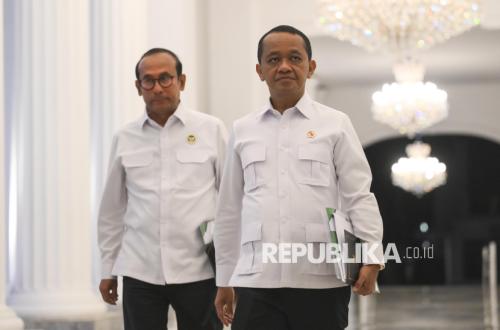
Wahyudi stated that Bahlil Lahadalia’s position as the Coordinating Minister for Downstreaming and Energy Transition, as well as the Minister of Energy and Mineral Resources (ESDM), provides an opportunity to integrate mining, energy, downstreaming, and investment policies from upstream to downstream.
With such integration, he believes that incoming investments are expected not to stand alone, but to generate a multiplier effect through the growth of supporting industries, job creation, technology mastery, and the development of industrial zones.
Meanwhile, Professor Ir. ING Wardana, a Professor at the Faculty of Engineering, Universitas Brawijaya, believes that the coordinated integration of downstreaming and energy transition can serve as the foundation for building a national green energy ecosystem.
According to Wardana, Indonesia’s strategic mineral wealth can be developed not only to produce value-added mining products but also to build new industrial chains that create employment.
“It is highly strategic because the downstreaming of strategic minerals such as nickel, bauxite, and copper can form a green energy production ecosystem,” said Wardana.
In addition to downstreaming, Wardana assessed that energy independence must be a primary agenda. The government is currently implementing the B50 biodiesel programme to reduce dependence on diesel imports.
He suggested that this policy could be strengthened by developing other biofuels, including ethanol based on domestic raw materials such as sugarcane, cassava, and corn.
“If the planting programmes for sugarcane, cassava, and corn for ethanol succeed and can make the E20, E30, or E50 programmes successful, alongside B50, we can achieve energy independence and eliminate the need for fuel imports,” he said.
Wardana noted that reducing energy imports could be a key indicator of the success of energy independence policies. Furthermore, success should also be measured by the ability to create jobs and increase national technological mastery.
“The most important thing is the reduction of energy imports because they drain significant foreign exchange. Next is job creation, followed by technology transfer, and other factors,” concluded Wardana.