
Academics Highlight the Resurfacing of Old UNJ Cases on Social Media Without Legal Basis and as Hoaxes
The Ministry of Religious Affairs seems to be constantly plagued by problems. The emergence of social media celebrities, influencers, and content creators discussing legal issues is considered part of the dynamic of the digital public sphere that should be appreciated. With their wide audience reach, they can help disseminate information, open space for aggrieved parties, and encourage transparency in public institutions.
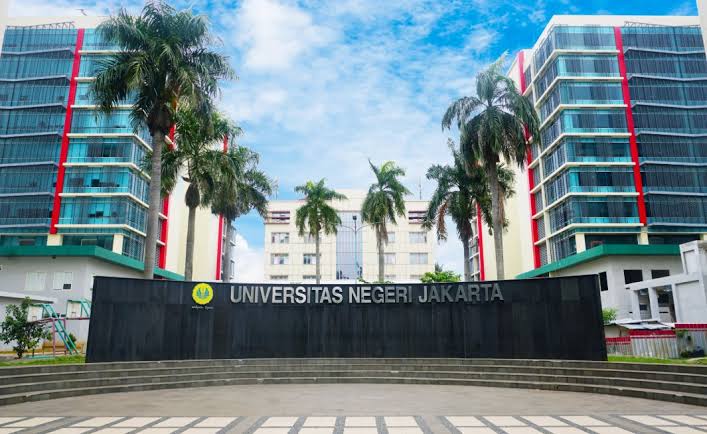
However, the recent circulation of content on social media linking the Rector of the State University of Jakarta (UNJ) to an old corruption case involving holiday bonuses (THR) from 2020 and a human trafficking case (TPPO) from 2024 has drawn attention from various parties. The narrative being spread is considered inconsistent with legal facts and potentially misleading to the public, as it connects two issues that have no direct link to the rector’s position or actions.
In several posts, certain content creators have presented opinions and accusations that steer public perception as if the UNJ Rector was involved in these two cases. In fact, to date, there has been no court ruling, no named suspect, and no official document from law enforcement indicating the rector’s involvement in the alleged criminal acts.
In a statement today, Abdul Rahman Hamid, a lecturer in the Legal Studies Programme at UNJ’s Faculty of Social Sciences (FISH), stated that while every citizen has the right to express opinions and exercise social control, the public also has the right to question the motives and objectives when a long-settled case is brought up again without new information or evidence. He argued that the main issue is not who is speaking, but the basis used to construct the narrative. ‘If the uploader does not bring new evidence, does not understand the entire case documents, and has no clear legal objective, the resurfacing of the case should be questioned. Legal issues should not be exploited merely to create noise, build popularity, or attack a specific party or institution, or for other motives,’ Rahman asserted. He reminded that regarding the 2020 issue, both the Corruption Eradication Commission (KPK) and the Metro Jaya Regional Police stated that no criminal elements were found, so the investigation was halted. Similarly, for the TPPO issue, there are no legal facts from the police indicating the rector’s involvement.
From a New Media perspective, Dini Safitri, a lecturer in the Communication Science Programme at FISH UNJ, assessed that social media allows an event to acquire new meaning through a framing process. Audiences respond not only to the facts that occur but also to how those facts are arranged and presented. ‘The choice of words, titles, images, video clips, sources, and omitted information can all influence how the public understands a case. Information that is individually correct can produce a mistaken understanding when removed from its context,’ Dini said. She noted that the repetition of a message by multiple social media accounts can create the impression that an accusation has become a widely accepted truth, even if the information does not come from many independent and factually correct sources. In many cases, Dini explained, a hoax narrative can originate from a single source and then be amplified through digital networks, making it appear to have broad support and truthfulness. She also highlighted the influence of social media algorithms, which tend to give more space to content that provokes emotion, conflict, or anger. This situation often encourages the creation of provocative titles and more sensational presentation of information. ‘Virality cannot be used as a measure of truth. A high number of viewers, comments, and shares only shows that content has successfully captured public attention, not that its entire content is true,’ she stated. Therefore, Dini believes that influencers and content creators need to apply ethical communication principles by clearly distinguishing between facts, allegations, slander, and opinions. They also need to convey the latest legal developments, provide a right of reply to the parties being reported on, and make corrections if errors are found.
Meanwhile, UNJ sociology lecturer Syaifudin views the phenomenon of resurfacing old cases as inseparable from the dynamics of social recognition in the digital space. According to him, a person who has no direct legal interest in a case can still have other interests that are social, economic, reputational, or political in nature. ‘The absence of a legal interest does not mean there is no other interest. A particular case can be used to build an identity as a defender of victims, a fighter for justice, or a figure considered brave by their followers, but there is certainly a motive behind the scenes,’ Syaifudin said. He explained that this phenomenon can develop into what sociology calls symbolic solidarity or pseudo-solidarity, where concern is more for public display than for taking real action to resolve the problem. In such conditions, a case can turn into an arena for seeking social recognition, while the party being reported on must bear the consequences of stigma, bullying, or reputational damage. Syaifudin also touched on the possibility of issue opportunism, where a problem is exploited more for gaining public attention than for seeking a substantive or educational resolution.
Source: jawawa.id (https://jawawa.id/newsitem/academics-highlight-the-resurfacing-of-old-unj-cases-on-social-media-without-legal-basis-and-as-hoaxes-1784555449)
Originally published by Media Indonesia (https://mediaindonesia.com/humaniora/912733/akademisi-soroti-pengangkatan-kasus-lama-unj-di-medsos-tanpa-fakta-hukum-dan-hoax), translated from Indonesian