
Academics Applaud Prabowo and Danantara's Steps to Revitalise Textile Industry
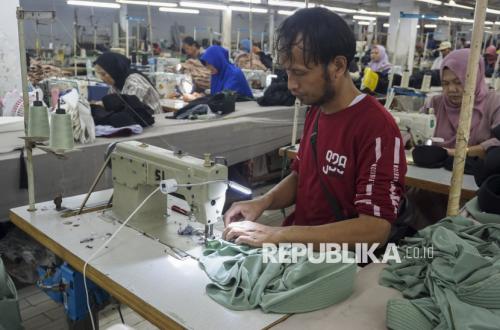
Sarlina Sari, an academic from the Faculty of Economics and Business at Universitas Bina Sarana Informatika (UBSI), believes that the revitalisation of the textile industry serves as a momentum to strengthen the national manufacturing foundation through technological modernisation, increased productivity, and job creation.
“The textile industry holds a vital position in Indonesia’s industrialisation journey. In addition to contributing to production and export activities, this sector is linked to labour absorption, supporting industries, and economic activities across various regions,” Sarlina stated in Jakarta on Saturday.
She expressed appreciation for President Prabowo Subianto’s attention to the revitalisation of the national textile industry. This move is deemed relevant to Indonesia’s need to strengthen the manufacturing sector, enhance industrial competitiveness, expand employment opportunities, and bolster national production capacity.
According to her, the government’s focus on the textile industry should be viewed within a broader perspective as part of a strategy to strengthen the national industrial foundation. However, the national textile industry currently faces various challenges, ranging from global competition and supply chain shifts to production cost pressures, changing market demands, and the need for machinery and technology modernisation.
In this situation, President Prabowo’s attention to textile industry revitalisation is seen as a step that can drive the transformation of the national manufacturing sector. One aspect receiving significant attention is the role of the Daya Anagata Nusantara Investment Management Agency (BPI Danantara) in supporting investment and strengthening national strategic industries.
Sarlina noted that investment in the textile industry should not merely focus on increasing production capacity. She argued that investment must result in increased productivity, efficiency, product quality, technological innovation, and the industry’s ability to penetrate global markets. Consequently, Sarlina also commended the attention of Danantara Chief Executive Officer (CEO) Rosan Perkasa Roeslani towards the investment agenda and the strengthening of the national industrial sector.
“Danantara holds a strategic position in driving long-term investments that can provide added value to the Indonesian economy,” she said.
She emphasised that support for the textile industry would be even more meaningful if directed towards technological modernisation, strengthening supply chains, improving human resource quality, and developing export markets. Sarlila asserted that investment in the textile industry must yield tangible added value. The metric, she noted, is not just the volume of capital inflow, but also improvements in productivity, efficiency, quality, exports, labour absorption, and industrial sustainability.
Historically, the textile industry was a key sector in Indonesia’s manufacturing development. Therefore, the current revitalisation can serve as a momentum to rebuild the sector’s strength using a more modern approach aligned with technological advancements.
She also revealed that the current challenges facing the textile industry cannot be resolved through short-term policies alone. A comprehensive transformation is required, encompassing technology, human resources, governance, financing, supply chains, innovation, and market access.
“Indonesia’s textile industry needs to move towards an industry that is more productive, technology-based, innovative, efficient, and globally competitive,” she explained.
Beyond investment and modernisation, Sarlina emphasised the importance of governance and accountability in every large-scale investment. She argued that every investment must be accompanied by clear performance indicators so that its impact can be measured transparently.
The success of the textile industry revitalisation will be measured not only by increased production capacity but also by its broader economic impact, including increased industrial productivity, job creation, export growth, the strengthening of supporting industries, enhanced national product competitiveness, and contributions to economic growth.
“Synergy between the government, Danantara, industry players, universities, financial institutions, and the workforce is a crucial factor in ensuring the revitalisation agenda proceeds sustainably,” said Sarlina.
In her view, the momentum for revitalisation should be utilised to build the national textile industry on a stronger foundation. With targeted investment, good governance, technological modernisation, and an orientation towards productivity, the textile industry can once again become a vital part of Indonesia’s manufacturing strength.
Sarlina concluded that the attention from President Prabowo and the steps taken by Danantara are ultimately part of a broader agenda to strengthen the national industrial structure. “The challenge is to ensure that the designed policies and investments can be translated into increased industrial capacity, competitiveness, exports, and sustainable economic benefits for the community,” she said.
Source: jawawa.id (https://jawawa.id/newsitem/academics-applaud-prabowo-and-danantaras-steps-to-revitalise-textile-industry-1790488438)
Originally published by Republika (https://ekonomi.republika.co.id/berita/tm08x3416/akademisi-apresiasi-langkah-prabowo-dan-danantara-revitalisasi-industri-tekstil), translated from Indonesian