
Academics and Civil Society Urged to Collaborate in Safeguarding Reform Outcomes
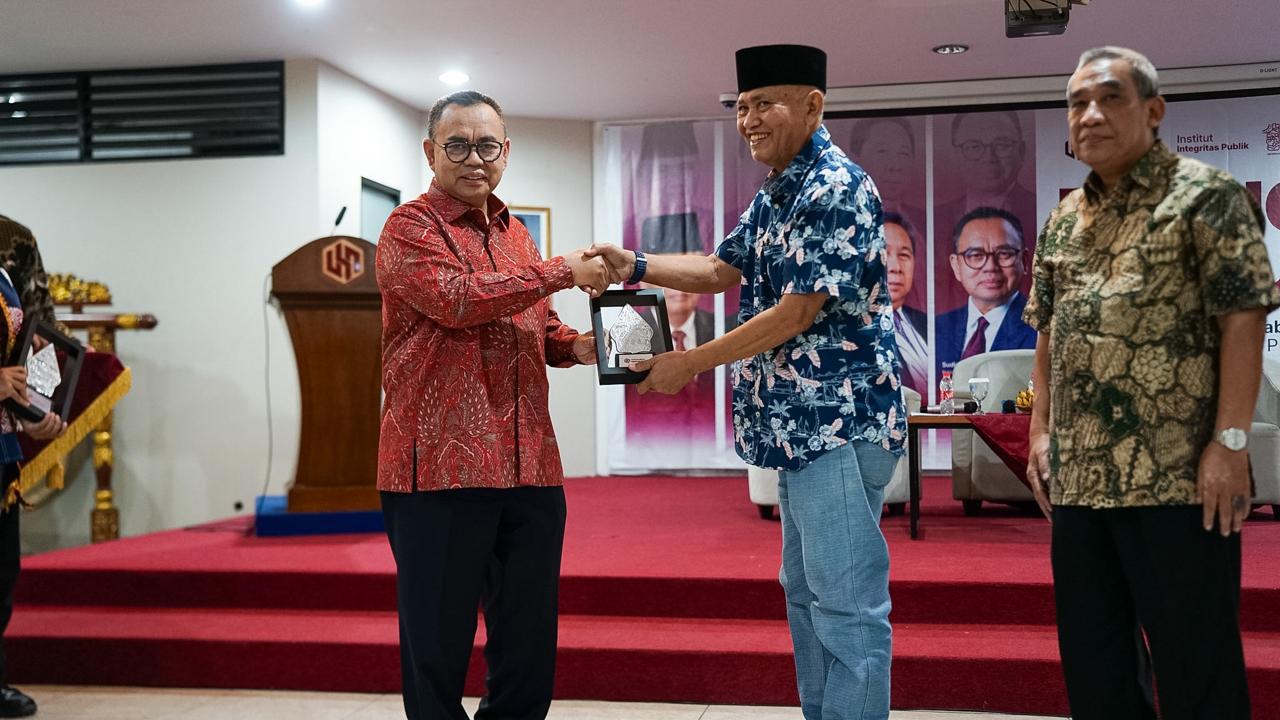
Former Energy and Mineral Resources Minister Sudirman Said has stated that Indonesia is currently entering a dark age in terms of state governance. He assessed that this decline in quality has occurred massively across institutional, leadership, and bureaucratic cultural aspects. Sudirman explained that the nation is currently facing three simultaneous crises: a deficit of morality and state ethics, an intellectual deficit, and a spiritual deficit. As a solution, the founder of the Indonesian Transparency Society offered three urgent leadership models for implementation: institutional leadership that places regulations above the whims of power, collective leadership to prevent the concentration of power, and intrinsic leadership that is steadfast in personal integrity. “Because the damage is caused by leaders, the repair must also start from the leadership aspect. There is no perfect crime; I do not believe in the Godfather. What I believe in is the real God. Politics goes up and down, but nobility will last forever,” Sudirman said during a discussion at Harkat State University on Thursday.
Echoing this sentiment, Agus Rahardjo, Chairman of the Corruption Eradication Commission for the 2015-2019 period, questioned why the instruments built from the 1998 Reformasi as the foundation for a clean state are now being systematically paralysed. He noted that institutions such as the KPK, PPATK, the Judicial Commission, and the Constitutional Court have lost their independence due to power intervention. Agus specifically highlighted the rampant practice of nepotism across various lines of government and the decline in Indonesia’s global Corruption Perception Index score, which remains stagnant at 34, far behind neighbouring countries like Singapore, Brunei Darussalam, Malaysia, and even Timor Leste. One of the main triggers is the revision of the KPK Law, which revoked the body’s independent status. “The destruction of governance begins with leadership that ignores integrity. Nowadays, it seems no one pays attention to the MPR Decree on a Clean and Corruption-Free State Administration. Nepotism is everywhere, corruption is in every layer and sector. There must be a movement to restore the results of reform, and civil society and the academic world must move,” said Agus Rahardjo.
The reunion of these two figures evoked public memory of their collaboration a decade ago in uncovering a major corporate cyber corruption case that ensnared former House Speaker Setya Novanto. Reflecting on that history, Sudirman expressed optimism that corrupt power will always meet its end through law enforcement. “Do you still remember the one who hit the electricity pole? There is no such thing as untouchable. Everyone can be touched if we want to,” Sudirman said. Despite levelling sharp criticism at the current real conditions, both figures agreed on a long-term projection that Indonesia historically possesses strong political immunity to carry out self-correction, reflecting on the history of the 1908 National Awakening, the 1928 Youth Pledge, the 1945 Proclamation, and the 1998 Reformasi movement.