
Academic warns AI regulation must not deter investment
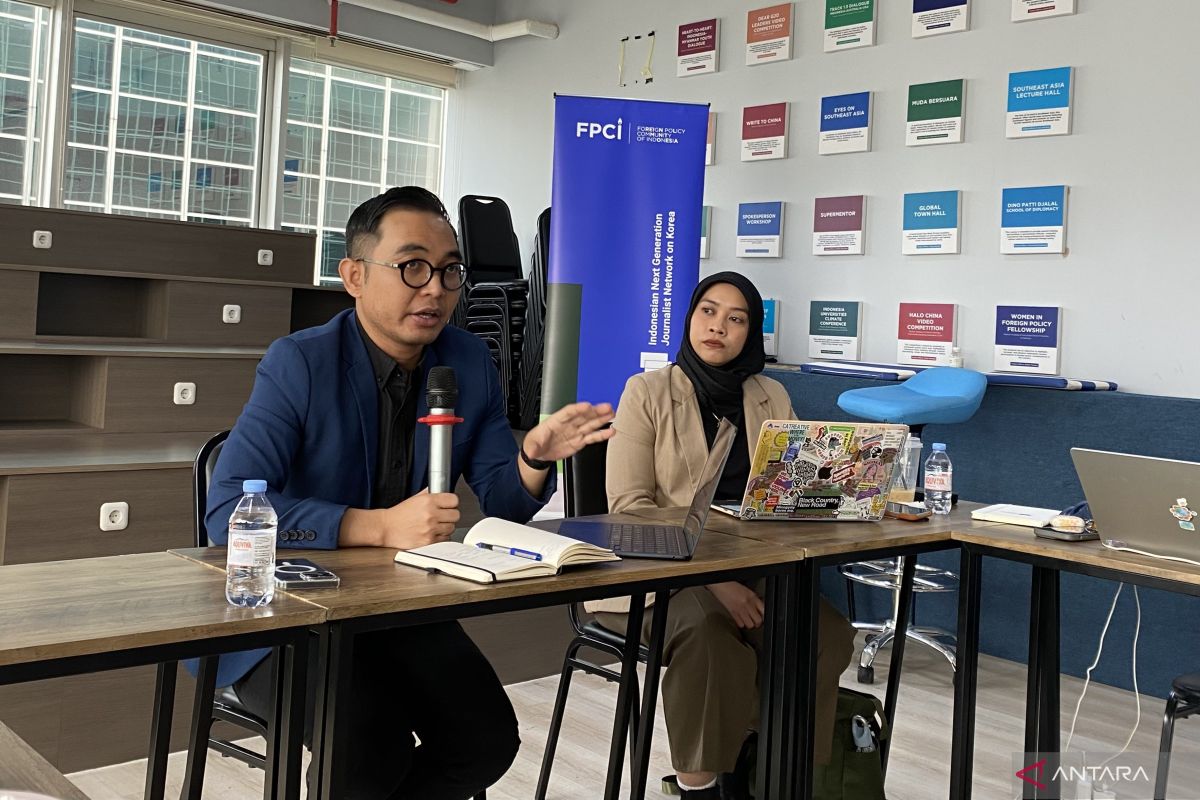
Jakarta (ANTARA) – Universitas Gadjah Mada academic Dedy Permadi has urged the government to ensure that artificial intelligence (AI) regulation does not deter foreign investment, including investment from South Korea, which is strengthening AI cooperation with Indonesia.
The UGM International Relations lecturer said the economy, including trade, energy and minerals, as well as investment, could be affected if AI rules were applied too stringently.
“When regulation is excessive, prospective investors will certainly consider whether they can comply with it. That is why regulatory clarity and certainty are very important,” Dedy said at a workshop of the Indonesian Next Generation Journalist Network on Korea, organised by the Foreign Policy Community of Indonesia (FPCI) and the Korea Foundation in Jakarta on Friday (30 October).
He said the development of AI governance should be based on an assessment of Indonesia’s readiness to adopt the technology. The government also needs to understand the challenges and opportunities of AI implementation across different sectors before drafting rules.
Dedy said UNESCO’s Readiness Assessment Methodology (RAM) could serve as a reference in drafting two presidential regulation proposals on AI ethics and an AI roadmap. However, he said the assessment should be followed by more specific studies of each sector affected by AI developments, including healthcare, education, culture and agriculture.
“Without a critical assessment of current conditions, we cannot formulate ideal regulation. We need to understand the conditions, challenges and opportunities on the ground across different sectors,” he said.
Dedy also cited data localisation policies, which require all data to be stored within Indonesia. He said such policies could affect the investment climate for the data centre industry, as investors would take storage requirements into account when deciding where to invest.
While the government awaits the passage of dedicated AI regulations, Dedy said it could use existing rules, such as the Electronic Information and Transactions Law (UU ITE) to address unlawful AI-generated content and the Personal Data Protection Law (UU PDP) to deal with the misuse of personal data.
“Regulation is needed when it genuinely responds to the assessment’s findings. While we wait for regulations that have not yet been passed, we can use existing regulations to govern AI,” he said.
Dedy added that regulatory clarity and certainty in law enforcement were important considerations for investors choosing where to invest.
The government is preparing national AI regulation in the form of a presidential regulation. Deputy Minister of Communication and Digital Nezar Patria said this instrument had been chosen because it could be drafted more quickly than a law, allowing the government to respond to the rapid pace of AI development.
Nezar said the government was not yet prioritising a dedicated AI law, as it was still monitoring global technological developments.
Indonesia–South Korea AI cooperation
Indonesia and South Korea agreed on two areas of cooperation in AI and digital technology in Seoul on 1 April 2026.
The first is a memorandum of understanding on using AI for primary healthcare and human development. It covers public health services, maternal and child health, community-based mental healthcare, and health resilience through data and digital systems.
The second is a strategic digital cooperation agreement between Indonesia’s Ministry of Communication and Digital Affairs and South Korea’s Ministry of Science and ICT. It focuses on improving public services, strengthening data security and developing AI talent.
The digital cooperation also covers improvements to communications infrastructure and networks, digital literacy, training, scholarships, expert exchanges, and the use of high-performance computing infrastructure to support domestic research and technology development.
The two countries will establish a joint committee to monitor the programmes and the outcomes of their cooperation. The digital agreement will remain in force for five years.
Source: jawawa.id (https://jawawa.id/newsitem/academic-warns-ai-regulation-must-not-deter-investment-1793454672)
Originally published by Antara (Indonesian) (https://www.antaranews.com/berita/5823939/akademisi-ingatkan-regulasi-ai-jangan-sampai-hambat-investasi), translated from Indonesian