
Academic urges widespread distribution of new Criminal Code and Criminal Procedure Code e-books to regions
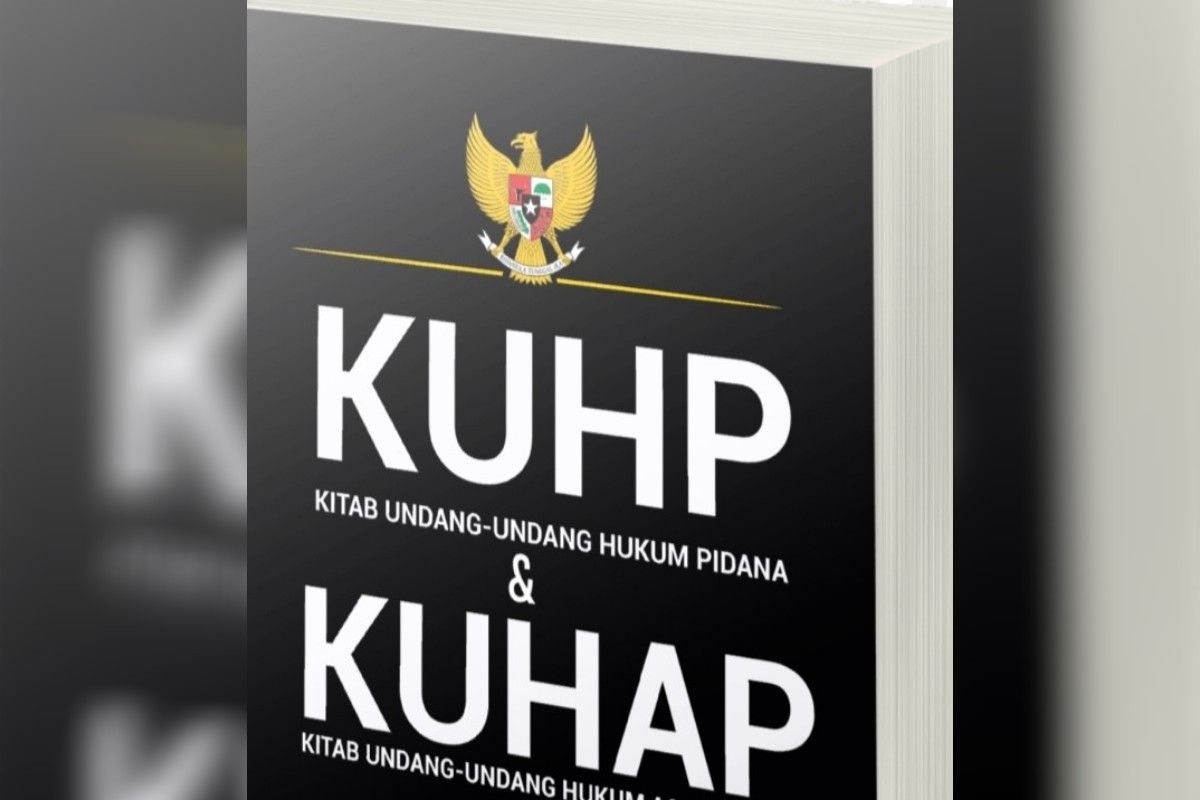
Jakarta (ANTARA) - Andi Muhamad Asrun, Professor of Constitutional Law at the Graduate School of Pakuan University in Bogor, has recommended that the Ministry of Law widely distribute the Criminal Code (KUHP) and Criminal Procedure Code (KUHAP) books to the regions in electronic form.
According to him, the KUHP and KUHAP books should be distributed to city and district governments, the ministry’s regional offices, and higher education institutions focused on legal education.
“These books (the KUHP and KUHAP) must be distributed more widely, to the regions and regional governments, ideally down to district and city level. Then to the ministry’s regional offices, and to universities. If physical copies are not feasible, they can be in e-book form,” said Asrun when contacted in Jakarta on Monday.
In his view, the birth of the new KUHP and KUHAP is a great achievement by the House of Representatives (DPR RI) and the government for the Indonesian nation, replacing the Criminal Code inherited from the Dutch colonial era.
Asrun commended the work of Commission III of the DPR RI, which has produced three laws on Indonesian criminal law, one of which is the KUHAP.
“This is a major event, an extraordinary achievement by Commission III of the DPR RI, and specifically by the government and the DPR RI. This is a legacy for the Prabowo-Gibran administration,” he said.
Law Number 1 of 2023 on the Criminal Code, together with Law Number 20 of 2025 and Law Number 1 of 2026 on Penal Adjustments, officially came into force on 2 January 2026.
The new Criminal Code represents a new face for Indonesian criminal law, marking a paradigm shift from retribution (retributive justice) to corrective and restorative justice.
Asrun considered the widespread distribution of the KUHP and KUHAP books to the remotest regions important so that the implementation of the new legislation can be broadly understood by the public.
In addition, he also urged the prompt issuance of government regulations as implementing rules for the Criminal Code, to serve as guidance for law enforcement officials in implementing the national Criminal Code.