
Academic Suspects 'Safe House' Scheme in Case of Former Jampidsus
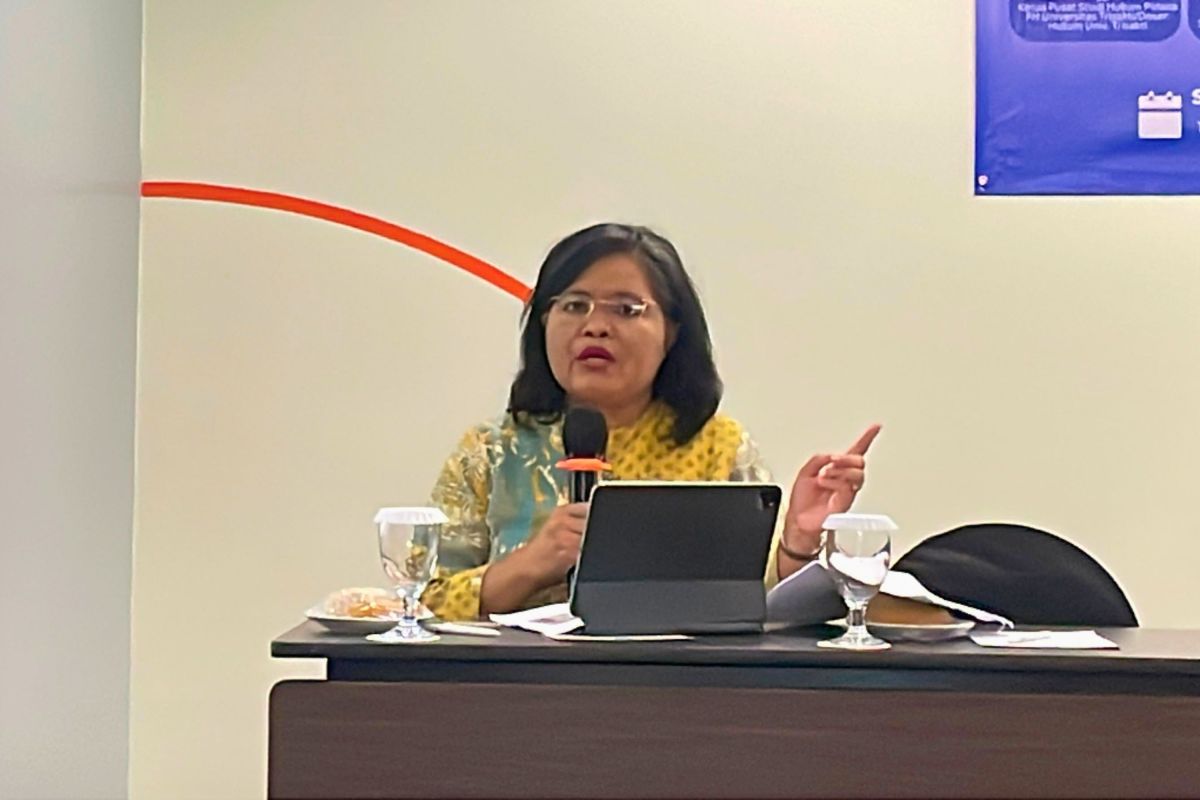
A legal academic has raised suspicions of a ‘safe house’ scheme being used in the alleged corruption and money laundering case involving former Junior Attorney General for Special Crimes (Jampidsus) Febrie Adriansyah. Maria Silvya Wangga, Chair of the Centre for Criminal Law Studies at Trisakti University’s Faculty of Law, questioned the legitimacy of the funds, asking, “If this money is legitimate or legal, why was it not kept in a bank?”
Wangga explained that a safe house scheme typically uses specific locations, such as houses, cafés, or warehouses, to hide money so that it cannot be detected by the banking system or the Financial Transaction Reports and Analysis Centre (PPATK). She also questioned why a state official would be willing to store assets belonging to another party that are suspected to be proceeds of crime.
Evidence seized includes Rp7.2 billion in cash in 16 foreign currencies from a money changer, as well as hundreds of billions of rupiah in Singapore and US dollars found in a hidden safe at the de’CLAN Signature Café in Jakarta and a house in Sentul, West Java. In addition to cash, investigators also seized tens of kilogrammes of gold bars. Wangga stated that these assets are suspected to be linked to money laundering from three cases: the investment management of PT ASABRI, alleged corruption at PT Krakatau Steel, and the governance of coal supply for Steam Power Plants (PLTU) for the 2018–2026 period.
She also assessed that there is an alleged application of a commingling strategy, which involves mixing assets derived from crime with legitimate assets to make the origin of the wealth difficult to trace through the State Administrators’ Wealth Report (LHKPN) or tax returns (SPT). Citing the social exchange theory of sociologist George Caspar Homans, Wangga suggested that state officials may have exchanged their integrity, moral values, and positions for material gain or illegally obtained facilities. She added that in the context of money laundering, the owner of assets whose wealth has an unclear origin can be required to prove the source of that wealth through a limited reversal of the burden of proof mechanism. Furthermore, Article 59 of the National Criminal Code stipulates that the criminal penalty for such officials can be increased by one-third of the maximum principal sentence. Wangga opined that money laundering is a continuation of the predicate crime, including corruption, which does not stop at the receipt of money but continues through the stages of placement, layering, and integration to disguise the origin of the funds.