
Academic Proposes Phased Roadmap for 100 GW Solar Power Target
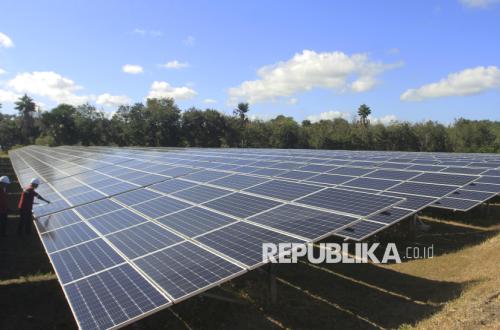
An academic from the PLN Institute of Technology (ITPLN), Zulfikar Manggau, has proposed a phased roadmap to realise the target of building solar power plants (PLTS) with a capacity of 100 gigawatts (GW) in Indonesia. According to him, this approach is more realistic so that PLTS development proceeds in tandem with readiness in funding, technology, regulation, the electricity grid, and supporting industries.
The proposal was delivered by Zulfikar during a Focus Group Discussion (FGD) on Mapping Potential and Increasing Readiness for the 100 GW PLTS Project with Bappenas and GIZ. He assessed that the 100 GW target remains important for strengthening energy security and driving economic growth, but it need not be forced to completion within a short time.
“100 GW is necessary and not impossible. But the key is not to rush, start with what is certain, with a strong foundation,” said Zulfikar in his statement in Jakarta, Friday (7/8/2026).
According to him, the first phase can be focused on the 2025-2029 period with a target of around 25 GW. Priority is given to projects that are relatively easy to realise, such as rooftop solar in industrial and office areas, floating solar on reservoirs, and the use of critical land in East Nusa Tenggara, West Nusa Tenggara, and Sulawesi.
In this initial phase, the government is also encouraged to improve regulations that are considered not yet fully supportive of PLTS development, including the Domestic Component Level (TKDN) policy. At the same time, the supporting industrial ecosystem also needs to be built so that PLTS development provides added value for national industry.
The second phase, he proposed, would take place in 2030-2034 with an additional capacity of around 25 GW. Development would begin to be directed towards large-scale PLTS to meet industrial needs, accompanied by the construction of energy storage systems so that electricity supply remains stable even though solar power production is intermittent.
He added that the construction of inter-regional transmission networks must also proceed in tandem with power plant development. The target size for each phase still needs to be aligned with PLN’s Electricity Supply Business Plan (RUPTL) and the latest policies of the Ministry of Energy and Mineral Resources (ESDM).
The third phase is directed at pursuing the remaining approximately 50 GW starting from 2035. According to Zulfikar, the success of that phase depends heavily on the development of increasingly competitive battery prices and the growing flow of green financing for renewable energy projects.
In addition to preparing the development phases, Zulfikar reminded that the construction of 100 GW of PLTS faces a number of major challenges. These range from investment needs reaching hundreds of billions of US dollars, limited land availability on Java, to the need for energy storage technology that is still relatively expensive.
He stressed that the success of the programme requires collaboration from all stakeholders. The government acts as regulator, while PT PLN (Persero) holds a strategic position as operator as well as the single off-taker of national electricity. Ultimately, the 100 GW PLTS target is considered achievable as long as development is carried out in stages with a mature project foundation, rather than merely chasing speed of completion.
Source: jawawa.id (https://jawawa.id/newsitem/academic-proposes-phased-roadmap-for-100-gw-solar-power-target-1786103610)
Originally published by Republika (https://ekonomi.republika.co.id/berita/tje3bu522/akademisi-usulkan-roadmap-bertahap-untuk-target-plts-100-gw), translated from Indonesian