
Academic: Mineral downstreaming strengthens national economic added value
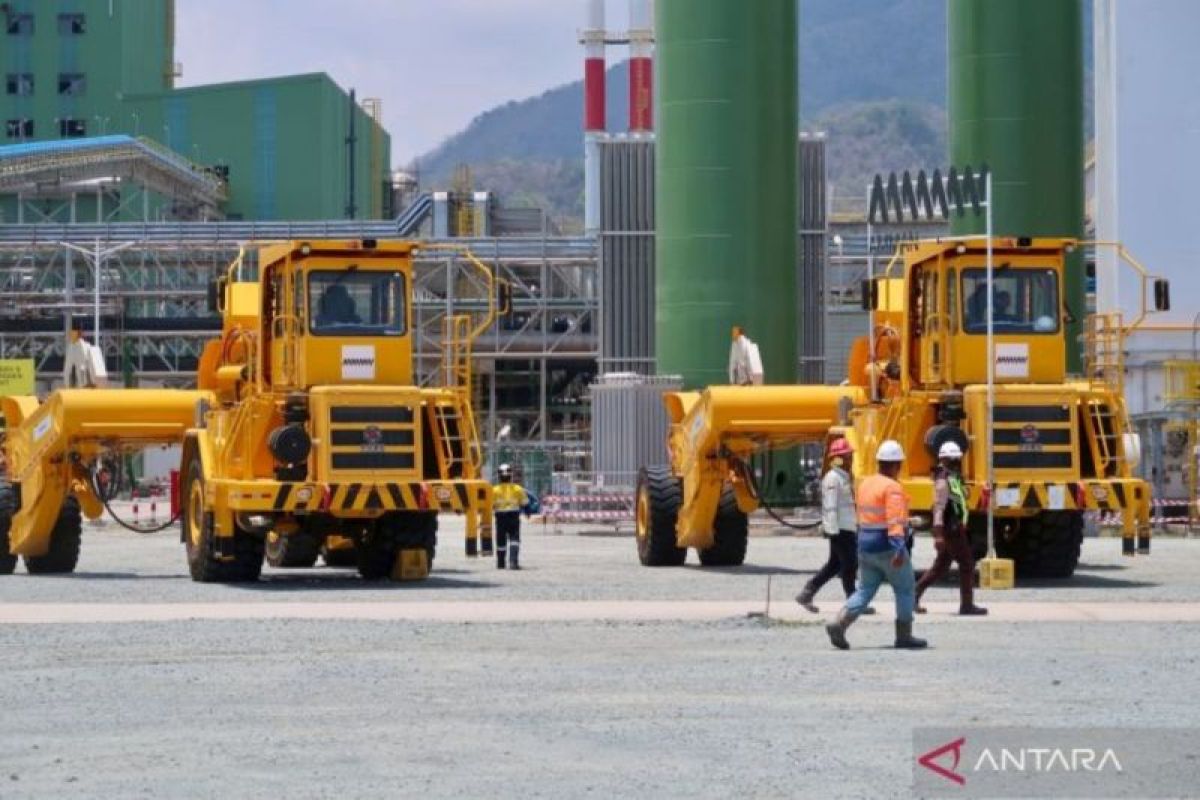
Jakarta (ANTARA) - Hatta Ridho, Dean of the Faculty of Social and Political Sciences at the Universitas Sumatera Utara (FISIP USU), is optimistic that mineral downstreaming will strengthen the added value of the national economy whilst broadening employment opportunities.
“For so long, we have often only thought that Indonesia produces, extracts, and then ships out the results. In fact, what is more important is how to carry out downstreaming and create added value domestically,” Hatta said in a statement received in Jakarta on Monday.
According to him, processing minerals domestically is important because the economic benefits of natural resources should not stop at exploration and production activities.
Downstreaming enables strategic mineral commodities to obtain higher economic value before being marketed, whilst simultaneously creating new economic activity through the growth of processing industries and their downstream sectors.
In this way, Hatta said, the benefits of mineral resources can have a wider reach across the economy through job creation and the strengthening of national industrial capacity.
Indonesia possesses a number of strategic mineral commodities, including nickel, bauxite, aluminium, tin, and gold, which can be further developed within industrial chains to generate added value domestically.
The development of this ecosystem is being carried out, among other means, through national mining companies grouped under MIND ID, namely ANTAM, Bukit Asam, INALUM, and TIMAH, with business activities across various links in the mineral industry chain.
“The management of commodities such as nickel, aluminium, bauxite, tin, and gold continues to be developed so as to generate ever greater economic benefits whilst remaining connected to the development agenda and economic sovereignty,” he said.
Hatta assessed that strengthening downstreaming is ultimately not merely a matter of building mineral processing facilities, but also of building national capability to manage natural wealth into a basis for sustainable economic activity.
Therefore, the development of the mineral industry also requires human resources capable of understanding the strategic position of natural resources in development and of generating new ideas to enhance their economic benefits.
According to him, this need has become increasingly important in line with policies to increase the added value of natural resources domestically. Universities and students can play a role by developing thinking on mineral management, technology, downstream industries, and sustainability.
“One day, Indonesia’s young people will replace today’s leaders. Therefore, they must start thinking and contributing ideas from now on,” he said.