
Academic Assesses Bali Waste-to-Energy Plant as Strategic for Controlling Waste and Emissions
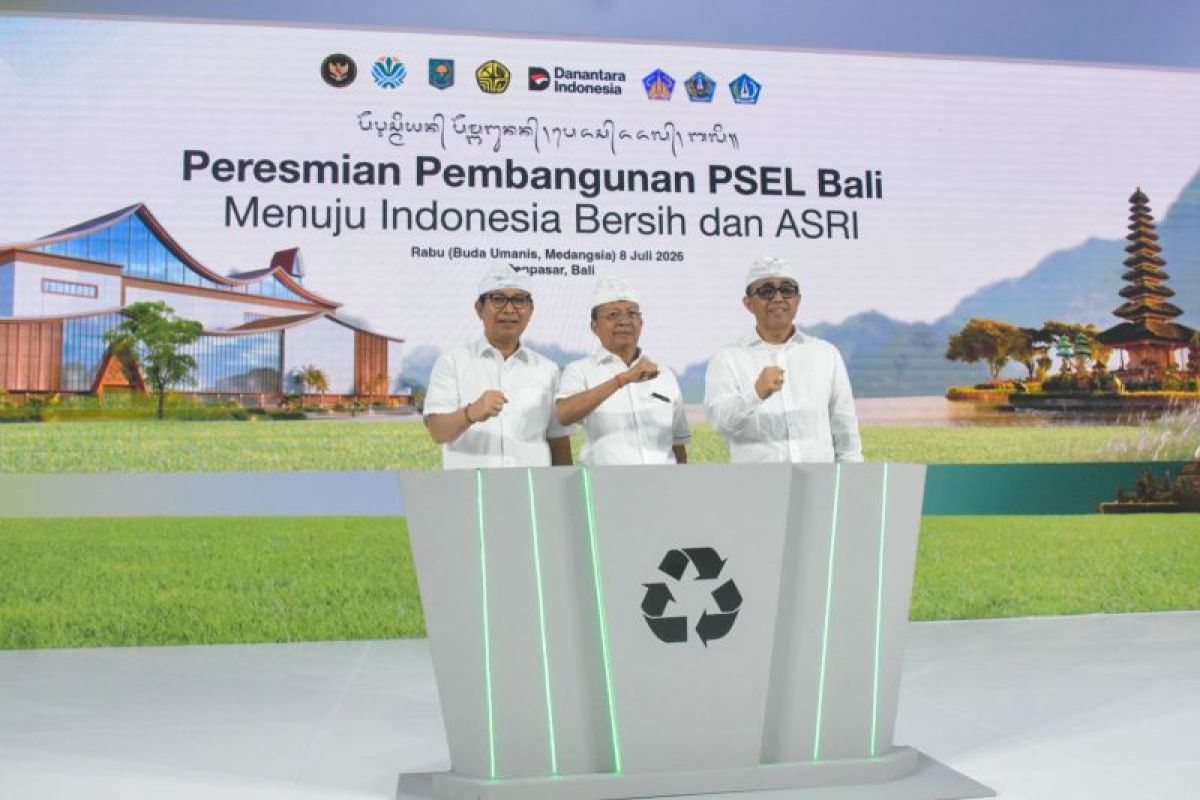
The Daily Chair of the Indonesian Environmental Scientist Association (IESA), Lina Tri Mugi Astuti, has assessed that the construction of the Waste-to-Energy (PSEL) facility in Bali is a strategic step to accelerate waste management while strengthening environmental impact control on the Island of the Gods. According to her, PSEL is relevant to the current state of waste management, especially when sorting at the source is not yet optimal. Open dumping of waste has the potential to release methane gas uncontrollably and contribute to greenhouse gas emissions. “When open dumping is carried out, the main problem relates to climate change. Methane gas is released uncontrollably and has a large potential to contribute to greenhouse gases. It is different when waste is managed,” Lina said in Jakarta on Thursday. She explained that PSEL can use various technologies, ranging from biogas to pyrolysis. However, observing the characteristics of waste that has not been fully sorted, incineration technology is considered one of the options to accelerate large-scale waste processing. “PSEL can actually use many technologies, not just incinerators. However, looking at the current condition of the waste, the technology that can be implemented for acceleration now is the incinerator,” she said. Lina stressed that the success of this technology is highly determined by a consistent emission control system and environmental monitoring. “What needs to be considered is the emission control system. The incinerator must be tested and the emissions produced must be controllable,” she said. According to her, environmental audits, the preparation of environmental impact analyses (Amdal), and periodic monitoring must be carried out correctly and in accordance with local environmental conditions. Nevertheless, Lina affirmed that the existence of PSEL cannot replace efforts to reduce and sort waste from the source. PSEL and the circular economy must run in a mutually complementary waste management system. Public awareness to sort organic and inorganic waste remains one of the main challenges. Besides reducing problems at final processing sites, the quality of incoming waste can also affect the performance of the energy processing facility. High moisture content in waste, for example, has the potential to affect the processing and the facility’s ability to produce energy according to planned capacity. “Incineration is indeed the fastest technology for now, but it does not guarantee sustainability if it is not supported by community behaviour in treating waste,” said Lina. Furthermore, she also reminded that the transformation of waste management needs to pay attention to social aspects, including the existence of the informal sector that has so far depended on the sorting and collection of economically valuable materials for their livelihoods. In the long term, Lina assessed that PSEL has the potential to provide a positive impact on Bali’s environment if built and operated according to standards. The most easily felt indicator for the community is a cleaner environment and reduced waste in public spaces, including beach areas. “If PSEL exists and Bali is not clean, that becomes a question mark, especially if waste is still visible on the beaches. The local government cannot remain silent. Waste collection must still be carried out massively,” she said. Besides environmental benefits, the operation of PSEL also has the potential to provide a multiplier effect on the economy through job creation and the strengthening of circular economy activities in the upstream sector. The Bali PSEL is expected to become a model for sustainable waste management with transparent governance, strong environmental oversight, and collaboration between the government, businesses, and the community. “The practice of building a clean PSEL must be the benchmark. Cooperation between the private sector and the government must run well. Regulatory and policy support must be strong,” said Lina. Good governance from the procurement process, Amdal preparation, construction, to operation is the foundation so that developers can work professionally and focus on meeting environmental standards. “If the process is clean, the developer or investor will not be distracted by non-technical matters. They can work well,” concluded Lina.