
Academic: Alleged Bugging of President Is a Serious National Resilience Issue
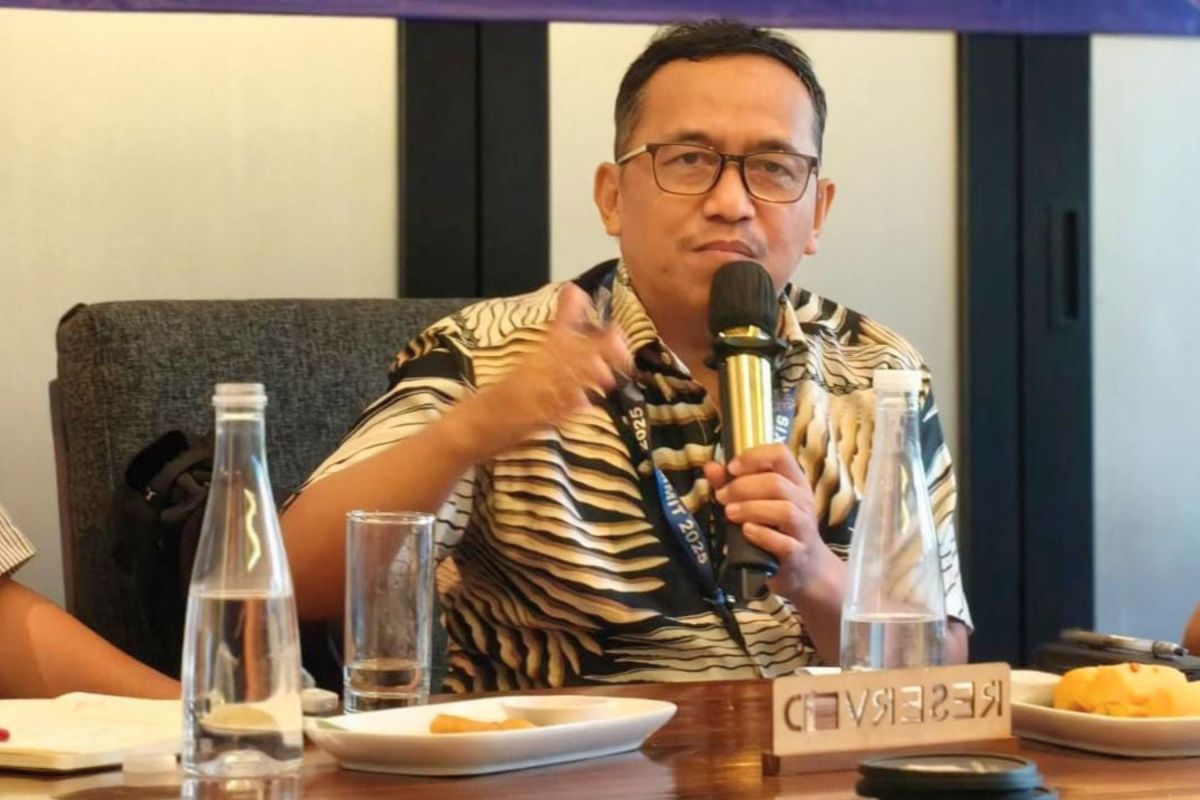
Jakarta (ANTARA) - Heri Herdiawanto, an academic at Al Azhar Indonesia University, has warned that allegations of illegal surveillance targeting President Prabowo Subianto and people around the Presidential Palace are a serious matter that must be considered in terms of national resilience and state security.
He said that if the operation was organised with the aim of disabling the President’s authority or overthrowing the legitimate government, the surveillance could form part of a series of acts amounting to an alleged attempt to overthrow the state.
“Threats to the state do not always come from military aggression from abroad. In contemporary security developments, threats can instead emerge from within state institutions through the abuse of office, authority, security facilities and intelligence technology,” Heri said in a statement in Jakarta on Tuesday.
He added that if the alleged acts did involve senior officials with strategic responsibilities for security and public order, the matter would go beyond a procedural violation or misuse of technology.
He said particular attention should be paid to the possibility that state security instruments had been abused by people who had access and authority to protect the country.
The situation, he said, pointed to a potential “inside threat” — a threat from within that could damage the system of government through facilities and authority intended to serve the national interest.
Heri said that if the allegations were proven, the investigation should target not only those who carried out the surveillance, but also those who designed, ordered and controlled the operation, as well as those who benefited from it.
“The fundamental questions are: who was behind the action, who gave the orders, what was the chain of command, and what was its strategic purpose?” he said.
He said he hoped the investigation would not stop with field operatives while any intellectual figures who may have controlled the operation remained untouched. All aspects, he said, must be established through evidence and due process.
He stressed that if the surveillance formed part of a series of acts accompanied by intent and concrete preparations to attack the President or overthrow the legitimate government, the elements of the criminal offence of makar — an attempt to overthrow the state — should be examined.
He said this was in line with Law No. 1 of 2023 on the National Criminal Code, particularly Articles 191 and 193.
Article 191 concerns makar with the intent to attack the President and/or Vice-President, including rendering the President or Vice-President unable to govern. Article 193 concerns makar with the intent to overthrow the government.
From the perspective of national resilience, Heri said makar was a form of internal threat that could shake the foundations of state life.
“Such a threat affects not only government stability, but can also undermine sovereignty and public confidence in state institutions,” he said.
He outlined three dimensions of national resilience that could be affected. The first is political resilience: efforts to disable the head of government or overthrow the government unconstitutionally could create political instability, disrupt continuity of government and trigger a crisis of public confidence.
If not handled properly, he added, this could create a power vacuum.
The second dimension is security resilience. He said the misuse of intelligence tools, surveillance systems and state security facilities by individuals with strategic access could undermine the country’s protective systems.
The third is ideological resilience. Heri said efforts to overthrow a government formed through constitutional mechanisms threatened the principles of democracy, Pancasila and the 1945 Constitution.
“A legitimate government must be respected, while every transfer of power must take place through constitutional mechanisms,” he said.
On 3 November 2026, the Indonesian National Police named three people as suspects in a case involving alleged illegal surveillance and the deletion of electronic data.
They are former National Police chief General LSP, the police’s Legal Division head, Inspector General AS, and an instructor at the National Police Education and Training Institute, Inspector General EH.
Two days later, on 5 November 2026, police named former head of the National Police Information and Communications Technology Division, Inspector General SU, as a suspect, bringing the total to four.
On the same day, police said LSP, AS and EH had been detained at the National Police Mobile Brigade detention centre in Depok, West Java. SU has not been detained because he is unwell.
Source: jawawa.id (https://jawawa.id/newsitem/academic-alleged-bugging-of-president-is-a-serious-national-resilience-issue-1794329505)
Originally published by Antara (Indonesian) (https://www.antaranews.com/berita/5845307/akademisi-dugaan-penyadapan-presiden-isu-serius-ketahanan-nasional), translated from Indonesian