
Academic Ability Testing in Primary Schools: Measuring Ability or Limiting Potential?
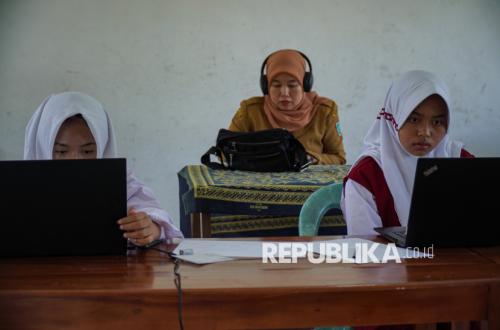
The implementation of Academic Ability Testing (TKA) at the primary school level has sparked public discussion. On one hand, TKA is viewed as an important instrument for objectively mapping student learning achievements. However, on the other hand, concerns have emerged that early academic testing has the potential to shift away from the essence of primary education—namely, developing children’s potential holistically. The question arises: does TKA truly measure ability, or does it actually limit children’s potential?
Various research findings indicate that assessment based on written tests generally tends to capture only lower to mid-level cognitive aspects, such as memory and comprehension. Meanwhile, critical thinking ability, creativity, collaboration, and character development are not fully accommodated in standard test models.
In primary school practice, pressure to achieve test scores often results in narrowing students’ learning experiences. Teachers are driven to “teach to the test”. Conversely, students experience academic anxiety at an age that should be a phase of exploration and play. This potentially hinders socio-emotional development and long-term learning interest. Various reports also show that learning quality is not always directly proportional to test results. Schools with supportive learning environments and meaningful learning are actually more capable of producing adaptive student profiles, even if they do not always excel in standard test scores.
Conceptually, evaluation policies such as TKA have a strong foundation in modern education systems. The government requires instruments to ensure accountability, equitable quality, and national mapping of learning achievements. Data-based evaluation becomes important in evidence-based policy-making. However, in the context of primary education, evaluation should not merely function as a measurement tool, but also as part of the education process itself. Assessment should ideally be formative, providing feedback and supporting individual student development. When evaluation becomes pressure, its educational function becomes diminished.
The implementation of TKA in primary schools presents a dilemma arising from discourse between the system’s need to measure and children’s need to grow. First, TKA has the potential to oversimplify the meaning of “ability”. Children’s ability should not only be reflected in right or wrong answers, but also in their thinking process, attempts, and willingness to experiment. When ability measurement is reduced to a number, other more essential dimensions become neglected. Second, TKA can indirectly limit children’s potential through overly rigid standardisation. Children with different learning styles, diverse social backgrounds, and multiple intelligences often do not receive fair space in uniform test systems. As a result, children who are actually potential in non-academic fields or divergent thinking are labelled as “less capable”.
Third, from a school leadership perspective, pressure over TKA results can influence learning practices. Teachers become more focused on achieving scores than on meaningful learning processes. Learning innovation risks being sidelined because it is deemed not to directly impact test results.
Rejecting TKA implementation entirely is not a solution. What needs to be done is placing TKA proportionally as one instrument, not the sole determinant of educational quality. A new approach that is more integrative and humanistic is needed.
First, integrating TKA with student learning profiles. TKA should not stand alone, but be supplemented by a learning portfolio that encompasses cognitive, socio-emotional, creativity, and character aspects so that evaluation results become more comprehensive. Second, developing adaptive TKA based on differentiation. This means TKA needs to adapt to students’ ability levels and learning styles. This approach can reduce single-standard bias and provide a more equitable evaluation experience.
Third, strengthening the formative function in TKA. TKA results should not merely be a final number, but be used as the basis for learning feedback. Teachers need to be supported to translate test results into more personalised learning strategies. Fourth, using long-term potential indicators. A new direction that needs to be promoted is incorporating indicators of future potential, such as critical thinking ability, creativity, and learning resilience, into the evaluation system. This can be done through a combination of performance assessment and structured observation.
Fifth, reorienting school culture from scores to process. This means schools need to build a culture that places learning process as the top priority. TKA becomes a reflection tool, not a pressure mechanism. The leadership of school principals plays an important role in directing this paradigm.
Evaluation should not only measure ability but also open space for potential to develop. With the assumption that primary education is the foundation of the future, its assessment system must be capable of reflecting the diversity of children’s potential, not limiting it. TKA needs to be placed as part of a humanistic, adaptive, and child-development-oriented learning ecosystem.