
Abundant Production But Fish Consumption in Central Java Remains Very Low
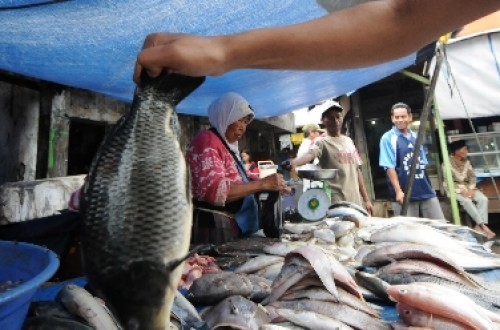
The Deputy Coordinating Minister for Food, Hanif Faisol Nurofiq, has highlighted the low level of fish consumption in Central Java Province. Despite significant production figures, Central Java still ranks 37th out of 38 provinces in Indonesia for the highest fish consumption achievement.
“Central Java is part of the top 10 fish producers in the country. However, if we calculate it honestly, fish consumption in Central Java is relatively very small. In fact, across all provinces in Indonesia, it is the second lowest,” stated Hanif while attending a socialisation event for Presidential Regulation Number 7lar of 2026 regarding the Movement to Popularise Fish Consumption (Gemarikan) at the Gradhika Bhakti Praja Building, Semarang, on Wednesday (30/09/2026).
Based on data from the Coordinating Ministry for Food, fish consumption in Central Java in 2025 was only 16.32 kilograms per capita per year. The province with the highest fish consumption is North Sulawesi, at 48.97 kilograms per capita per year.
This is despite the fact that fish production figures in Central Java are quite significant. According to data from the Coordinating Ministry for Food, between 2019 and 2024, the average capture fisheries production in Central Java reached 390,000 tonnes per year, while the average aquaculture production reached 531,000 tonnes per year.
According to Hanif, the low level of fish consumption in Central Java needs attention. “After South Papua, the second lowest is Central Java. It is number 37 out of 38 provinces. It is only a little way from being the 38th. This is certainly a major shock given our abundant fish wealth,” he said.
The fish consumption level in South Papua is 10.2 kilograms per capita per year, a difference of about six kilograms compared to Central Java. Nationally, Hanif noted that the absorption of fish production also remains relatively low.
“We have a fish production of almost 56 million tonnes per year, yet our consumption is only 7.5 million tonnes,” said Hanif.