
Abundant Energy, the Challenge of Creating Added Value
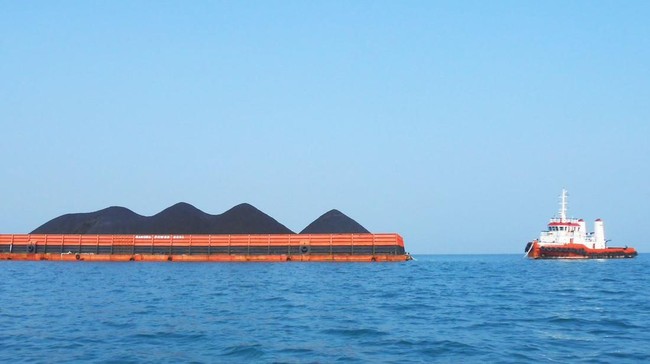
Indonesia truly never lacks reasons to be an energy nation. We possess vast amounts of coal, gas reserves, significant geothermal potential, hydropower, abundant sunlight, vast wind potential, and strategic minerals that are increasingly vital in the global economy. Geographically, Indonesia is also situated in one of the regions with the fastest economic growth and energy demand in the world.
However, there is a much more important question than simply how much resource we possess: how much economic value can we create from that energy? A nation does not become strong merely because it possesses natural resources.
A nation becomes strong when it is capable of transforming resources into productivity, productivity into industry, industry into jobs and technology, and ultimately, all of these into prosperity and national strength. This is where Indonesia faces a challenge far greater than merely ensuring energy availability.
We need to build the capability to transform energy into value. We may not lack energy, but we must expand our national capacity to ensure that every unit of energy we possess can generate increasingly higher economic value.
World economic history provides a very clear lesson that natural resource wealth never automatically produces prosperity. There are countries with massive amounts of oil, gas, coal, and minerals that remain economies vulnerable to commodity price fluctuations, while other countries with limited natural resources have successfully built global industries, technologies, and companies by leveraging energy, capital, human resources, and global trade networks.
Japan does not have oil and gas reserves like Middle Eastern energy producers, South Korea is not known for its natural resource wealth, and Singapore has almost no natural resources in the conventional sense. Yet, all three have successfully built economic power because they were able to transform the energy and resources they acquired into high-value productivity, manufacturing, technology, trade, and services.
Conversely, history also recognises the phenomenon of the ‘resource curse’, where resource wealth actually makes an economy overly dependent on commodities and less driven to build other productive capabilities. The lesson is simple yet vital for Indonesia: what determines a nation’s strength is not just what lies beneath its soil, but what can be built upon it.
Indonesia must begin to view energy in this same way. For years, the success of the energy sector has been viewed through the lens of production volume, reserves, and capacity. We speak about how many millions of tons of coal can be produced, how much oil can be extracted, the size of available gas reserves, how many gigawatts of power plants will be built, and the potential for renewable energy development.
All these figures are important, as a country indeed requires sufficient energy. However, these figures only describe the supply side of an energy system. They do not answer the question regarding the value created once that energy is available.
Energy that is produced but not utilised does not create productivity. Large electrical capacity that is unavailable when industry needs it does not create competitiveness. Abundant mineral resources that are only sold as commodities have not yet realised the full potential value that could be created. Therefore, the measure of Indonesia’s energy success must shift from simply ‘how much energy we have’ to ‘what we can create with that energy’.
This shift in mindset is becoming increasingly important as Indonesia enters an economic transformation phase that requires energy on a different scale and quality. We aim to build mineral processing industries, strengthen manufacturing, develop the battery and electric vehicle industries, attract data centre investment, develop the digital economy, expand green industries, and increase export competitiveness.
All these agendas require energy, but not just energy in large quantities. Modern industries require energy that is competitive, reliable, predictable, and available in the right locations. Data centres require stable electricity twenty-four hours a day.
Manufacturing industries require a consistent quality of supply. Smelters require large and sustainable amounts of energy. Artificial intelligence computing hubs will require electricity on an increasingly large scale. Thus, energy will no longer be just one of the production inputs. Energy will increasingly determine where investment occurs, where industries grow, and where high-value-added jobs are created.
Therefore, when an investor considers building manufacturing facilities, industrial estates, or data centres in Indonesia, the question does not stop at whether Indonesia has energy sources. Investors will look at whether electricity is available when needed, what the long-term energy costs are, how stable the grid system is, whether capacity can be increased as businesses grow, and whether supply can be guaranteed amidst changing global market conditions.
This demonstrates that energy has an economic function far greater than just a cost component. Energy is part of the investment infrastructure. A nation capable of providing competitive and reliable energy has an advantage in attracting industry. Conversely, if energy is unavailable or…
Source: jawawa.id (https://jawawa.id/newsitem/abundant-energy-the-challenge-of-creating-added-value-1790203862)
Originally published by CNBC Indonesia (https://www.cnbcindonesia.com/opini/20260918074249-14-768882/energi-melimpah-tantangannya-menciptakan-nilai-tambah), translated from Indonesian