
Abrasion and Tidal Flooding Still a Threat, 13,000 Mangroves Planted in Muara Gembong
The threats of abrasion and tidal flooding continue to pose significant challenges to the coastal area of Muara Gembong, Bekasi Regency. The continuous changes in the coastline from year to year not only threaten the coastal ecosystem but also impact the lives of communities that depend on marine resources and coastal areas.
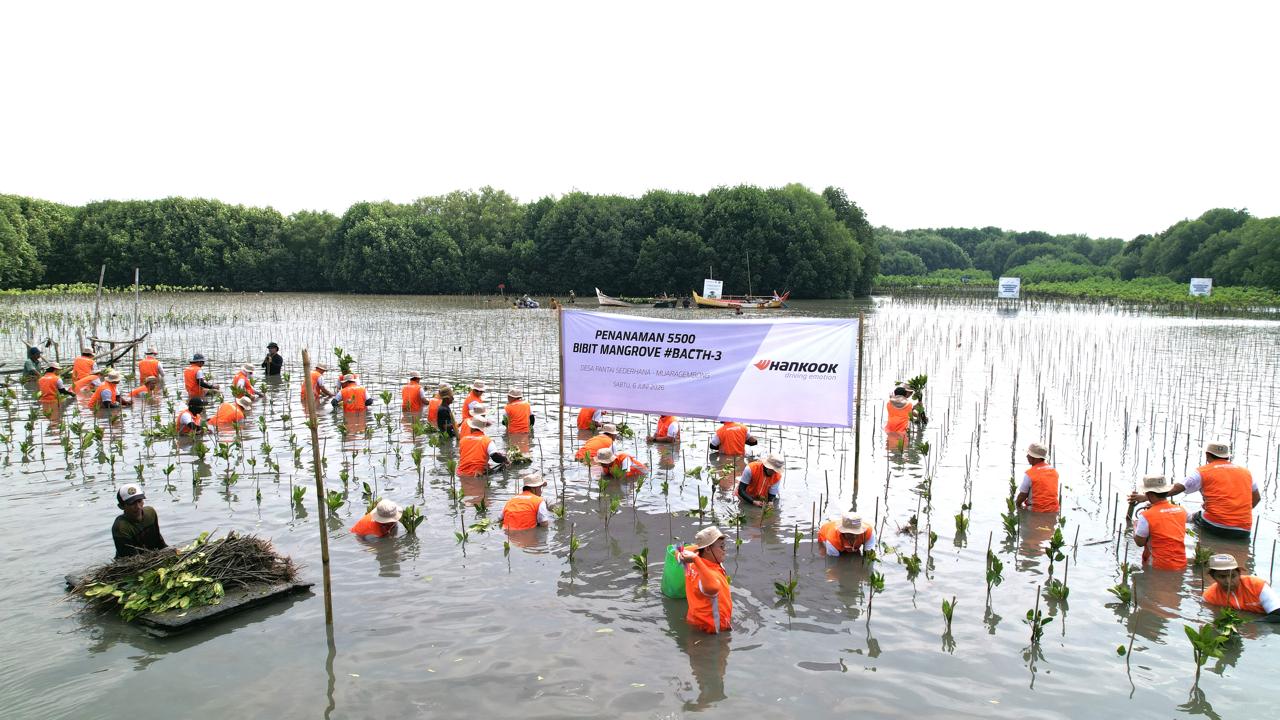
Amidst these challenges, the rehabilitation of the mangrove ecosystem remains a vital effort to strengthen the natural protection of coastal regions. To commemorate World Environment Day, PT Hankook Tire Indonesia has once again conducted mangrove planting in Pantai Sederhana Village, Muara Gembong, North Bekasi, as part of an effort to support the recovery of coastal areas affected by abrasion and to reduce the risk of tidal flooding.
This activity, carried out consistently every year, is part of the support for the national environmental preservation agenda. In the last three years, Hankook has planted a total of 13,000 mangrove seedlings in the Muara Gembong area as a form of the company’s commitment to environmental preservation and the empowerment of surrounding communities.
The programme also serves as the company’s contribution to supporting the implementation of Government Regulation Number 27 of 2025, which encourages the acceleration of mangrove ecosystem restoration in Indonesia. In addition to helping protect coastal areas from the impacts of abrasion, mangrove rehabilitation also plays a role in climate change mitigation by increasing carbon sequestration and storage capacity.
Mangroves are of great importance to Indonesia. With an area of approximately 3.45 million hectares in 2025, Indonesia is home to about 23 per cent of the world’s mangrove ecosystems. This area serves as a habitat for more than 200 fish species and stores about 17 per cent of the global blue carbon reserves, which play a crucial role in suppressing the impacts of climate change.
Nevertheless, various challenges remain in mangrove conservation efforts. Land-use conversion, environmental pollution, and development pressures in coastal areas are still factors causing the degradation of mangrove ecosystems in various regions. Rehabilitation data shows an increase in mangrove area from approximately 3.44 million hectares in 2024 to 3.45 million hectares in 2025, yet recovery efforts must continue to be strengthened to keep pace with the rate of damage occurring.
The President Director of PT Hankook Tire Indonesia, Jung Jinkyun, stated that the mangrove planting activity is one of the sustainability programmes consistently implemented by the company due to its direct benefits to both the environment and coastal communities.
“This mangrove planting activity remains one of Hankook’s main agendas as a manifestation of our commitment to providing a real contribution to the environment and the communities around our operational areas. Through this initiative, we also encourage collaboration between employees and local communities as part of a collective effort to maintain the sustainability of the coastal ecosystem,” he said.
According to Jung, the steps taken consistently every year are expected to provide a sustainable impact, not only in protecting the environment but also in supporting the livelihoods and economy of coastal communities in the future.
Before the planting activity took place, participants attended an educational session to learn about various types and benefits of mangroves. In that session, participants gained an understanding of the role of mangroves as a natural fortress that helps reduce abrasion, withstand sea waves, and maintain the balance of the coastal ecosystem.
Beyond ecological benefits, mangroves also hold economic value for the community. Mangrove areas serve as important habitats for fish and shrimp to breed, thereby supporting fishermen’s catches. Various types of mangroves can also be processed into value-added products such as chips and syrup, while the forested areas have the potential to be developed into ecotourism destinations that can open new business opportunities and jobs for local residents.
The Head of Environmental Management at the Bekasi Regency Environmental Office, Donny Arief Budiman, appreciated the consistency of various parties in supporting coastal area rehabilitation through mangrove planting.
“We appreciate Hankook’s efforts in consistently conducting environmental preservation activities through this mangrove planting. As we know, tidal flooding remains a challenge in the Muara Gembong area from year to year due to abrasion and changes in the coastline, so coastal ecosystem rehabilitation efforts like this play an important role in supporting area protection and the environmental sustainability of the surrounding community,” he said.
According to Donny, environmental preservation requires the collaboration of all stakeholders, ranging from the government and the private sector to the community. Such cooperation is deemed essential to accelerate the recovery of affected coastal areas while strengthening environmental resilience in facing climate change.
Since 2024, the mangrove planting programme has been part of Hankook’s ongoing commitment in Indonesia. Through this initiative, the company continues to strengthen the implementation of Environmental, Social, and Governance (ESG) principles, while also supporting the achievement of the Sustainable Development Goals (SDGs), particularly in efforts to address climate change and preserve marine ecosystems.
Amidst the ongoing threats of abrasion and tidal flooding in several Indonesian coastal areas, mangrove rehabilitation is considered a strategic step that not only protects the environment but also safeguards the economic continuity of communities living alongside coastal ecosystems.
Source: jawawa.id (https://jawawa.id/newsitem/abrasion-and-tidal-flooding-still-a-threat-13-000-mangroves-planted-in-muara-gembong-1781113848)
Originally published by Media Indonesia (https://mediaindonesia.com/megapolitan/899225/abrasi-dan-rob-masih-mengancam-13000-mangrove-ditanam-di-muara-gembong), translated from Indonesian