
Abidin Fikri: Pancasila is a national consensus that must be continuously nurtured
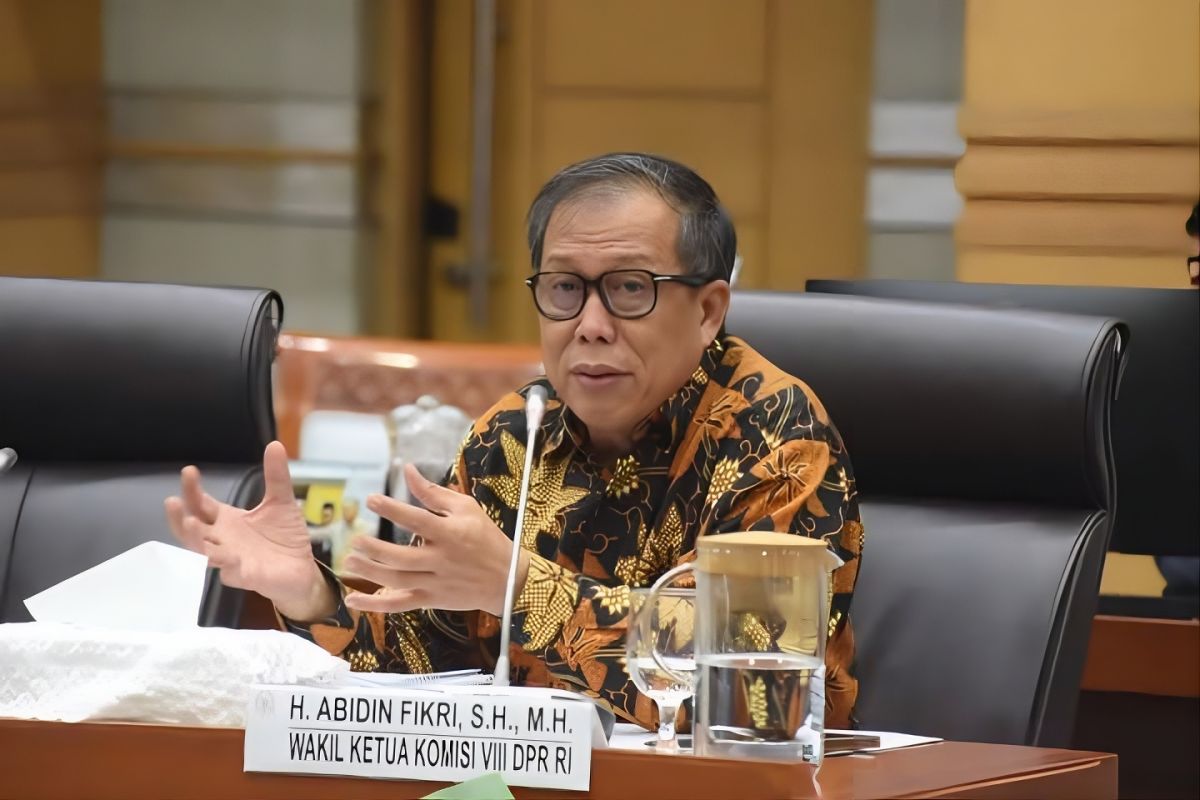
Deputy Chairman of House Commission VIII of the Indonesian House of Representatives (DPR RI), Abidin Fikri, has stated that Pancasila is the result of a consensus reached by the Indonesian nation and must be continuously safeguarded and applied in national and state life.
In an official statement received in Jakarta on Sunday, Abidin said the process of formulating Pancasila involved the thoughts and views of various figures and groups both before and after the Proclamation of Indonesian Independence.
According to him, during the sessions of the Investigating Committee for Preparatory Work for Indonesian Independence (BPUPKI) from 29 May to 1 June 1945, a number of figures put forward ideas regarding the foundation of an independent Indonesian state.
In his speech on 1 June 1945, Soekarno proposed five principles which he named Pancasila, namely Indonesian nationalism, internationalism or humanitarianism, deliberation or democracy, social welfare, and belief in God.
The process of formulating the state foundation then continued through the Committee of Nine, which produced the Jakarta Charter on 22 June 1945.
Abidin said the formulation underwent further deliberation until Pancasila, with its first principle of “Belief in the One and Only God”, was established as part of the Preamble to the 1945 Constitution on 18 August 1945.
According to Abidin, this lengthy process demonstrates that Pancasila was born through a consensus among the nation’s founding fathers, who came from diverse backgrounds.
He said Pancasila must therefore be continuously safeguarded as the foundation of national and state life.
Abidin also touched on Indonesia’s history of briefly taking the form of the United States of Indonesia (RIS) before returning to the Unitary State of the Republic of Indonesia (NKRI).
He highlighted the role of Mohammad Natsir through the Integral Motion, delivered in a parliamentary session on 3 April 1950, which pushed for the reunification of the constituent states into a unitary state.
According to Abidin, this historical experience demonstrates the importance of preserving the legacy and consensus of the nation’s founding fathers.
The statement was made by Abidin while speaking at a community-based Socialisation of the Four Pillars of the MPR event organised by the MPR RI Socialisation Agency in cooperation with the Central Board of Persatuan Islam Istri in Bandung, West Java, on Saturday (15/8).
At the same event, Chairman of the MPR RI Socialisation Agency Abraham Liyanto likened Pancasila to a foundation that strengthens the edifice of national and state life.
“We have experienced facing all manner of trials in our national and state life. Because the foundation of this Indonesian house is strong, we have all been kept safe,” he said.
Abraham called on the public to safeguard and apply the values of Pancasila, the 1945 Constitution, the Unitary State of the Republic of Indonesia, and Bhinneka Tunggal Ika in daily life.