
Abdullah Basa Bandaro, a Merchant Driving Nationalism at a Crossroads of Eras
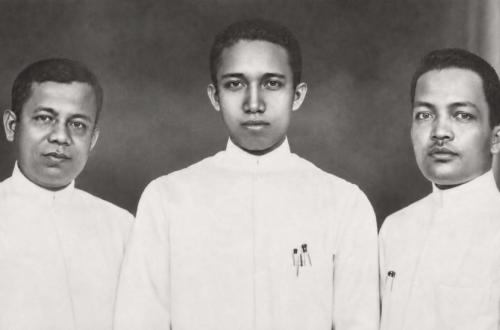
His name may not be found in the pages of national history, but his role has been immortalised in research by Taufik Abdullah (1971), Audrey Kahin (2008), Mestika Zed (2024), and Fikrul Hanif Sufyan (2021). In Padang at the beginning of the 20th century, one such important space was Pasar Gedang (Gadang). It was there that textiles, batik, iron goods, agricultural produce, capital, and ideas circulated almost simultaneously. Amidst the pulse of this market, a Minangkabau merchant named Abdullah emerged, later known as Inyiak Basa Bandaro or Angku Basa, who graced the world of the national movement.
His life journey is compelling not because he came from a noble family or pursued higher education—quite the opposite. Abdullah was a village boy from Maninjau who never sat in a formal school during his childhood. His early education took place in the surau, amidst customs, religion, village social life, and the economic life of the Lake Maninjau community. From this world, a boy named ‘Dulah’ slowly transformed into a merchant, a silat teacher, a mover of trade organisations, a supporter of education, an intermediary between the community and the colonial rulers, and eventually came into contact with the current of Indonesian nationalism.
Abdullah’s story is therefore not merely a biography of a trader. It illustrates how the market, surau, rantau (migration), education, and politics converged in the formation of an indigenous elite group at the end of the colonial period. Born in 1880, Abdullah hailed from the Malay Taban clan in Maninjau. His father was Ali from the Caniago clan, while his mother was named Cakap. His home village was called Teratak Jambu Putih, Jorong Bancah, Maninjau. Abdullah’s childhood was not depicted through the classroom, but through the surau and village life. From his youth, he was noted as standing out among his peers: brave, clever, persistent, responsible, and loyal. One small story in the book is crucial for reading his character. Together with his friends, Abdullah organised the collection of nutmegs that fell at night. The fruit was then sold at the market, while the proceeds were used for the group’s needs and their activities at the surau.
The Maninjau environment also educated him through the demands of custom on young men. To gain recognition, a young man had to be able to protect himself, his clan, and his nagari. Abdullah subsequently learned silat. Sources mention he delved into one form of silek kampuang in Maninjau, in addition to expanding his religious knowledge from local ulama. Interestingly, the martial arts knowledge in Abdullah’s narrative did not stand alone. It intertwined with religious education and character building. He associated with ulama, studied tauhid and sharia, while living in a world that placed courage and the ability to defend oneself as part of Minangkabau male honour. But becoming an adult male in Minangkabau also meant facing another demand: merantau (migrating).
In the old Minangkabau world, rantau was a path to obtain a livelihood as well as experience. Abdullah followed this path. He initially moved to Pesisir Selatan, following family and trader networks from the Lake Maninjau area. The journey was not always undertaken with comfortable means. The book describes Abdullah’s group walking through Bungus and Siguntur, climbing hills before descending to the Painan area. Rantau then took him to Pariaman, Tanah Datar, Solok, and Sawahlunto. In Sicincin, around the 1890s according to sources, Abdullah traded while also opening a silat training ground. From this environment emerged the title Bagindo Kinya, a name marking his reputation in the martial arts world.
Stories of his supernatural powers must certainly be read as part of the Minangkabau oral biographical tradition. However, behind the tales of silat lies something more historical: martial arts ability opened up Abdullah’s network of acquaintances. He associated not only with traders but also with penghulu (customary chiefs), ulama, parewa, and various layers of society. This social network became important capital when he later decided to settle in Padang. Around 1900, Abdullah married. Sources estimate his age at that time was nearing 30 years. After starting a family, he began to shift his life orientation to Padang. The name Inyiak Basa Bandaro thus became attached to his calling and memory after he left his bachelorhood behind. However, entering the colonial trading city without substantial capital was no easy matter. Inyiak Basa Bandaro did not have sufficient capital to open a shop immediately. He also did not yet have a name among the influential merchants and figures of Padang. The path he took was typical: using the skills he already possessed to build new networks. Inyiak Basa Bandaro opened a silat school. From this school came students, including prominent people. Little by little, Abdullah gained a reputation and trust. He accepted goods on consignment from shops in the Batang Arau and Jalan Muara areas. From that point, a crucial transformation in his life began: from a silat teacher to a merchant. And the most important stage for that transformation was called Pasar Gedang. At the beginning of the 20th century, Pasar Gedang was one of the key trading centres in Padang. In his manuscript, Samad (1987) writes that this market was primarily depicted as a centre for textiles and manufacturing, with extensive trade links to the Minangkabau interior. The market was divided into the Pasar Mudik and Pasar Hilir areas. Traders came from various regions: Mandailing, Tanah Datar, Agam, Sumpur, Solok, and Padang.
Source: jawawa.id (https://jawawa.id/newsitem/abdullah-basa-bandaro-a-merchant-driving-nationalism-at-a-crossroads-of-eras-1786514095)
Originally published by Republika (https://news.republika.co.id/berita/tjn526393/abdullah-basa-bandaro-saudagar-penggerak-nasionalisme-di-persimpangan-zaman), translated from Indonesian