
Abdul Mu'ti Clarifies Report of Primary School Receiving Smart Board Without Electricity
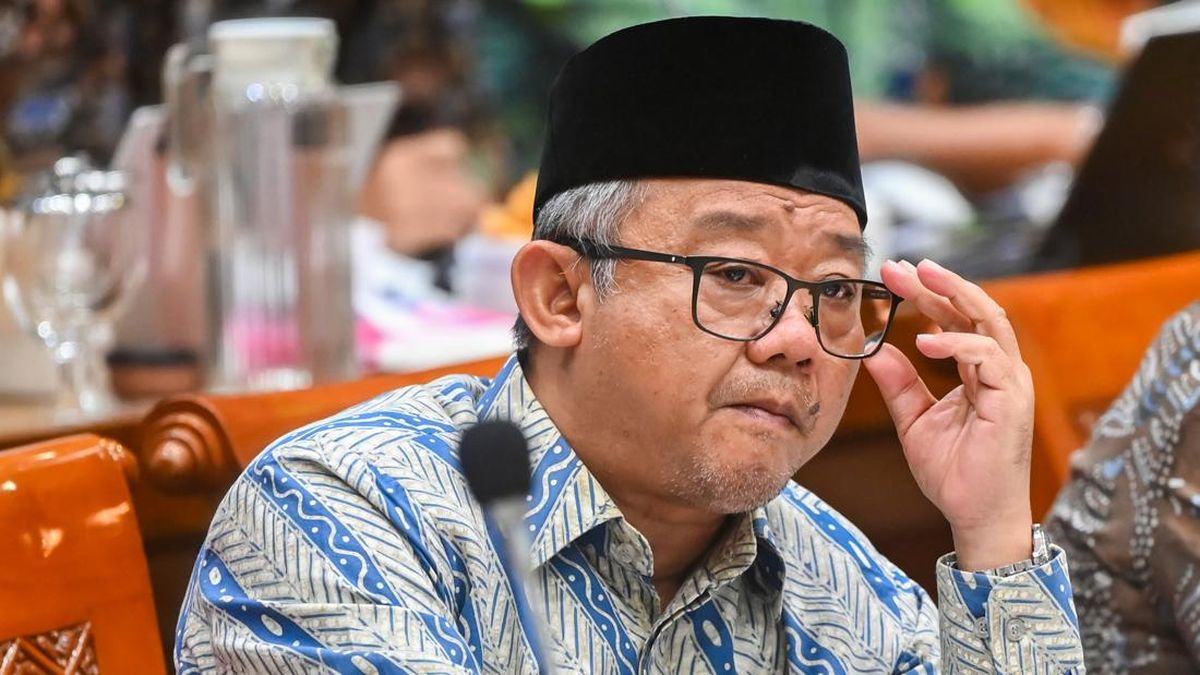
The Minister of Primary and Secondary Education, Abdul Mu’ti, has provided a clarification regarding a primary school in East Nusa Tenggara (NTT) that went viral after receiving Smart TV facilities despite lacking electricity.
Mu’ti stated that the video circulating on social media was inaccurate. In the video, the device suspected to be a Smart TV is actually an Interactive Flat Panel (IFP). According to the Minister, the specific IFP shown in the viral video is currently non-functional, but other classrooms in the school are operational, and their IFPs are working correctly.
“Regarding the viral news about a public primary school in NTT, what is circulating on social media is actually inaccurate. The school has several classrooms, and others are still functional. The one in the video is the one that is not working or is damaged, but the other classes are functional, and their IFPs are also working,” Mu-ti said during a Q&A session at a Commission X DPR RI working meeting on Monday (21/9).
He explained that the ministry has four core commitments regarding the school digitalisation programme: the provision of Interactive Flat Panels (IFP), teacher training, the provision of laptops, and the provision of network access.
“First is the provision of IFPs. Second is teacher training. Third is the provision of laptops. And fourth is network access. Half of that involves networks: both internet and electricity networks,” Mu’ti added.
For schools that lack internet access, Mu’ti explained that the ministry will reach 3T areas (underdeveloped, frontier, and outermost) through satellite-based internet services, such as Starlink. “For areas without internet, we are assisting through Starlink, which we have already implemented in 3T regions because it is very affordable,” he said.
Regarding schools without electricity, Mu’ti stated that two schemes will be implemented: first, through solar panels, and second, through the construction of new networks in collaboration with the State Electricity Company (PLN). “We have had discussions with PLN regarding the development of these networks, so God willing, we can implement this effectively in the future,” he noted.
During the meeting, Bonnie Triyana, a member of Commission X from the PDI-Perjuangan faction, raised concerns regarding SDN Mboeng in NTT, which received a smart board but lacks electricity in its school building. He warned that if the smart board cannot be used, it may eventually become damaged.
Previously, the Director of Primary Schools at the Ministry of Primary and Secondary Education, Moch. Salim Somad, stated that a revitalisation process for SDN Mboeng would take place this year. He added that the ministry has directly inspected the school’s condition to ensure necessary repairs are addressed.
Regarding the Smart TV assistance received by SDN Mboeng, Salim noted that according to the Basic Education Data (Dapodik), the school is recorded as having a power source. Based on that data, the school was selected as a recipient of television devices intended to support the learning process.
Source: jawawa.id (https://jawawa.id/newsitem/abdul-muti-clarifies-report-of-primary-school-receiving-smart-board-without-electricity-1790029245)
Originally published by CNN Indonesia (https://www.cnnindonesia.com/nasional/20260921224401-20-1406553/abdul-muti-klarifikasi-soal-sd-dapat-smart-board-tapi-tak-ada-listrik), translated from Indonesian