
Abdi Waluyo Hospital Has Relied on AI Technology Since 2004 to Improve Services
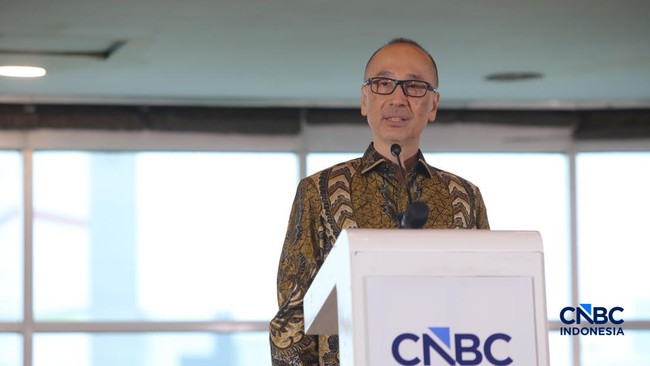
Jakarta, CNBC Indonesia — Sigit Pramono, head of the Obstetrics and Gynaecology Department at Abdi Waluyo Hospital, said technology plays a major role in healthcare. It is therefore unsurprising that the medical world increasingly relies on AI to obtain optimal diagnoses and treatment quickly.
“To ensure patient safety, evidence-based medicine and personalised patient care, Abdi Waluyo Hospital has always prioritised technological advances and innovation to achieve fast, accurate diagnoses. We combine AI and technology with continuous improvements in staff quality to deliver personalised patient care, which is the hospital’s main vision,” he said at the CNBC Indonesia Health Summit 2026, as quoted on Monday (12 October 2026).
To make medical services more precise, Abdi Waluyo has also adopted digital medical records integrated with CT scans and MRI, while continuing to develop its workforce.
He said the hospital began using AI in 2004. Abdi Waluyo was also the first hospital to use 64-slice CT, a cath lab and first cardiac imaging. The technology was continually updated, and in 2015 the hospital became the first to use 512-slice CT Revo and 1.5-tesla MRI.
“We continue to develop. In 2023, we became the first hospital to introduce HIVU technology for treating fibroids and adenomyosis without surgery. In 2024, we were the first to introduce RESUM technology for prostate treatment,” he said.
Medical services are consequently becoming less invasive, and in the future may even become non-invasive. HIVU treatment, in particular, requires no surgery or incision and uses only light sedation. The hospital says it is highly effective and safe, and delivers optimal treatment to established standards.
“Patients recover quickly. This shows that the technology is very much needed by the Indonesian public, as fibroids are becoming more common. A faster recovery also benefits patients economically,” he said.
Sigit had previously said that AI can be used both for diagnosis and for treatment, including in the operation of medical and surgical equipment. It can also improve precision and patient safety, reduce complications and shorten recovery time, allowing patients to be discharged sooner.
Sigit stressed that after an accurate diagnosis, Abdi Waluyo’s healthcare professionals continue to practise evidence-based medicine by selecting the best treatment for each patient’s condition. Patients differ from one another, including in their cultural backgrounds.
Source: jawawa.id (https://jawawa.id/newsitem/abdi-waluyo-hospital-has-relied-on-ai-technology-since-2004-to-improve-services-1791802249)
Originally published by CNBC Indonesia (https://www.cnbcindonesia.com/news/20261012164715-4-775449/perkuat-layanan-rs-abdi-waluyo-andalkan-teknologi-ai-sejak-2004), translated from Indonesian