
Abbasid Traces in Tapanuli: Discovery of Dirham Coins and Srivijaya's Correspondence with Caliph Muawiyah
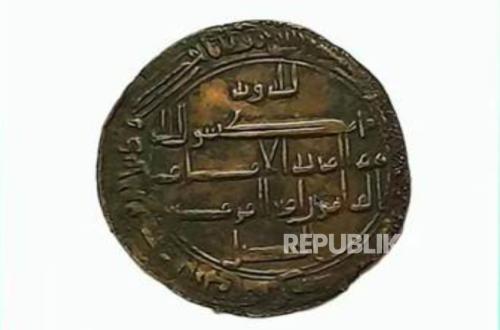
The history of Islam’s arrival in the archipelago has once again drawn significant attention following the discovery of new archaeological evidence on the coast of North Sumatra. These findings have the potential to reshape the mainstream narrative which has long held that Islam only entered and developed in the Indonesian archipelago in the 12th or 13th century AD.
Ery Soedewo and Nur Ahmad, in their scholarly article titled ‘Abbasid Coins in North Sumatra: Evidence of Interactions With Islamic Civilization in The 8th-9th Century AD’ published in Amerta (Journal of Archaeological Research and Development), reveal that a number of Western scholars such as Pijnapel, Snouck Hurgronje and J.P. Moquette put forward the theory that Islam in the archipelago originated from Gujarat and Malabar in India.
That view is based on the dating of ancient tombstones in Pasai and Gresik from the 15th century AD. However, the theory overlooks early records of direct interaction between the region of West Asia (the Middle East) and the archipelago.
The late Professor of Islamic History, Prof Azyumardi Azra, in his works examined ancient documents recording these early diplomatic relations. Among them are the Kitab al-Hayawan by al-Jahizh (783–869 AD) and al-’Iqd al-Farid by Ibn ’Abd al-Rabbih (860–940 AD).
These documents record correspondence between the Maharaja of Hind—who ruled a region rich in camphor and spices—and Caliph Mu’awiyah bin Abu Sufyan as well as Caliph ’Umar bin ’Abd al-’Aziz (717–720 AD). In the period spanning the 7th to 8th centuries AD, the only ruler in the archipelago who bore the title Maharaja was none other than the ruler of the Srivijaya Kingdom.
These diplomatic and trade relations during the Umayyad and Abbasid eras are reinforced by the account of the adventurer Buzurg ibn Shahriyar al-Ramhurmuzi in ’Ajaib al-Hind (circa 1000 AD), which reports the existence of a Muslim community within the realm of the Kingdom of Zabaj/Zabag (Srivijaya). The records of Yijing (I-Tsing) from the 7th century AD also note the presence of Ta-shi (Arab/Persian) merchant vessels plying the route from Guangzhou to Sumatra.
This archival and classical literary evidence has now found field verification through the discovery of Abbasid dirham coins and Middle Eastern artefacts at the Bongal site in Central Tapanuli. The discovery clarifies the historiographical map of Islam in the archipelago: that relations and cultural contact with the centre of Islamic civilisation in the Middle East had been closely established since the earliest centuries of the Hijri calendar.
Source: jawawa.id (https://jawawa.id/newsitem/abbasid-traces-in-tapanuli-discovery-of-dirham-coins-and-srivijayas-correspondence-with-caliph-muawiyah-1787021519)
Originally published by Republika (https://khazanah.republika.co.id/berita/tjxz9g483/jejak-abbasiyah-di-tapanuli-temuan-koin-dirham-dan-korespondensi-sriwijaya-dengan-khalifah-muawiyah), translated from Indonesian