
AAJI records life insurance claims reaching Rp75.57 trillion
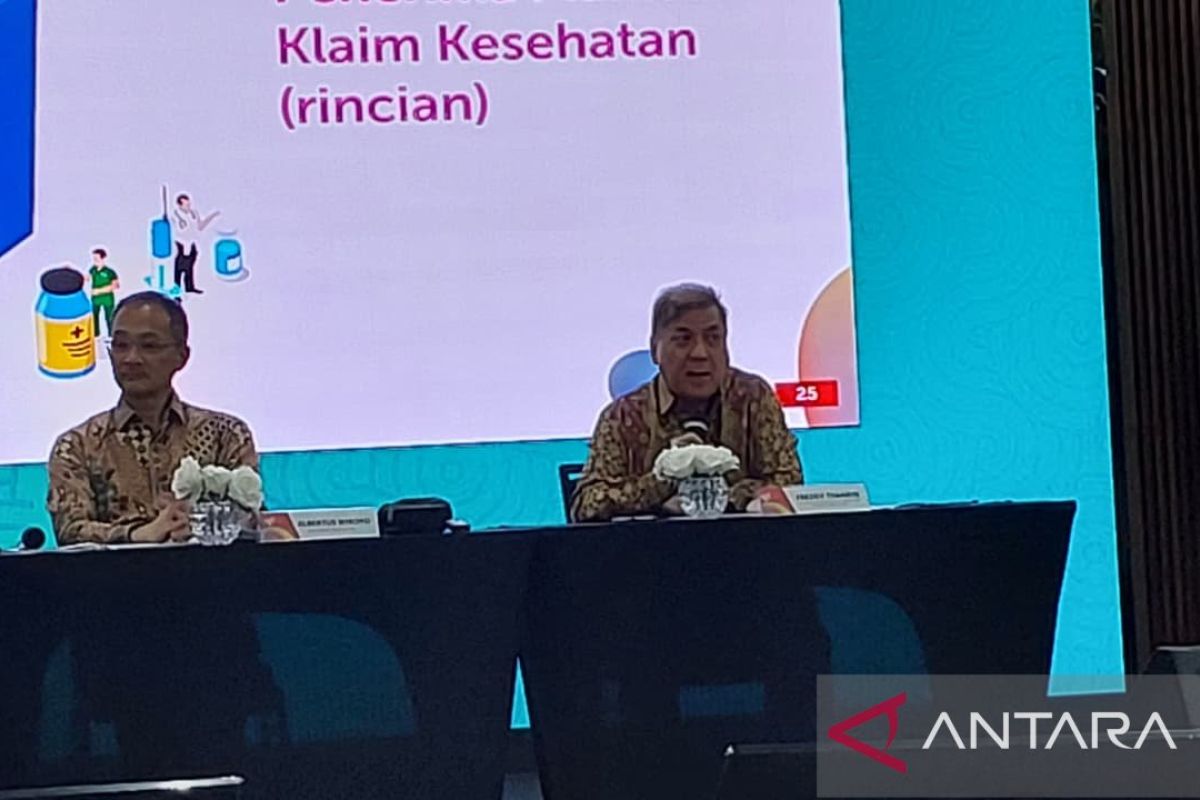
The Indonesian Life Insurance Association (AAJI) has recorded that the life insurance industry paid out claims and benefits totalling Rp75.57 trillion in the first half of 2026, representing a 4.3 per cent increase compared to the same period the previous year.
Freddy Thamrin, Head of Human Resources Development and Training at AAJI, stated that this figure was accompanied by an increase in beneficiaries, rising from approximately 4.82 million people in the first half of 2025 to 5.01 million people in the first half of 2026.
“This means that protection benefits have increased not only in terms of monetary payments but also in reaching more beneficiaries. This serves as evidence that the industry continues to fulfil its protective function amidst various economic and health dynamics,” Freddy said during a press conference regarding the Life Insurance Industry Performance Report for the first half of 2026 in Jakarta on Monday.
Freddy explained that of the total amount, claims were categorised by risk benefits, including death claims, which were recorded at Rp6.5 trillion, an increase of 25.5 per cent. Meanwhile, health claims reached Rp13.58 trillion, growing by 11.3 per cent.
The rise in death and health claims indicates that basic and health protection remains a vital need for the public. Specifically regarding health claims, the increase also showed a significant shift based on customer segments.
AAJI noted that health claims from the individual segment reached approximately Rp8.74 trillion, despite an 8.6 per cent decrease. Conversely, health claims in the group segment increased significantly by 83.1 per cent to Rp4.84 trillion.
“This development shows that the need for health protection through group schemes is growing and requires collective attention. The increase in claim values also needs to be read alongside the dynamics of healthcare service costs and service utilisation patterns,” he added.
In terms of the number of recipients, Freddy explained that the total number of health claim beneficiaries increased from approximately 2.13 million to 2.24 million people. In the group segment, the number of beneficiaries rose from approximately 1.95 million to 2.08 million people.
Meanwhile, based on payment components, end-of-contract benefits recorded the highest increase, at 84.3 per cent to Rp18.42 trillion. This increase indicates that more policies are reaching the end of their protection period and providing benefits in accordance with policy terms.
AAJI also noted that surrender payments, or the termination of policies, fell by 24.2 per cent to Rp26.08 trillion. This decrease indicates a reduction in payments resulting from policies being terminated before the end of their protection period.
On the other hand, partial withdrawals increased by 13.5 per cent to Rp8.48 trillion. This component reflects the partial withdrawal of policy value without terminating the policy, in accordance with the terms of the customers’ products.
Thus, these figures reflect not only an increase in payment values but also a growing number of people receiving protection benefits. This condition simultaneously demonstrates the importance of building a sustainable healthcare ecosystem so that the needs for protection and healthcare service financing can continue to be met.
AAJI assesses that the sustainability of the healthcare ecosystem requires collaboration from all parties, given that the increasing need for health protection is occurring alongside the dynamics of healthcare costs and service utilisation.