
AAAH urges use of AI to tackle shortage of health workers in Asia-Pacific
Jakarta (ANTARA) - The Asia Pacific Action Alliance on Human Resources for Health (AAAH) is calling for stronger health-worker competencies through digital transformation, including the use of artificial intelligence (AI), to address health workforce challenges in the Asia-Pacific region.
Anna Kurniati, AAAH chair for 2024–2026 and Secretary of the Directorate General of Pharmaceuticals and Medical Devices at the Ministry of Health, said health workforce challenges in the region were becoming increasingly complex. In addition to shortages and uneven distribution, countries face ageing populations, a rise in non-communicable diseases and health emergencies caused by climate change.
“Strengthening technology must go hand in hand with good governance and education capable of producing competent and adaptable health workers,” she said in a statement in Jakarta on Thursday.
These efforts were among the topics discussed at the 14th AAAH Conference, held in Bali from 2 to 5 November 2026. The forum brought together representatives from 22 member countries and international partners to discuss strengthening the health workforce in the Asia-Pacific region.
Anna said no country could solve these problems on its own. Regional collaboration was therefore needed to build health workers’ capacity through the exchange of experience and good practice among countries.
The conference was organised around three main pillars: Leadership and Governance, Transformative Education and Wellbeing, and Digital Transformation.
Under the digital transformation pillar, technology was seen as a way to strengthen data-driven decision-making and health information systems, as well as expand access to education and professional development for health workers.
“Technological developments, including digital technology, must be accessible to all health workers, including those in remote areas. Emerging technologies such as artificial intelligence must also be tools that can help health workers,” Anna said.
Ika Trisia, Director of Health Workforce Provision at the Ministry of Health, said Indonesia currently had 180,327 registered doctors, equivalent to 0.62 per 1,000 people.
National data show that 63 per cent of community health centres, or 6,520 of 10,337 facilities, have the nine types of health workers required under the standards. Meanwhile, 80.8 per cent of regional public hospitals, or 681 of 843 hospitals, have the seven required types of basic specialist doctors.
“These figures show the progress we have made, while also reminding us that much work remains. We still face challenges in meeting the need for specialist doctors and ensuring an even distribution of health workers, particularly in remote, border and island regions,” Ika said.
She stressed that the government’s focus was not only on increasing the number of health workers, but also on ensuring they had the right qualifications and were deployed in line with service standards and needs.
“Our challenge is not only to produce more health workers, but also to ensure that the right health workers are in the right places, with the right competencies,” she said.
To address these challenges, Indonesia is pursuing a comprehensive approach to health workforce transformation through four strategic measures.
First, it is strengthening evidence-based workforce planning using high-quality national data, so that availability is aligned with the future needs of the health system.
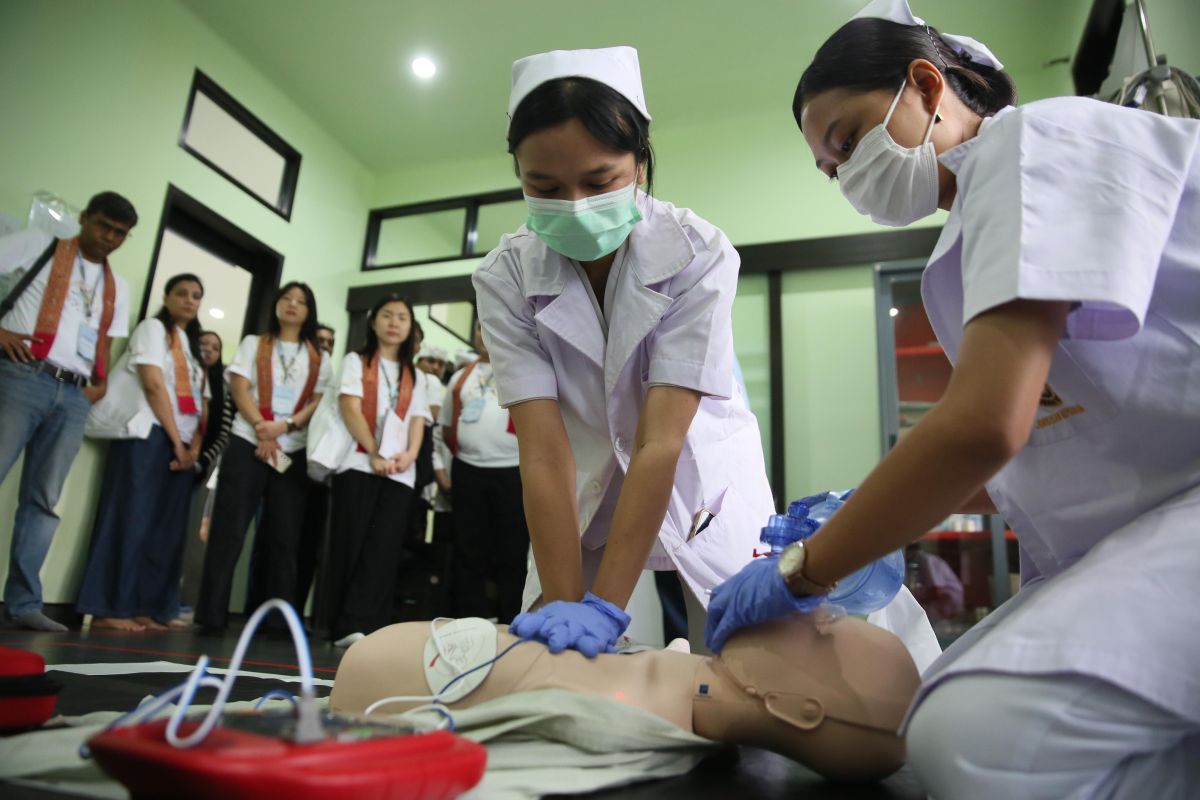
Second, it is strengthening education and training through competency-based curricula, clinical simulation learning and the development of professional skills suited to modern health services.
Third, it is accelerating the more even distribution of health workers in areas with limited access while addressing gaps in specialist medical services.
Fourth, it is promoting digital transformation through health workforce platforms and information systems to broaden opportunities for continuing professional development and improve health workers’ access to skills development.
Through these four measures, the government aims to ensure that health workforce planning focuses not only on numbers, but also on equitable distribution and matching competencies to the needs of public health services.
Source: jawawa.id (https://jawawa.id/newsitem/aaah-urges-use-of-ai-to-tackle-shortage-of-health-workers-in-asia-pacific-1793893946)
Originally published by Antara (Indonesian) (https://www.antaranews.com/berita/5835235/aaah-dorong-pemanfaatan-ai-untuk-atasi-kekurangan-nakes-asia-pasifik), translated from Indonesian