
A Wealth of Expectations from the Business World Rests on the Shoulders of Finance Minister Suahasil Nazara
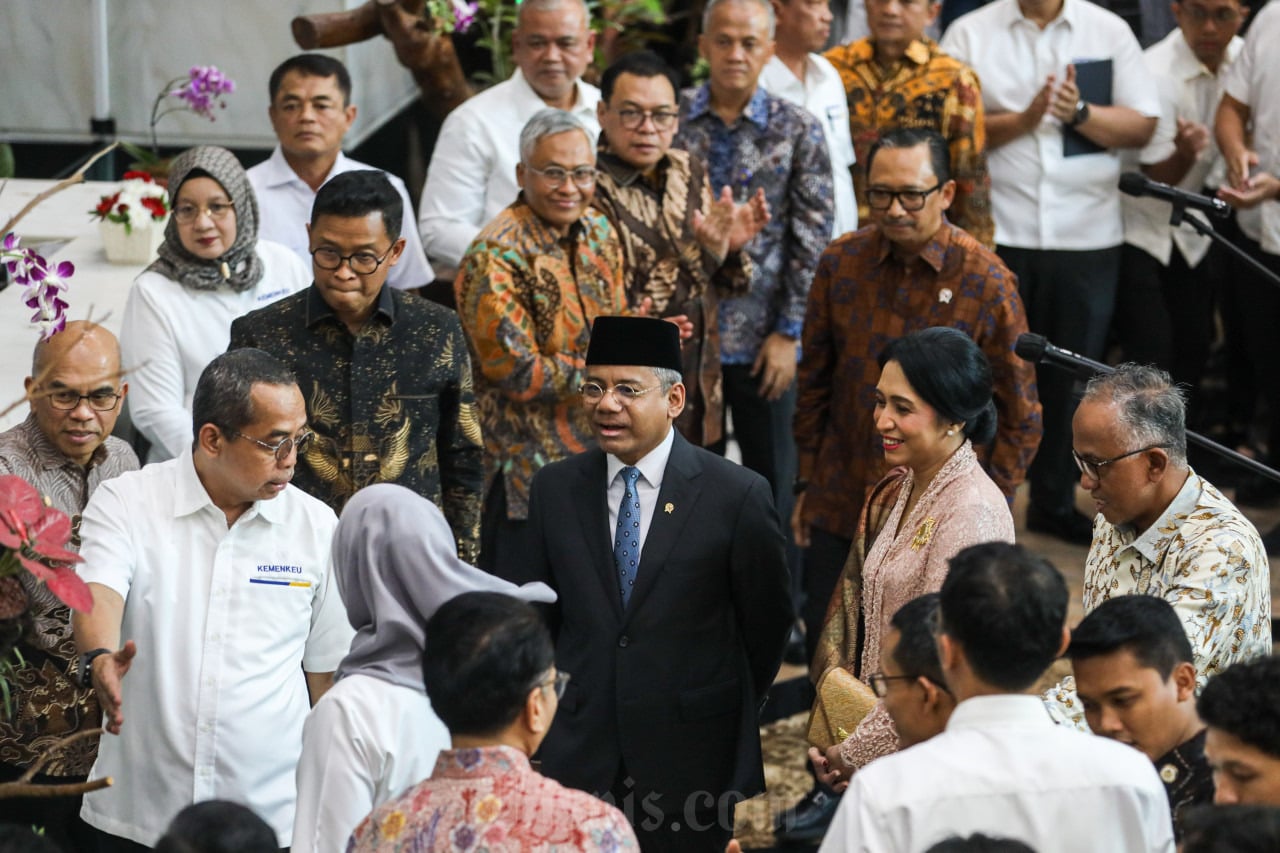
JAKARTA — The business community has expressed optimism over the appointment of Suahasil Nazara as Finance Minister, given his track record in safeguarding the credibility of the state budget (APBN). Business players have entrusted him with a range of messages, from dismantling investment obstacles to preventing fiscal policies that add to business costs.
The Indonesian Employers Association (Apindo), the Indonesian Chamber of Commerce and Industry (Kadin), and the Indonesian Young Entrepreneurs Association (HIPMI) have all placed high hopes on Suahasil.
Apindo Chairwoman Shinta Widjaja Kamdani asked Suahasil to continue efforts to untangle various investment bottlenecks. Apindo had previously worked with the Ministry of Finance to resolve issues related to licensing and regulation.
“Because one thing we are currently doing — Apindo is doing together with the Ministry of Finance — is addressing bottlenecking, particularly with the Minister himself. So we also conveyed to the Governor earlier that we see the reforms in Jakarta, especially regarding licensing, as extraordinary,” Shinta said in Jakarta on Monday (14/9/2026).
Shinta assessed that licensing reform under the DKI Jakarta Provincial Government has been running well. However, licensing and regulatory issues related to central government authority remain.
“Therefore, we hope that with the new Finance Minister, this bottlenecking issue can continue to be addressed, because there are many issues related to licensing and regulation that we still need to resolve together,” she said.
The business world has also asked that fiscal policy not become a source of additional costs while industry is contending with pressures on energy, raw materials, logistics, financing, competition from imported products, and global trade uncertainty. Deputy Chairman of Kadin Indonesia Erwin Aksa hopes Suahasil’s policies will become increasingly pro-growth, pro-investment and pro-industry while maintaining the health of the state budget.
“Because of that, fiscal policy must not end up adding to the cost of doing business,” Erwin told Bisnis on Monday (14/9/2026).
Erwin argued that increasing state revenue should be pursued through broadening the tax base, improving compliance, and enhancing tax administration. The government is expected to avoid policies that add burdens on industry or on taxpayers who have been compliant.
Kadin has also requested that fiscal incentives be increasingly directed at sectors with a direct impact on the economy. Priority could be given to industries that create jobs, boost exports, carry out downstream processing, strengthen domestic component levels and supply chains, and bring in new technology and investment.
“Fiscal incentives must become more targeted,” Erwin asserted.
Similar expectations came from Saleh Husin, Deputy Chairman of Kadin Indonesia for Industry. He believes Suahasil’s long experience at the Ministry of Finance is an asset for taking the fiscal and macroeconomic policies needed by the business world.
“I think in a global economic situation that remains turbulent and full of uncertainty, the appointment of Prof Suahasil as Finance Minister is a very appropriate step, considering his extensive track record at the Ministry of Finance, which will allow him to act very quickly and easily on the various fiscal and macroeconomic policies that the business world has been waiting for,” Saleh said in Jakarta on Monday (14/9/2026).
Suahasil also has experience as an academic at the Faculty of Economics and Business of the University of Indonesia and previously led the Fiscal Policy Agency. Saleh believes this background means Suahasil understands the need to keep industrial and commercial activities running.
According to him, the government needs the private sector as a strategic partner in driving the national economy. The Finance Minister’s role therefore does not stop at managing state finances, as fiscal policy must also support the turnover of economic activity.
“In any case, in driving the wheels of the Indonesian economy, the government certainly needs the private sector as a strategic partner. Therefore, beyond serving as the state treasurer managing the financial balance between the centre and the regions, what is equally important is ensuring that the wheels of the private sector’s economic turnover — in this case industry and trade — keep spinning rapidly and are never stalled,” Saleh said.
He hopes the direction of fiscal policy under Suahasil can provide greater room for economic growth and business activity.
“Hopefully Prof Suahasil will continue to prioritise pro-growth policies going forward,” he said.
The Indonesian Young Entrepreneurs Association (HIPMI) has also urged Suahasil to strengthen fiscal policy that is responsive to the needs of the real sector. Business expansion, investment and job creation are three agendas expected to receive support.
Anthony Leong, Secretary General of the HIPMI Central Board, believes Suahasil’s appointment provides policy continuity, as the new Finance Minister already understands the fiscal architecture, the state budget, and the challenges facing the national economy.
“What matters most is not only who holds the office, but the certainty of policy direction. We hope this transition runs smoothly and that fiscal policy remains credible and prudent, while at the same time becoming increasingly responsive to the needs of the real sector,” he told Bisnis on Monday (14/9/2026).
According to Anthony, young entrepreneurs need more room to grow. Fiscal stimulus is expected to create multiplier effects through increased consumption, investment, job creation, and expanded opportunities for MSMEs and local entrepreneurs to enter the supply chains of government projects and large corporations.
HIPMI has also highlighted the high cost of running a business. The organisation wants access to fiscal incentives broadened so that the benefits can be felt by entrepreneurs pursuing expansion.
“Fiscal incentives should not only be enjoyed by large investments, but must become more easily accessible to entrepreneurs who are expanding, investing in machinery and technology, increasing production capacity, and creating jobs,” he said.
Suahasil must answer this wealth of expectations from the business world amid the challenge of maintaining fiscal health. President Prabowo Subianto officially sworn in Suahasil as Finance Minister, replacing Purbaya Yudhi Sadewa, at the State Palace in Jakarta on Monday (14/9/2026).
The appointment was set out in Presidential Decree Number 97/P of 2026 concerning the Dismissal and Appointment of the Finance Minister of the Red and White Cabinet for the Remaining Term of the 2024–2029 Period.
Suahasil is not a newcomer to the Ministry of Finance. Before being sworn in as minister, he served as Deputy Finance Minister since 2019 and was involved in drafting the state budget and formulating fiscal policy.
Irman Faiz, Chief Economist at PT Bank Danamon Indonesia Tbk. (BDMN), believes this experience can reduce the risks that arise during a leadership transition.
“We see this reshuffle as a signal of fiscal continuity, not a change in Indonesia’s fiscal regime. Suahasil’s long experience at the Ministry of Finance should limit transition risks and provide institutional continuity in the management of the state budget,” Irman said in his assessment on Monday (14/9/2026).
Irman expects fiscal credibility and spending efficiency to remain key principles in managing the state budget. Suahasil’s challenge lies in balancing the government’s growth agenda with increasingly limited fiscal space.
The government is targeting economic growth of 6% with a fiscal deficit of 2.4% of gross domestic product in 2027. Danamon has a more conservative projection of 5.1% economic growth and a deficit of around 2.75% of GDP.
“This situation further underscores the need to maintain fiscal credibility while shifting spending with low multipliers towards more productive spending,” Irman said.
Harry Su, Managing Director of Research at Samuel Sekuritas Indonesia, believes Suahasil’s background as an internal Ministry of Finance official can help ease friction in fiscal management. This experience means Suahasil is relatively familiar with the ministry’s internal dynamics and the direction of existing policy.
“To help restore market confidence and stabilise macro-fiscal management, President Prabowo ultimately made the decision to appoint Suahasil Nazara, an experienced internal fiscal expert,” Harry said in his statement to the media on Monday (14/9/2026).
According to Harry, the change took place amid friction over state revenue targets, budget execution, and policy coordination. Debates over the transfer of state funds and Danantara’s contributions have also drawn attention.
The position of Finance Minister holds wide influence over market perception, as fiscal policy relates to liquidity, financial markets, exchange rates, and banking intermediation activity. Policy stability is one of the factors watched by investors and businesses.
Suahasil ultimately faces two simultaneous demands. The business world wants a more aggressive fiscal policy supporting investment and the real sector, while economists and markets await his consistency in safeguarding the credibility of the state budget.
Fiscal space limits how far the government can accommodate all these demands. Suahasil’s ability to maintain the balance between economic growth, the needs of the business world, state revenue, productive spending, and the health of the state budget will be the first test of his leadership at the Ministry of Finance.
Source: jawawa.id (https://jawawa.id/newsitem/a-wealth-of-expectations-from-the-business-world-rests-on-the-shoulders-of-finance-minister-suahasil-nazara-1789458636)
Originally published by ekonomi.bisnis.com (https://ekonomi.bisnis.com/read/20260915/9/2004204/segudang-harapan-dunia-usaha-di-pundak-menkeu-suahasil-nazara), translated from Indonesian