
A Vital Middle Eastern Water Source Is Disappearing—The Prophet Muhammad Had Warned of It
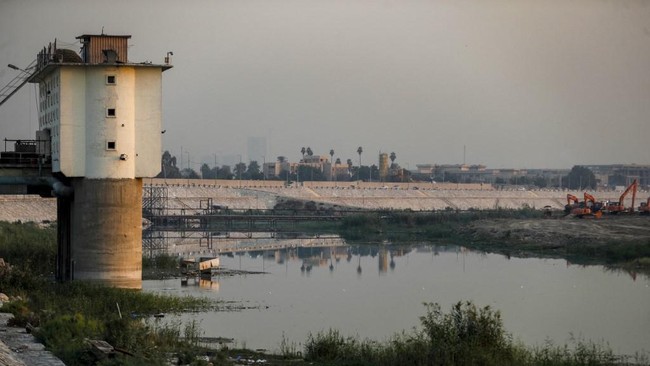
Jakarta, CNBC Indonesia — The Euphrates and Tigris rivers are expected to dry up by 2040. The rivers once flowed through an exceptionally fertile region.
The phenomenon, the article says, was warned of by the Prophet Muhammad long ago. The hadith reads: “The Hour will not come until the Euphrates dries up and reveals a mountain of gold, over which people will fight and kill one another” (Sahih Muslim, No. 2894).
The Euphrates flows through several countries, including Türkiye, Syria and Iraq, before emptying into the Persian Gulf. Together with the Tigris, it forms the largest river system in West Asia.
The Euphrates and the neighbouring Tigris run through a fertile area with ideal conditions for agriculture. They also supported the development of early urban civilisation in Mesopotamia.
Today, however, the river system is drying up rapidly. A 2021 report by the Ministry of Water Resources warned that the rivers could dry up by 2040.
The report attributed the decline to falling water levels and drought caused by climate change, IFL Science reported on Monday (19 October 2026).
Flows in the Euphrates–Tigris system have fallen by almost half in just a few decades. Satellite imagery reportedly showed that 144 cubic kilometres of fresh water disappeared between 2003 and 2013.
Around 60 million people depend on water from the Euphrates–Tigris system for their livelihoods, particularly in Türkiye and Iraq.
The Euphrates and Tigris are among the world’s oldest and most historically significant river systems, and formed the foundation for the development of human civilisation. Both rise in the Anatolian mountains of Türkiye and flow south-east, running roughly parallel through Türkiye, Syria and Iraq before joining and emptying into the Persian Gulf. The land between them is known as Mesopotamia, meaning “land between the rivers”.
The Euphrates is about 2,800 kilometres long, making it the longest river in West Asia. The Tigris is shorter, at around 1,900 kilometres, but has a stronger current. Together, they fertilised the region known as the Fertile Crescent, where people first developed agriculture, established permanent settlements and created irrigation systems around 10,000 years ago.
Historically, the valley was home to the Sumerian, Babylonian and Assyrian civilisations, which developed the first writing, systems of calculation, calendars and some of humanity’s earliest written law codes. The world’s first cities, including Uruk, Babylon and Nineveh, stood on the banks of these rivers. Both rivers are also mentioned in ancient texts and holy books in accounts of the beginnings of human civilisation.