
A State Primary School in Banyumas Welcomes Only Three New Students
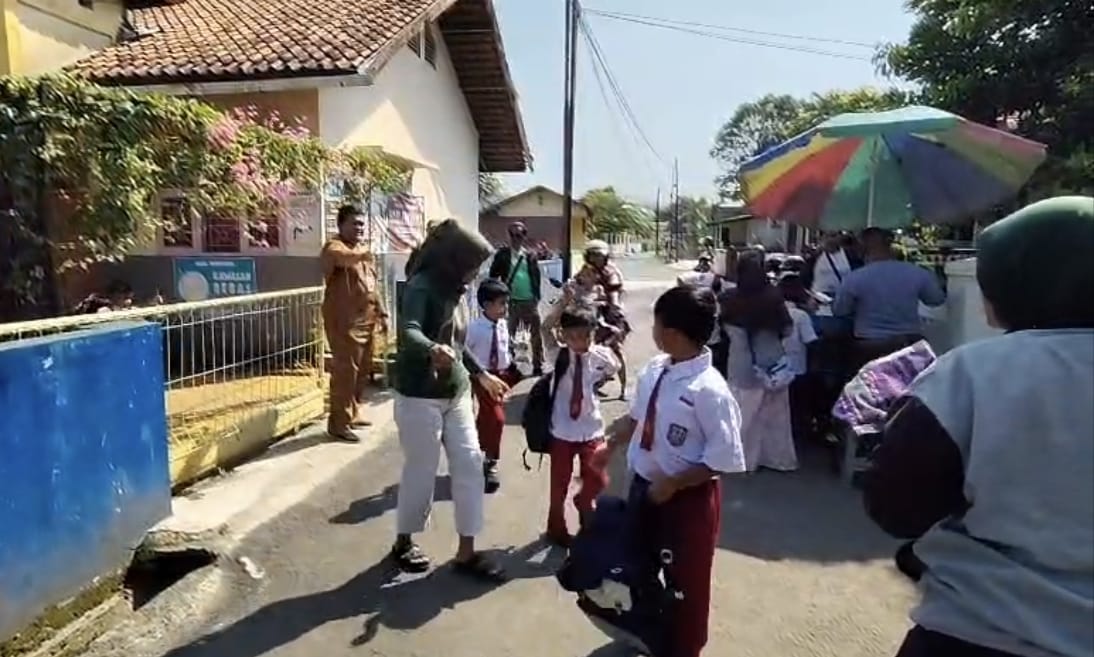
The atmosphere on the first day of the new academic year at SD Negeri 8 Kranji, in East Purwokerto District, Banyumas Regency, Central Java, appeared quiet on Monday (13/7). The school welcomed only three first-year pupils beginning their lessons.
One parent, Nur, remained resolute in enrolling her daughter, Nala, at SDN 8 Kranji. She said she had no issue with the very small number of new pupils and hoped her child could still study comfortably.
“Only three children enrolled here,” said Nur as she escorted her daughter to school.
The scarcity of new pupils has drawn attention given that SDN 8 Kranji actually has capacity for up to 28 pupils per class. By the close of the New Pupil Admissions Selection (SPMB), only three seats had been filled, leaving 25 vacant.
The head of SDN 8 Kranji, Nur Laila, said that at the start of the online SPMB process her school received only one applicant. That situation prompted the Banyumas Regency Government to permit schools short of pupils to reopen registration offline.
“At the start of online registration there was only one pupil enrolled. Then, following instructions from the Banyumas Regent, we opened offline registration to make it easier for the public to register,” she said.
After offline registration opened, the number of pupils rose to seven. However, only three were new first-year pupils, whilst the other four were transfer pupils entering second grade.
According to Nur Laila, the low number of applicants was influenced by several factors. Besides the SPMB online system being applied for the first time at primary school level, socialisation to the community was deemed suboptimal, leaving many parents unfamiliar with the registration mechanism.
In addition, the school’s location off the main road and the presence of several other primary schools around the Kranji area gave residents more choices.
Yet in the previous academic year, SDN 8 Kranji was still able to admit 22 new pupils when the entire admissions process was conducted offline. The school currently has a total of 75 pupils. “For a small school like ours, an offline system is more suitable. Going forward, we will be more active in using social media and conducting outreach in the local RT and RW neighbourhoods so people know this school exists,” said Nur.
Despite having only three new pupils, the school assured that the quality of education services would be no different.
“Whatever the number of pupils, we will provide the same teaching,” she insisted.
Meanwhile, the Secretary of the Banyumas Regency Education Office, Wahyu Adhi Fibrianto, said schools that had not met their quota were permitted to open offline registration after obtaining approval from the Banyumas Regent, in accordance with the regulations of the Minister of Primary and Secondary Education.
According to him, the policy was adopted so that prospective pupils registering through the offline route could still join the first day of school alongside other pupils.
He revealed that as of the initial close of SPMB, eight state junior high schools and 61 state primary schools in Banyumas had yet to meet their new pupil intake quotas.
“Today the real figures will only become clear because reports are still coming in. There are indeed several schools that received only three pupils, even fewer than five,” he said.
Wahyu stressed that a shortfall in pupil numbers would not hinder the learning process. As long as the number of pupils does not exceed the maximum limit per class, teaching and learning activities can proceed as usual.
He also urged residents who had not secured a school place to take advantage of seats still available at a number of state schools, including SDN 8 Kranji, which still has 25 empty seats for first-year pupils.