
A sincere intention from West Bandung: keeping watch over Hajj funds at one’s fingertips
Equipping prospective pilgrims is no longer enough if it focuses solely on ritual guidance and physical endurance; they also need to understand how their deposits are managed and what benefit returns they are entitled to during the waiting period.
Bandung (ANTARA) — Amid the heavy rain in early November 2026, Annisa, 37, opened a small brown-covered notebook on a simple wooden table at a food stall in Cihanjuang, West Bandung Regency.
The mother of two was working out how to divide the monthly household allowance from her husband into several categories, a routine she follows at the start of each month.
In recent months, as well as setting aside emergency savings, she has channelled what remains of the monthly food budget into a dedicated fund, separated as soon as she receives the household allowance.
That dedicated allocation is part of her effort to realise a major ambition: setting foot in the Holy Land. For Annisa, saving for the Hajj is not a race to be first, but a marathon of patience that requires a clear financial plan.
In managing a Muslim family’s cash flow, waiting to save whatever is left at the end of the month often comes to nothing, as discretionary spending can easily grow with one’s wants. Annisa has reversed that approach, prioritising her “share for the future” — as well as social contributions such as zakat, infak and sedekah, when possible — once daily needs and emergency savings have been met.
She carefully separates essential needs from passing wants, then gradually takes steps towards the Baitullah, saving Rp25 million as an initial deposit to secure a place on the Hajj waiting list.
As she diligently set aside rupiah from her family’s income, a question began to trouble Annisa — and perhaps many prospective pilgrims in the regions: where does the tens of millions of rupiah go during a waiting period that can last from a dozen to several decades?
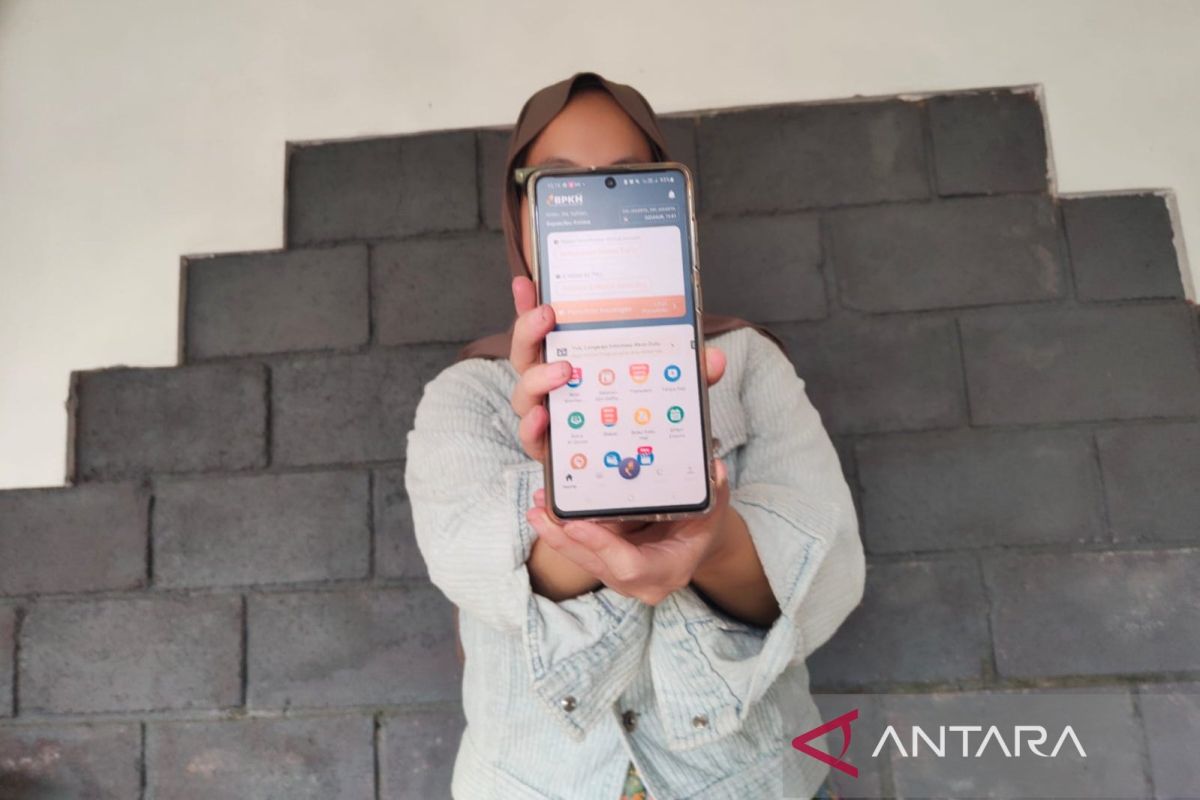
For Annisa, that anxiety has gradually given way to a sense of security since she registered her Hajj place through a bank authorised to receive Hajj Cost (BPIH) deposits and downloaded BPKH Apps to her smartphone. On the screen, she can now monitor her initial deposit and the growth of her returns, or Virtual Account Benefit Value (NMVA), in real time.
“I used to wonder what happened to the Hajj deposit money while it sat for so long, and whether it was safe. Now, whenever I open the app, the figures are clear, and I can also see the benefit value credited to my virtual account. I feel reassured because I have an answer: the money is not merely being held in trust; I can monitor it myself,” Annisa said.
The reassurance Annisa feels is the result of the digital systems developed by the Hajj Financial Management Agency (BPKH) to safeguard transparency in the management of public funds.
At the forefront of its direct engagement with the public, BPKH has introduced BPKH Apps as an information portal for around 5.7 million pilgrims across Indonesia who are waiting to perform the Hajj.
Through the app, prospective pilgrims no longer have to rely on hearsay or one-sided information.
The Hajj Funds Dashboard and Virtual Account Balance Check provide transparent summaries of funds, including details of the accumulated benefits received by pilgrims during the waiting period and regular reports on Hajj financial management.
In September 2026, BPKH expanded the app’s functions by launching five new features, including a Hajj e-wallet and domestic interbank transfers. The aim is to bring prospective pilgrims’ financial preparations into a single digital ecosystem, from the waiting period through to preparations for departure.
While BPKH Apps serves as the public-facing window for transparency, the integrated financial information system IKHSAN (Integrasi Keuangan Haji Sistem Aplikasi Nyata) operates behind the scenes.
The system is continually updated, including its accounting and internal reporting modules, which reached version 4.5.9 in October 2026. It forms the digital backbone for BPKH staff to record, reconcile and monitor every rupiah flowing into Hajj funds through regional Islamic banking networks.
The combination of IKHSAN for internal governance and BPKH Apps for public services ensures that the data displayed on Annisa’s phone in West Bandung is directly connected to the state’s financial accounting system, which is subject to rigorous audits.
BPKH Executive Board head Fadlul Imansyah said that digital access to information was fundamental to maintaining public trust during the long wait for Hajj departures.
“Openness of information is fundamental to maintaining the trust of the community,” Fadlul said in a statement on strengthening Hajj financial literacy and transparency through BPKH Apps.
He emphasised that all pilgrims’ funds are managed carefully, transparently and professionally in accordance with sharia principles and legislation, to ensure the sustainability of benefit returns for both pilgrims who are departing and those still waiting.
Hajj guides share a similar view. KH Manurul Hidayat, chairman of the national board of the Communication Forum for Hajj and Umrah Guidance Groups (DPP FK KBIHU), said the financial transparency provided by BPKH complemented pilgrims’ overall preparedness.
He said prospective pilgrims should no longer be equipped solely through ritual guidance and physical training; they also needed to understand how their deposits were managed and their entitlement to benefit returns during the waiting period.
Looking back at Indonesia’s history, the peace of mind Annisa now enjoys would have been unimaginable to prospective pilgrims from the archipelago in earlier times.
From the 17th century through the Dutch East Indies colonial era, pilgrims from the archipelago travelled for Hajj under a cloud of suspicion and strict restrictions imposed by the Dutch East India Company (VOC) and the colonial government. They viewed pilgrims returning from Makkah as a potential catalyst for popular resistance.
In the absence of official governance that protected pilgrims, people made month-long sea voyages on private merchant ships operated independently by figures such as Syekh Umar Bugis and Syekh Abdul Karim, without financial protection regulations.
Meanwhile, official private shipping agents in the colonial era, such as Herklots and Al Seggaf & Co, often exploited prospective pilgrims and ship workers through crippling charges.
After Indonesia gained independence, the state began taking responsibility for Hajj administration.
The government established the Indonesian Hajj Travel Improvement Committee (P3H) in 1950 and founded Bank Haji Indonesia (BHI) in 1952 to collect and manage funds for Hajj travel.
This was followed by the establishment of the Department of Hajj Affairs (DUHA) in the 1960s, which later evolved into the Directorate General of Hajj and Umrah at the Ministry of Religious Affairs.
That long journey was not without painful chapters. In the 1960s and 1970s, the government relied on PT Perusahaan Pelayaran Arafat to transport pilgrims by sea using a fleet financed by their deposits.
Rather than developing sustainably, the shipping company collapsed and went bankrupt, leaving a bitter lesson about the risks of combining operational responsibilities with the management of public funds.
In subsequent decades, Hajj fund governance, which had not yet been institutionally separated, was also shaken by several corruption cases involving state officials responsible for organising the pilgrimage.
That collective trauma eventually prompted reform through Law No. 34 of 2014 on Hajj Financial Management, reinforced by Government Regulation No. 5 of 2018 and Presidential Regulation No. 110 of 2017. The regulations separated financial management from the operational organisation of the Hajj pilgrimage.
BPKH was established as an independent agency accountable to the President through the Minister of Religious Affairs, overseen by Commission VIII of the House of Representatives (DPR RI), and audited by the Audit Board of Indonesia (BPK). It must adhere to six core principles: sharia compliance, prudence, benefit, non-profit, transparency and accountability.
By the end of 2026, the agency was reporting solid financial performance. According to BPKH figures as at 31 October 2026, total managed Hajj financial assets had grown 7.7 per cent year on year to Rp195.7 trillion, up significantly from Rp171.65 trillion at the end of 2024.
The growth in managed funds was supported by returns from sharia investments that exceeded a range of domestic financial industry benchmarks, including the deposit guarantee rate set by the Indonesia Deposit Insurance Corporation (LPS), Bank Indonesia’s policy rate, and the average returns of pension funds and BPJS Ketenagakerjaan.
BPKH said that, in accordance with Articles 10 and 16 of Law No. 34 of 2014, the proceeds from optimising the funds were not simply left idle but were redistributed to pilgrims through two main channels.
First, Virtual Account Benefit Value (NMVA) is credited directly to the virtual accounts of millions of pilgrims on the waiting list. Since BPKH began full operations, the accumulated benefit value distributed to pilgrims’ virtual accounts has exceeded Rp18.3 trillion.
In the first phase of 2026, BPKH distributed Rp2.06 trillion to 5.7 million pilgrims on the waiting list. The average virtual-account benefit balance had risen to around Rp3.4 million ahead of the 1448 H/2027 Hajj season.
Second, the returns provide a direct subsidy to reduce costs for pilgrims who are departing. Under the average Hajj Cost (BPIH) set for the 1448 H/2027 season at Rp98.47 million per pilgrim, BPKH’s benefit returns cover Rp43.82 million, or 44.50 per cent, amounting to Rp8.83 trillion in total. Pilgrims therefore need to pay Rp54.65 million in Hajj Travel Costs (Bipih), with a further reduction through government support of Rp3.20 million per pilgrim.
Beyond the figures in pilgrims’ accounts, the Hajj savings set aside by families such as Annisa’s also help drive development in Indonesia.
Through investments in Government Sharia Securities (SBSN), or state sukuk, including Green Sukuk and Orange Sukuk schemes, Hajj funds help finance university teaching buildings and research centres, including at Islamic State University Sunan Gunung Djati Bandung, as well as madrasahs, Hajj dormitories, Integrated Hajj and Umrah Service Centres (PLHUT), and the renovation of Religious Affairs Offices (KUA) and manasik training centres in various regions.
Returns from the Ummah Endowment Fund (DAU) are also channelled into public-benefit programmes in education, healthcare, places of worship, disaster response and the empowerment of hundreds of micro, small and medium-sized enterprises (MSMEs).
BPKH Executive Board member Indra Gunawan, speaking in Bandung, said the strength of Indonesia’s Hajj funds lay in the combination of substantial financial capital and assured demand from more than 221,000 Hajj pilgrims and millions of Umrah pilgrims each year.
By strategically consolidating managed funds into tangible assets across the Hajj ecosystem, from hotels and catering to transport in Saudi Arabia, Indonesia could move from being merely a consumer of services to owning productive assets. This could help curb long-term increases in Hajj costs while also saving foreign exchange.
That afternoon in Cihanjuang, after closing her household accounts notebook, Annisa glanced again at the virtual balance growth chart on her phone. The journey to the Holy Land would still take years, given the length of the waiting list.
But by managing her household cash flow with discipline and using a transparent digital monitoring system at her fingertips, the long wait no longer made her anxious. Instead, she felt confident that the community’s trust was being safeguarded as it moved towards a more dignified future.
Source: jawawa.id (https://jawawa.id/newsitem/a-sincere-intention-from-west-bandung-keeping-watch-over-hajj-funds-at-ones-fingertips-1795474334)
Originally published by Antara (Indonesian) (https://www.antaranews.com/berita/5873843/niat-suci-dari-bandung-barat-mengawal-dana-haji-lewat-genggaman), translated from Indonesian