
A Series of Obstacles for Indonesia in Pursuing 100 GW Solar Power Target
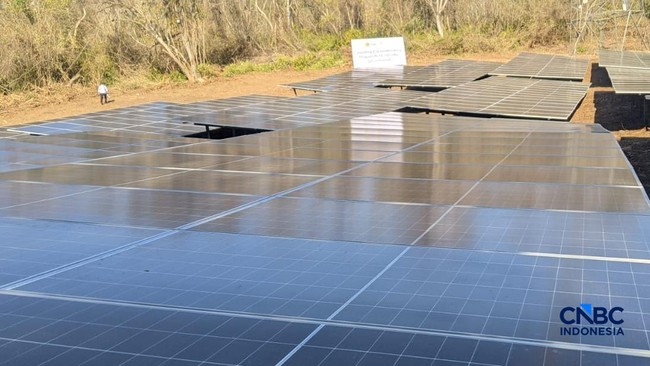
The Chairperson of the Indonesian Solar Energy Association (AESI), Mada Ayu Habsari, stated that the expansion of solar power plants (PLTS) in Indonesia is still facing various obstacles. These hurdles range from land availability and human resources to investment issues.
“When discussing the current bottlenecks for solar power, land readiness is the primary concern. This is the main issue because solar power currently requires large areas of land,” she said during the Energy Corner on Monday (1_4/9/2026).
However, regarding land issues, the association has alternatives, such as establishing plants on dams. Another alternative is utilising the rooftops of residential houses or factories.
“In Indonesia, there are still many empty rooftops that could be used as alternative sites for solar power utilisation. Whether it is house roofs or factory building roofs, essentially any available rooftop can be utilised,” Ayu added.
Another challenge involves licensing. Although solar power development is currently regulated, licensing requirements sometimes differ at the regional level.
“For example, licensing at the central level might state A, B, and C, but at the regional level, it might be A+, A-, and so on. There are additional requirements that sometimes lead to disagreements. We at AESI certainly hope that licensing requirements are standardised from the top down,” Ayu explained.
Project scale is another issue, where small-scale projects face difficulties in securing financing. Furthermore, Indonesia’s geography as an archipelago does not easily support small-scale project levels.
“How to make small-scale projects scalable is something we need to consider collectively,” she noted.
Another obstacle is the availability of human resources. She explained that the development of solar power in the Frontier, Outermost, and Remote (3T) regions will be hindered by a lack of skilled labour.
“The availability of labour is a challenge because, in our experience, when performing field installations, workers essentially have to relocate from Java to these 3T regions,” Ayu explained.
Small-scale investment is also a hurdle. In this regard, a funding platform is required to ensure that solar power development can be financed with lower risk levels.
Finally, there is the issue of grid availability, as solar power, being a renewable energy source, requires a strong supporting infrastructure.
“To address this, we at AESI encourage the use of battery energy storage systems to ensure that any intermittency that occurs can be covered by battery energy storage,” she concluded.
Source: jawawa.id (https://jawawa.id/newsitem/a-series-of-obstacles-for-indonesia-in-pursuing-100-gw-solar-power-target-1789394245)
Originally published by CNBC Indonesia (https://www.cnbcindonesia.com/news/20260914192731-4-767870/sederet-hambatan-ri-kejar-target-plts-100-gw), translated from Indonesian