
A series of legendary myths about Mount Semeru
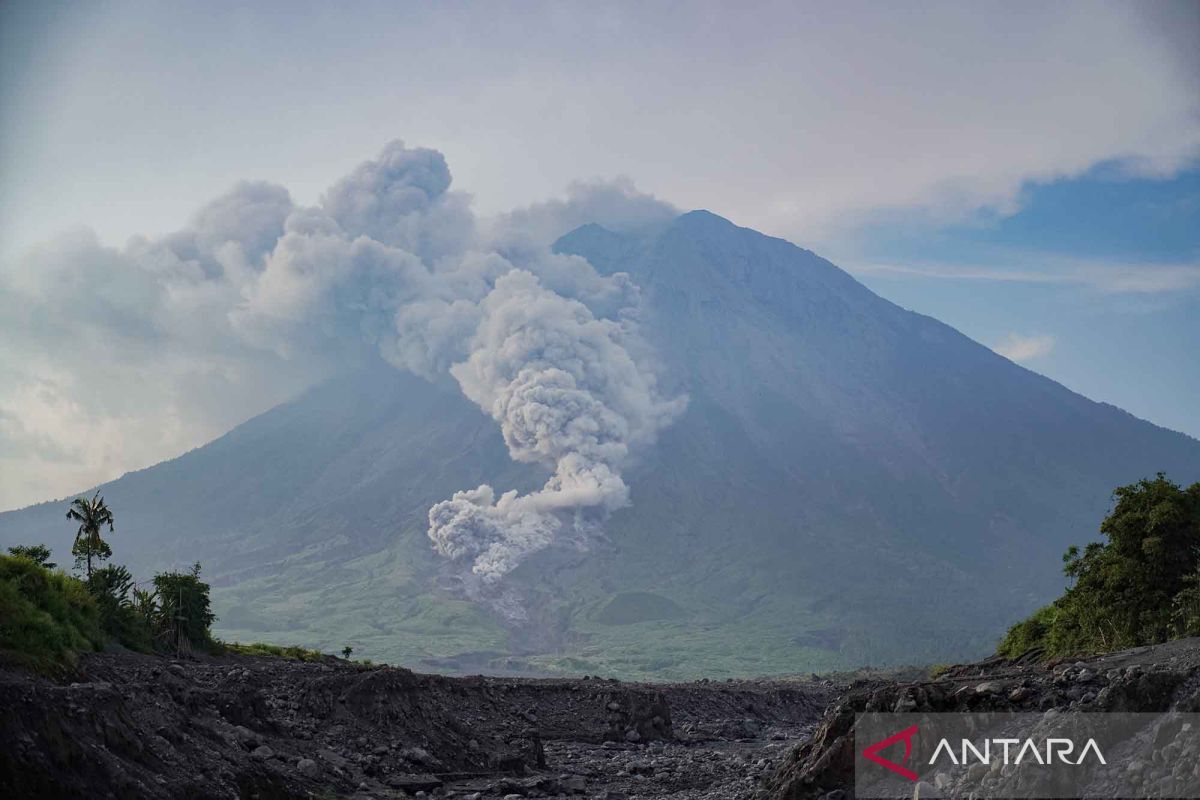
Jakarta (ANTARA) – Mount Semeru is known not only as the highest mountain on Java, but also for the many legends and mystical stories that have grown among local communities. The beauty of Ranu Kumbolo, the challenging hiking routes and the summit of Mahameru give the mountain a distinctive appeal for hikers.
Yet behind its natural beauty, Mount Semeru is closely associated with a number of myths passed down through generations. They range from beliefs that it is the abode of the gods and stories of a lake guardian, to tales of a steep trail supposedly connected with romance.
Some of these stories are still believed by local people and form part of local culture. Here are several legendary myths associated with Mount Semeru.
- The abode of Lord Shiva
One of the best-known legends says that Mount Semeru is the abode of Lord Shiva. This belief is linked to Hindu tradition, which regards mountains as sacred places and as a connection between the human world and the realm of the gods.
In ancient stories, Mount Semeru originated as Mount Mahameru in India, which the gods moved to Java. The legend is also one of the foundations for the belief that Semeru has great spiritual significance.
- Mount Semeru as Java’s ‘peg’
Another story associated with the Mahameru legend says that Java was once unstable and tossed about in the sea.
The gods then moved Mount Mahameru to Java to serve as an earthly peg and stop the island from moving. Mount Semeru is believed to be the main part of Mahameru that was eventually placed in eastern Java.
- The golden carp guarding Ranu Kumbolo
Ranu Kumbolo is one of the favourite spots for hikers exploring Mount Semeru. The lake is also the subject of a myth about golden carp believed to guard the area.
Some local people believe that the carp living in the lake are extraordinary creatures or manifestations of supernatural beings. Hikers are therefore said not to catch, fish for or disturb them.
There are also stories of a goddess believed to guard Ranu Kumbolo. According to local tales, she sometimes appears wearing a yellow kebaya. Her appearance is said to be heralded by mist or plumes of smoke around the lake, particularly during a full moon.
The stories mean that Ranu Kumbolo is known not only for its beauty, but also for the mystical tales surrounding it.
- Tanjakan Cinta and the promise of romantic fortune
Tanjakan Cinta is a well-known section of the Mount Semeru hiking route. In addition to requiring extra effort, the climb is associated with a myth about romance.
It is said that anyone who makes it up the slope without looking back while thinking of the person they love will have good fortune in their romantic relationship.
Although it is only a story passed down through generations, the myth has made Tanjakan Cinta a place that attracts hikers’ attention.
- Kelik, a supposedly haunted area
Kelik is an area along the Mount Semeru hiking route associated with mystical stories. It is known for a number of gravestones or markers commemorating hikers who died while climbing the mountain.
Some hikers say the area has a distinct atmosphere and believe it holds mystical energy. The graves and markers also serve as a reminder of the risks and dangers of hiking.
- The mysterious statues of Arcopodo
The name Arcopodo refers to the presence of two statues. The area features in Semeru hiking stories because a pair of statues from an earlier era are said to be there.
Their presence and appearance have prompted various mysterious tales. Some hikers have even linked them to royal soldiers assigned to guard the Mount Semeru area.
- Mbah Dipo’s advice about Semeru eruptions
Mbah Dipo is known in local stories as a guardian of Mount Semeru who was believed to be able to interpret signs of volcanic activity.
One of his best-known pieces of advice concerned which direction people should take to escape during an eruption. He is said to have warned people not to flee towards Gunung Sawur village when Semeru erupted.
The story is still often discussed, although proper evacuation measures should always follow the guidance of officials and official disaster information.
The many myths associated with Mount Semeru show the mountain’s close connection to local history, culture and beliefs. Although not all of them can be scientifically verified, the stories are part of a rich local tradition worth knowing about.
For hikers, learning about local legends can be a way to respect the culture of surrounding communities. Safety must nevertheless remain the priority: hikers should obey trekking rules, monitor volcanic activity and follow instructions from the management of Bromo Tengger Semeru National Park.
Source: jawawa.id (https://jawawa.id/newsitem/a-series-of-legendary-myths-about-mount-semeru-1794109925)
Originally published by Antara (Indonesian) (https://www.antaranews.com/berita/5839411/sederet-mitos-legendaris-yang-terdapat-di-gunung-semeru), translated from Indonesian