
A Rp160 Million Drone Destroyed by a Rp50 Billion Missile? Türkiye Has a Cheaper Answer
JAKARTA — Türkiye’s defence industry is offering a solution to one of the most costly problems in modern warfare. When an attack drone worth tens of thousands of US dollars can force a country to deploy an interceptor missile costing millions, Turkish defence company Aselsan has developed a system it says can destroy drones for less than US$10,000.
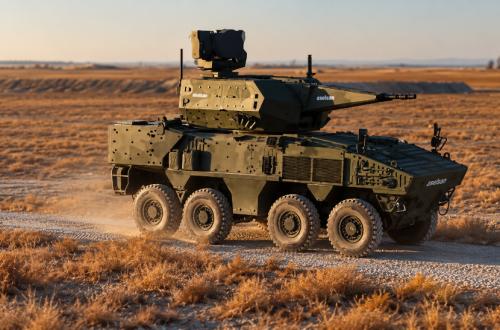
The weapon, called Korkut, is a very short-range air-defence system that uses an automatic cannon and smart ammunition to destroy airborne targets. Unlike missile-based air-defence systems, Korkut relies on projectiles that can be programmed to explode near their target.
Aselsan chief executive Ahmet Akyol said the system offers a more economical way to counter attack drones, including kamikaze uncrewed aircraft based on Iran’s Shahed design.
In an interview with the Financial Times published on Thursday (22 October 2026), Akyol said the cost of destroying a single drone with Korkut could be brought below US$10,000.
He said repeatedly using air-defence missiles against cheap drones was not economically sustainable.
The problem has become more urgent since the Russia-Ukraine war and various conflicts in the Middle East demonstrated the use of drones in large numbers. Attacks involving dozens or hundreds of uncrewed aircraft can deplete interceptor-missile stocks, even when most of the targets are destroyed.
Air-defence missiles such as the Patriot PAC-3 and IRIS-T interceptors can cost hundreds of thousands to millions of US dollars each, depending on their type and configuration. By contrast, Shahed-type attack drones are estimated to cost tens of thousands of dollars to produce.
That cost gap presents a dilemma for countries under attack. They must protect strategic infrastructure and the public while facing the risk of exhausting ammunition worth far more than the weapons used by their adversaries.
Korkut is one of Türkiye’s proposed answers to this problem.
35mm cannon with smart ammunition
According to Aselsan’s official specifications, the Korkut 150/35 uses two 35mm automatic cannons capable of firing ATOM 35 ABM ammunition.
The ammunition uses airburst technology: rounds are programmed to explode at a specific point in the air and scatter fragments to hit the target.
This technology allows the system to engage relatively small drones without relying on a direct hit from a single round on the aircraft’s body.
Aselsan says Korkut has a firing rate of up to 1,100 rounds per minute and an effective range of about four kilometres. The system is equipped with a fire-control radar and electro-optical sensors to help track targets.
A Korkut 150/35 unit consists of three armed vehicles and one command-and-control vehicle. The command vehicle is equipped with a three-dimensional search radar to detect and identify threats and help determine their priority.
The Financial Times reports that each 35mm smart round used by Korkut is estimated to cost about US$1,000.
That figure does not mean a single round will always be enough to destroy a drone. The amount of ammunition required can vary according to the target’s size, firing distance, flight speed and conditions on the battlefield.
Similarly, the claim that interception costs less than US$10,000 is an estimate from Aselsan’s chief executive, not a fixed cost applicable in every operational situation.
The costs of operating the vehicles and radar, maintenance and personnel must also be included to calculate the system’s total expenditure.
Nevertheless, using a cannon with smart ammunition offers an alternative to relying on expensive interceptor missiles.
Already in use in Ukraine
Another significant development is Korkut’s use in the Russia-Ukraine war.
Akyol said the air-defence system was operating in nine countries, including Ukraine and several countries in the Gulf region.
The Ukrainian Air Force confirmed to the Financial Times that one of its units had been equipped with Korkut. It did not disclose how many systems it had received.
Middle East Eye previously reported that Ukraine had obtained a small number of Korkut systems from Türkiye to strengthen its defences against Russian air attacks.
An unnamed Ukrainian official said the system had produced positive results against Russian attacks, although it still required some technical adjustments.
The official also said further purchases were possible if the price met Ukraine’s needs.
Akyol, meanwhile, claimed that Korkut had destroyed up to hundreds of drones during its use in various countries. The claim has not been accompanied by publicly available details on locations, target numbers or independently verified results.
Korkut’s use in Ukraine has attracted attention because the country faces large-scale Russian drone attacks.
Kyiv has used a range of weapons against aerial threats, from heavy machine guns mounted on vehicles to Germany’s Gepard anti-aircraft gun system.
Ukraine also faces a new challenge from jet-powered attack drones, which can fly much faster than earlier generations of Shahed drones.
According to the Financial Times, there is no public record confirming that Korkut has shot down a jet-powered drone.
Atınç Özkan, an analyst at defence industry firm Wood & Company, said Korkut was technically capable of engaging high-speed aerial targets. The system was designed to counter low-flying aircraft and cruise missiles travelling at high subsonic speeds of about 700 to 900 kilometres per hour.
However, a capability envisaged in the system’s technical design should be distinguished from operational success demonstrated on the battlefield.
Source: jawawa.id (https://jawawa.id/newsitem/a-rp160-million-drone-destroyed-by-a-rp50-billion-missile-turkiye-has-a-cheaper-answer-1792727485)
Originally published by Republika (https://news.republika.co.id/berita/tncaq5451/drone-rp160-juta-dihancurkan-rudal-rp50-miliar-turki-punya-jawaban-murah), translated from Indonesian