
A Robot Named Pepper Delivers Surprising Lessons on Human Behaviour
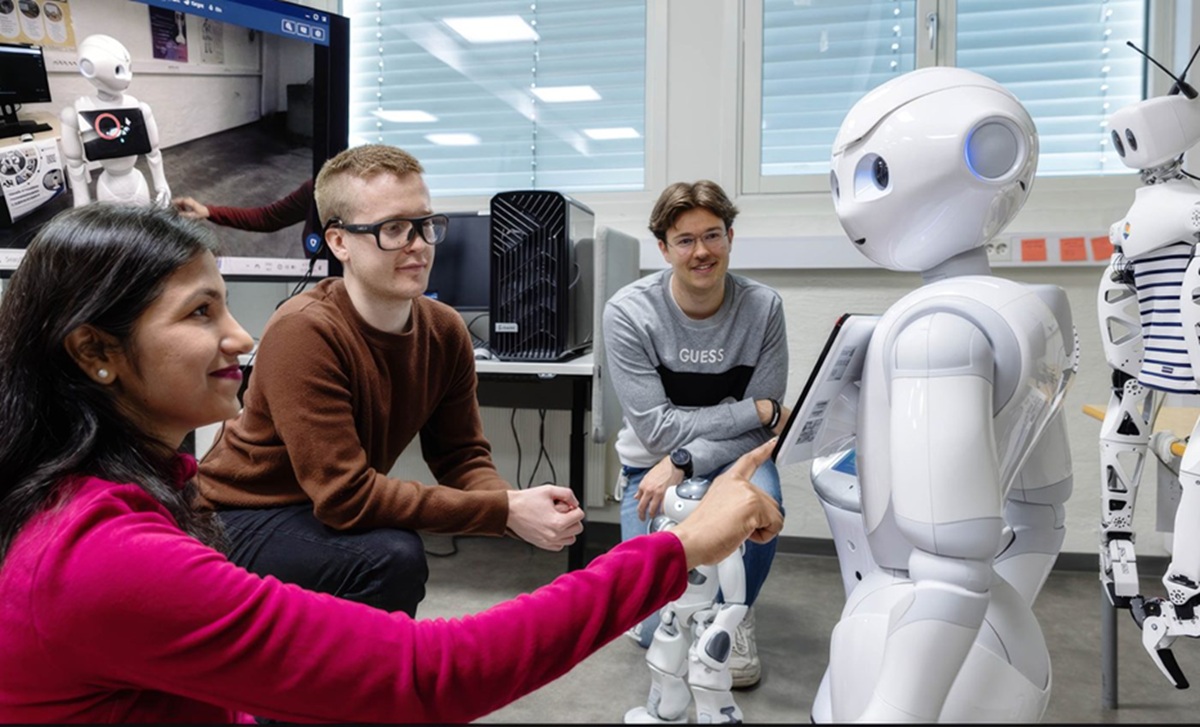
The presence of social robots in daily life is no longer merely a scientific fantasy. Amid the increasing use of artificial intelligence, scientists utilised a popular humanoid robot named Pepper to study how humans interact with technology. However, rather than merely testing the robot’s capabilities, the experiment unexpectedly revealed something surprising about human psychology and behaviour itself. In a recent study, experts designed a scenario in which Pepper was placed in a public environment to interact directly with people from various backgrounds. The robot was programmed to engage in light conversation, help provide directions, and even display simulated emotional expressions through body movements and changes in the colour of its eyes. The researchers initially predicted that humans would treat the robot merely as a rigid machine or electronic tool. However, field observations showed a very different phenomenon. Humans apparently have a strong natural tendency towards anthropomorphism, projecting human-like traits, emotions, and intentions onto inanimate objects. When Pepper showed signs of ‘confusion’ or made minor errors in responding, instead of feeling annoyed, most participants actually demonstrated empathy. They lowered their tone of voice, spoke more slowly, and even tried to comfort the robot as if they were speaking to a small child or someone who was learning. ‘We found that humans very quickly build social and emotional bonds with robots, even when they know perfectly well that the entity in front of them is just a collection of code and metal,’ revealed one of the lead scientists overseeing the study. Conversely, the study also captured the other side of human behaviour. When the robot was programmed to act too dominantly or rigidly, humans tended to show defensive responses and withdraw from the interaction. This indicates that the social rules, norms of politeness, and power dynamics that apply between humans are directly adopted by us when dealing with artificial intelligence. The findings from the experiment with Pepper provide crucial insights for the future of technology development. The scientists concluded that the biggest challenge in creating future robots is no longer simply enhancing their computational intelligence, but rather designing robots capable of understanding and adapting to the labyrinth of human emotions and social behaviour. Data from this study is expected to serve as an important guide so that the integration of robots in the service, health, and education sectors can proceed more harmoniously without eroding our humanity.