
A Record That Demands Quality
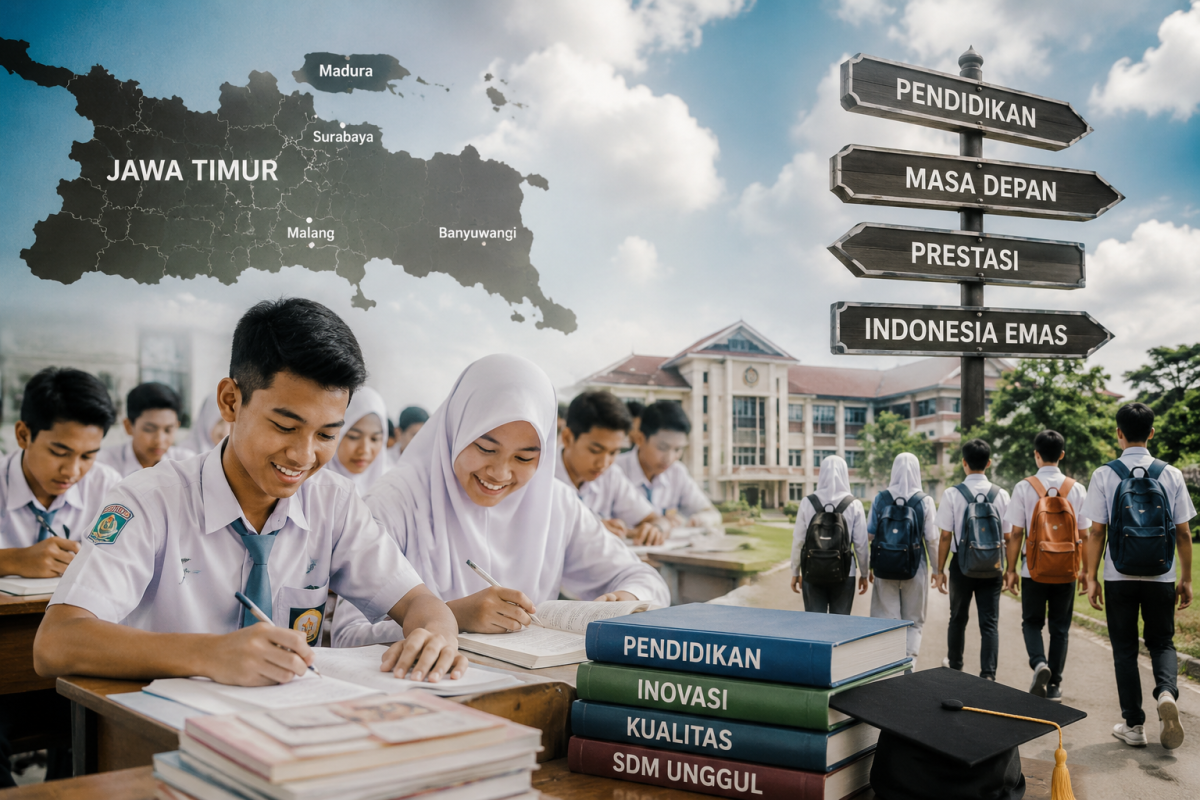
The measure of educational success is not merely the number of students admitted to universities, but how much they will ultimately be able to contribute to Indonesia.
Not all records are born from fanfare. Some grow slowly, over many years, through routines that often escape notice. In simple classrooms, at study desks that accompany long nights for students, and in the homes of families pinning their hopes on education, a great achievement is being built.
East Java has once again recorded itself as the province with the highest number of students admitted to state universities (PTN) through the National Selection Based on Achievement (SNBP) and the National Selection Based on Test (SNBT) pathways in 2026. Furthermore, this achievement extends a record that has endured for seven consecutive years.
A total of 29,046 East Java students were admitted through the SNBP pathway. Meanwhile, through the SNBT pathway, the number of successful candidates reached 24,213, representing an increase of almost 20 per cent compared to the previous year.
These figures are more than just educational statistics. Behind them lie stories of human resource quality, the equalisation of learning opportunities, and the direction of long-term regional development.
However, the more important question is not why East Java is able to maintain this record. The question worth asking is whether this achievement is sufficient to meet future challenges.
Beyond the numbers
East Java’s superiority in state university admissions is not a sudden phenomenon. As the second most populous province in Indonesia, East Java possesses a large student base. Mathematically, the probability of producing a high number of new university students is indeed greater than in many other regions.
However, demographic factors alone are insufficient to explain the consistency over seven consecutive years. What is interesting lies in the region’s ability to keep the educational ecosystem moving. This includes public schools, madrasahs, private schools, tutoring centres, family support, and a social culture that still views higher education as an essential ladder for social mobility.
In many parts of East Java, entering a state university is still viewed as a symbol of success as well as a way to improve a family’s economic condition. This spirit creates a collective energy that is not always visible in statistical reports.
East Java’s achievement also demonstrates that competition for university admission is no longer dominated solely by major cities. Data shows that all branches of the education office experienced an increase in the number of students passing the SNBT. In fact, several areas previously considered peripheral have shown significant growth.
This phenomenon serves as a signal that access to information, learning assistance, and readiness for national selection is beginning to spread more widely. In the context of human development, this is good news. The quality of education is measured not only by how many excellent students emerge from large cities, but by how far these opportunities can reach previously disadvantaged areas.