
A Rare History: BI Has Raised Rates by 50 Basis Points Only Five Times — When Will It Happen?
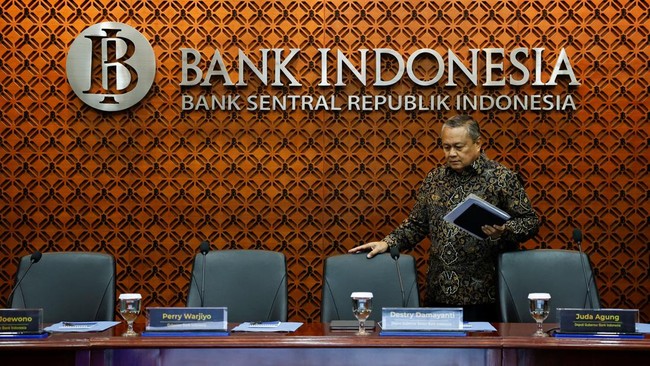
Jakarta, CNBC Indonesia — Bank Indonesia (BI) stunned markets by raising the policy rate, the BI Rate, by 50 basis points to 5.25%. The 50 bps increase is unusual. At today’s Board of Governors Meeting (RDG), on Wednesday, 20 May 2026, BI also lifted the Deposit Facility rate by 50 bps to 4.25% and the Lending Facility rate to 6.25%, ending the BI Rate at 4.75% after eight months of hold. Governor Perry Warjiyo said the move was taken to strengthen rupiah stability amid worsening global conditions due to the Middle East conflict and to safeguard the inflation target for 2026–2027 within the 2.5% ± 1 percentage point band. The rate hike aligns with CNBC Indonesia’s poll results. Of 15 participating institutions, nine expected BI Rate to rise by 25 basis points to 5.00%, but the 50 bps increase diverged from the poll. Hosianna Situmorang, an economist at Danamon Bank, said the rate rise was indeed higher than market expectations. “This step reiterates BI’s focus on stabilising the exchange rate amid US–Iran tensions, energy price pressures, and capital outflows from emerging markets,” he told CNBC Indonesia. He added that the rate rise is an attempt for BI to stay a step ahead, particularly since a 5.7% depreciation since the start of the year could spur imported inflation. When Could BI Raise Rates by 50 bps? The 50 bp move is rare in BI’s history. Since the policy rate was introduced in 2005, BI has done it only in four periods. A 50 bps hike is usually an anticipation by BI to pre-empt a surge in inflation from fuel-price policies. There have been two periods when such an increase occurred outside the inflation-surge pre-emption, namely in 2018 and this year. 1. September–November 2025: BI raised the policy rate by 50 bps in September, October and November 2022. This aggressive step followed a government fuel-price increase of about 31% and higher U.S. rate expectations. At that time, BI was seen as late to tighten. BI first raised rates in August 2022 by 25 bps, while the U.S. Federal Reserve had already moved in March. Several other central banks had already begun tightening earlier than the Fed. The Bank of Korea (BoK), for example, had raised rates since August 2021, and by October had lifted them eight times by a total of 250 basis points to 3%. 2. June 2018: BI lifted rates by 50 bps in June 2018 as a front-loading pre-emptive move to safeguard domestic financial-market competitiveness amid a global tightening cycle. 3. July and August 2013: BI aggressively lifted rates in July and August 2013 after the government raised fuel prices by around 30% in June. 4. July–December 2005: BI aggressively raised rates from July to December 2005, from 8.5% to 12.75% (a rise of 425 bps). Throughout 2005, BI pursued an aggressive tightening path with rate increases of 25 bps in August, 125 bps in September, 100 bps in October, 125 bps in November, and 50 bps in December. It is worth noting that July 2005 marked BI’s introduction of the policy rate. 5. May 2006: BI lifted rates as the rupiah languished through May, briefly hitting a historic low near Rp 17,700 per US dollar.