
A Police Force the Public Can Trust
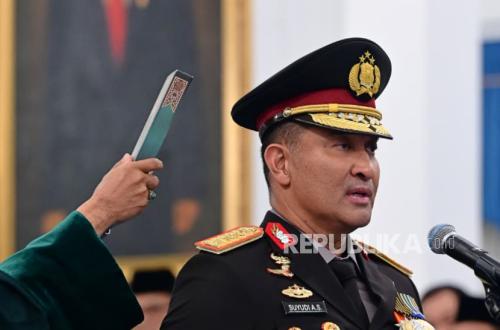
Every change at the top of the National Police brings new hope. This time, however, that hope comes with considerable demands: the public wants to see a police force that genuinely changes, not one that merely replaces its leader, slogans or officials.
People long for police who are present when needed, serve everyone without discrimination, protect the public sincerely and enforce the law without bowing to money or power.
It is in this context that the arrival of Police General Suyudi Ario Seto as the new National Police Chief deserves attention.
His vision, “Police Together with the Community”, conveys an important message: the police must not be distant from the people they serve. The police are not merely holders of state authority; their presence and powers must deliver tangible benefits to society.
These expectations have not arisen in a vacuum. In daily life, the public’s relationship with the police is often shaped by concrete experiences: how reports are received, how officers treat members of the public, whether cases are handled professionally, and whether people can obtain justice without money, connections or the courage to make their case go viral. That is where trust is truly tested.
Towards a change in culture
Suyudi has begun his leadership with a series of consolidation and organisational restructuring measures. Before his inauguration, he also outlined six transformation priorities covering institutional strengthening, improvements to human resources and meritocracy, better public services, quality law enforcement, supervision, and budget accountability.
These steps signal that change cannot be achieved through speeches or appeals alone. An organisation as large as the National Police requires systemic reform, disciplined implementation and measurable outcomes that can be evaluated.
One point, however, must not be forgotten: replacing officials does not automatically change an organisation’s culture. Transfers can refresh the leadership line-up, but they do not necessarily alter how officers use their authority. Structures can be reorganised, yet old habits may persist unless systems of reward, promotion, oversight and discipline are also changed.
Suyudi’s success should therefore not be measured by how quickly he reshuffles the ranks, but by how clearly the public feels the difference. Are people’s reports handled more quickly? Is it becoming harder to demand illicit payments or abuse authority? Do officers with integrity have better opportunities to advance? Are violations dealt with fairly, including when they involve people with rank and influence?
These are the questions that will determine whether the National Police is truly being transformed or merely given a new face.
Leading by example beyond the chain of command
One notable event at the start of Suyudi’s leadership came when he delivered the Friday sermon at Al-Ikhlas Mosque at National Police Headquarters on 9 October 2026. He spoke about the importance of humility, avoiding arrogance, and viewing office and rank as a trust for which one must be held accountable.
For the author, the moment is noteworthy not simply because a National Police Chief stood at the Friday pulpit. More important is the leadership message he conveyed: a leader must do more than issue orders; they must also instil the values that underpin every action taken by their subordinates.
The National Police is a large organisation with more than 400,000 personnel. Mobilising an institution of this size cannot rely solely on instructions from the top. It requires a working culture embedded at every level, from National Police Headquarters to regional, resort and sector police commands. That culture must be reflected in leaders’ decisions, officers’ conduct in the field and the institution’s treatment of the public.
The Friday sermon could be one way of communicating moral guidance to personnel, particularly on responsibility and self-restraint. But moral messages have institutional value only when translated into behaviour and policy. Humility is not enough to proclaim; it must be evident when officers deal with ordinary people. Trustworthiness cannot remain a subject of sermons; it must be demonstrated when officers refuse bribes, work honestly and reject abuses of authority.
This is the difference between leadership that relies solely on command and leadership that seeks to build awareness.