
A New Test for Malaysia's Non-Aligned Stance Between the US and China
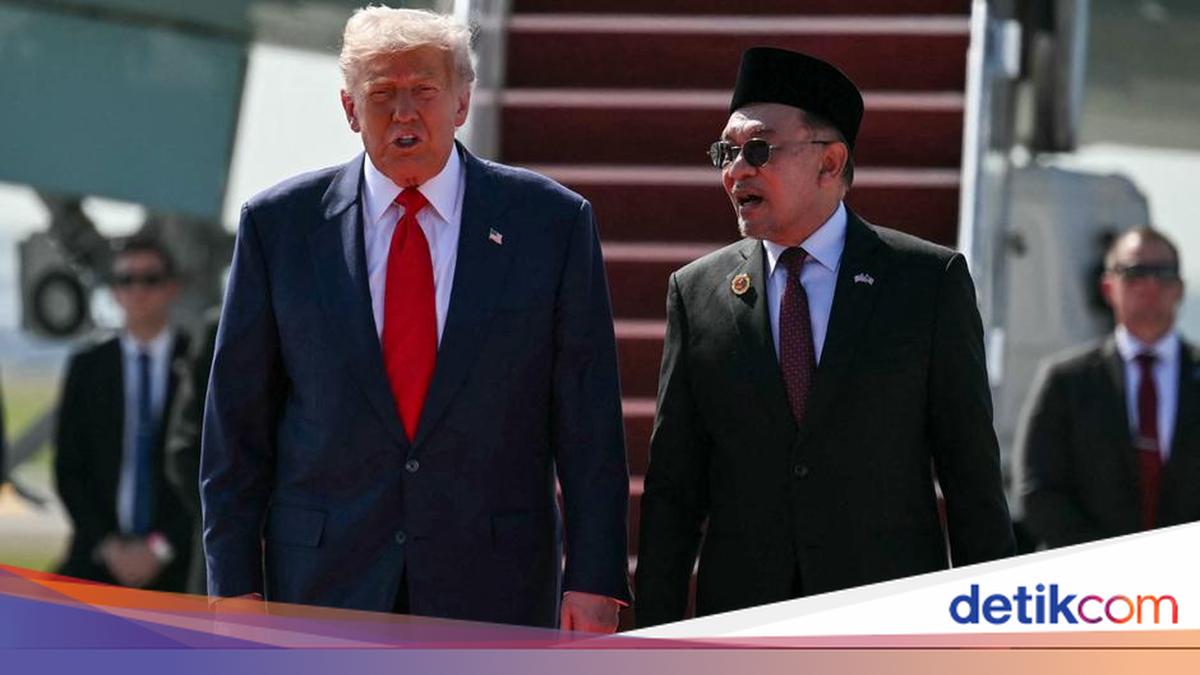
Malaysian Prime Minister Anwar Ibrahim has spent much of his tenure asserting that Kuala Lumpur cannot be forced to choose between the United States and China. However, two of his statements last month have raised questions regarding how long this position can be maintained, amidst the expanding rivalry between the two superpowers in Southeast Asia.
“I see Taiwan as part of China, period,” Anwar stated in an interview with Al Jazeera aired on 1s August. Beijing considers Taiwan, which has a democratic government, to be part of its territory. Although Chinese leaders have stated they prioritise “peaceful reunification,” they have never ruled out the possibility of using military force to bring the island under Beijing’s control.
More controversially, Anwar appeared to accept Beijing’s argument that the use of military force could be justified. “If one province decides to secede, would we use force? I think so, to protect the integrity and unity of the nation,” he said.
Regional Concerns
These statements were welcomed enthusiastically by Beijing. Conversely, Taiwan’s Ministry of Foreign Affairs accused Anwar of indirectly legitimising the use of military force against the island. Taiwan also warned that “unilateral support for China could reduce the confidence of Taiwanese businesses to invest in Malaysia,” including in the semiconductor sector, which is of strategic importance to the country.
Two days after his statements regarding Taiwan were aired, Anwar stated that Malaysia needs to strengthen its defences in Sabah. He linked this to the expansion of US-supported military facilities on Balabac Island, Philippines. The Philippines is currently upgrading its military facilities in Balabac, which is approximately 50 kilometres from Malaysia’s Banggi and Balambangan Islands.
Balabac is one of four additional locations included in the 2023 Enhanced Defense Cooperation Agreement (EDCA). This agreement allows US forces to access specific military facilities in the Philippines, build infrastructure, and station military equipment at these sites.
Taken as a whole, Anwar’s statements have raised concerns that Malaysia is moving closer to China, while simultaneously becoming more wary of the US military presence in the region.
Is Malaysia Changing Course?
Malaysia is also one of the most vocal countries in the region criticising Israel’s actions in Gaza. Anwar has repeatedly accused the United States and European nations of hypocrisy and applying double standards by championing democracy and international law, yet failing to hold Israel adequately accountable.
However, observers warn that Anwar’s rhetoric should not be immediately interpreted as evidence of a strategic shift in the country’s foreign policy. “Malaysia still maintains very good relations with the United States and other Western nations,” Ngeow Chow Bing, Director of the China Studies Institute at Universiti Malaya, told DW.
According to Bing, while these relations may not always be as visible as Anwar’s recent, warmer public rhetoric towards Beijing, the foundation of Malaysia’s relationship with Western nations remains strong. “It is true that the space for Malaysia to maintain its traditional strategy as a balancer between China and the US is narrowing compared to before. However, that space still exists, and Malaysia will continue to utilise it,” Bing added.
Change in Rhetoric, Not Strategy
Anwar’s statements regarding the development of military facilities in the Philippines are more closely related to the long-standing territorial dispute between Kuala Lumpur and Manila, said Chee Meng Tan, assistant professor at the University of Nottingham Malaysia, to DW. The Philippines still claims territory in Sabah, which became part of Malaysia when the federation was formed in 1963. Malaysia rejects this claim and considers its sovereignty over Sabah non-negotiable.
Tensions periodically resurface. In August, Kuala Lumpur lodged a new objection with the United Nations regarding the Philippines’ submission concerning its continental shelf. “When a neighbouring country that claims part of your territory is building a military base just 20 minutes from your coast, any government would react,” said Tan.
Anwar called for the strengthening of Malaysia’s own defences, rather than seeking assistance from China, “and he is also attempting to assert that relations with Manila remain good,” Tan added.
Anwar also sought to ease tensions regarding Taiwan following his previous remarks. In an interview with Malaysian media following the event, he emphasised that Kuala Lumpur desires a peaceful resolution to the tensions in the Taiwan Strait and ensured that Malaysia’s position remains unchanged. Malaysia has officially adhered to a “One China” policy since establishing diplomatic relations with Beijing in 1974.
Chinese state media quickly interpreted Anwar’s statements using terminology favoured by Beijing. Xinhua reported that the Malaysian leader had “reaffirmed the one-China principle,” something Malaysian analysts believe is inaccurate.
Malaysia is not abandoning its traditional position. However, Anwar’s rhetoric is “sometimes more accommodative towards Beijing than necessary,” said Khoo Ying Hooi, associate professor of international relations at Universiti Malaya, to DW. “This can create the impression that Malaysia is leaning towards Beijing, even though Malaysia’s broader strategy remains cautious and pragmatic,” she added.
Shrinking Room for Maneuver
Prime Minister Anwar Ibrahim faces increasing political pressure after his Pakatan Harapan coalition suffered three defeats…
Source: jawawa.id (https://jawawa.id/newsitem/a-new-test-for-malaysias-non-aligned-stance-between-the-us-and-china-1788515959)
Originally published by detikcom (https://news.detik.com/dw/d-8648505/ujian-baru-sikap-nonblok-malaysia-di-antara-as-china), translated from Indonesian