
A New Source of Dollars for Indonesia Is Instead Flowing Heavily to Its Neighbour
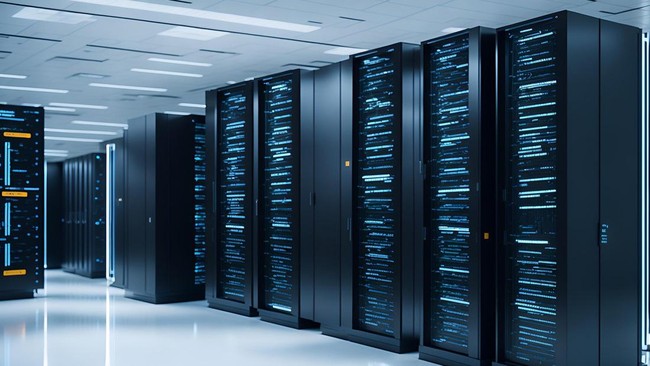
Jakarta, CNBC Indonesia – Malaysia is becoming increasingly attractive to foreign investors in the technology sector. Most recently, Google announced plans to invest US$15 billion, or around Rp270 trillion, in the country over the next two years to build data centres and other infrastructure.
The investment, which will take place in 2027–28, expands on Google’s previous commitment. In 2024, the company announced an investment of US$2 billion in Malaysia.
The neighbouring country is now one of South-east Asia’s fastest-growing hubs for data-centre development. These server-filled facilities are essential infrastructure for training and running artificial intelligence (AI) services, such as chatbots and image generators.
“Malaysia is one of South-east Asia’s most dynamic digital economies, driven by 99% internet penetration and the rapid adoption of AI among government institutions, businesses and consumers,” Google said in a statement, as quoted by Yahoo News on Thursday, 5 November 2026.
The US technology giant also pledged to build a data-centre complex in an industrial area in Malaysia, with a focus on energy efficiency. The company said it would strengthen local water resilience and add more than one gigawatt of clean-energy capacity to the national electricity grid.
“Once operational, the facilities are projected to support more than 9,000 local jobs each year, with average wages 45% above the national median,” it said.
According to market intelligence firm DC Byte, Malaysia accounts for more than half of the data-centre capacity currently under construction in South-east Asia. The figure includes projects in Indonesia, Thailand, the Philippines and Vietnam.
The scale of investment in data centres is also underpinning Malaysia’s economic outlook. The International Monetary Fund (IMF) forecasts that the Malaysian economy will grow by 5.2% in 2026, partly driven by data-centre construction activity.
However, the industry’s expansion also presents challenges. AI data centres require large amounts of electricity, putting further pressure on power grids that remain dependent on fossil fuels. The facilities also need water to cool computing equipment.
Data-centre construction has begun to face opposition in various countries because of its environmental impact. Other concerns include noise, pollution, the appearance of buildings and the number of jobs created.
Malaysia’s Deputy Prime Minister said in July that data centres were expected to account for a third of the country’s total energy consumption by 2035.
The Malaysian government has said it will approve data-centre projects only after confirming that adequate energy and water supplies are available.
Source: jawawa.id (https://jawawa.id/newsitem/a-new-source-of-dollars-for-indonesia-is-instead-flowing-heavily-to-its-neighbour-1793947831)
Originally published by CNBC Indonesia (https://www.cnbcindonesia.com/tech/20261106120449-37-782931/sumber-dolar-baru-ri-justru-mengalir-deras-ke-tetangga), translated from Indonesian