
A New Form of Indonesia-Germany Partnership
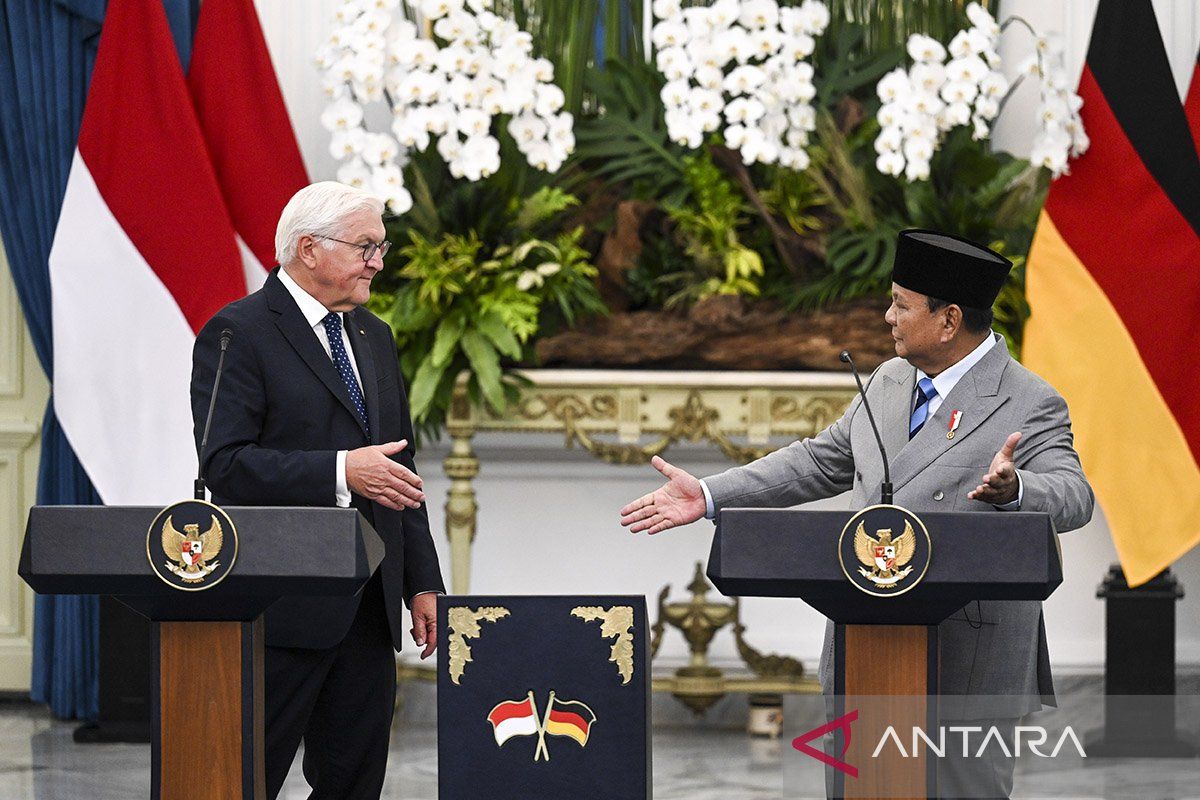
Jakarta (ANTARA) - The visit of German President Frank-Walter Steinmeier to Jakarta on 15 June 2026 lasted only a day. Yet the agenda brought by the two countries far exceeded the packed diplomatic schedule at the Merdeka Palace.
Steinmeier arrived in Jakarta for his fourth visit to Indonesia. The frequency of these visits provides a picture of Indonesia’s position in Germany’s current foreign relations.
Amid global economic uncertainty, the energy transition, and the changing geopolitical landscape of the Indo-Pacific, relations between the two countries are increasingly moving into a more strategic realm compared to a decade ago.
In his meeting with President Prabowo Subianto, discussions did not stop at trade or investment issues. The agenda that emerged encompassed energy, climate, education, culture, and the development of a skilled workforce.
This broad scope indicates that Indonesia-Germany relations are no longer reliant on a single sector, but are evolving as a partnership that touches upon various development interests.
One issue that received attention was the acceleration of the completion of the Indonesia-European Union Comprehensive Economic Partnership Agreement (IEU-CEPA). For Indonesia, the agreement opens up greater market access opportunities to the European region.
For Germany, which is the largest economy in the European Union, the deal could be an important instrument to strengthen economic ties with one of the most influential countries in Southeast Asia.
Discussions on increasing trade and investment also took place in a broader context. Competition for global investment is currently becoming increasingly fierce.
Developing countries are no longer just competing by offering large domestic markets, but also through regulatory certainty, infrastructure readiness, and the ability to provide a workforce that meets the needs of modern industry.
For this reason, one of the prominent outcomes of the visit actually emerged in the employment sector. Indonesia and Germany agreed to strengthen cooperation in developing a skilled workforce, including through partnerships in the nursing and high-tech sectors.
The signing of a Letter of Intent on a Global Skills Partnership in the nursing field became one of the concrete steps born from the meeting of the two heads of state.
For Indonesia, this kind of cooperation holds greater value than simply opening job opportunities abroad. It involves the transfer of competency standards, improvement of training quality, and opportunities to strengthen the link between the education system and industry needs.
The German vocational education model has long been a frequent reference because of its relatively effective ability to connect the world of education with the world of work.