
A New Face for the Pancasila Sanctity Museum, Now More Digital
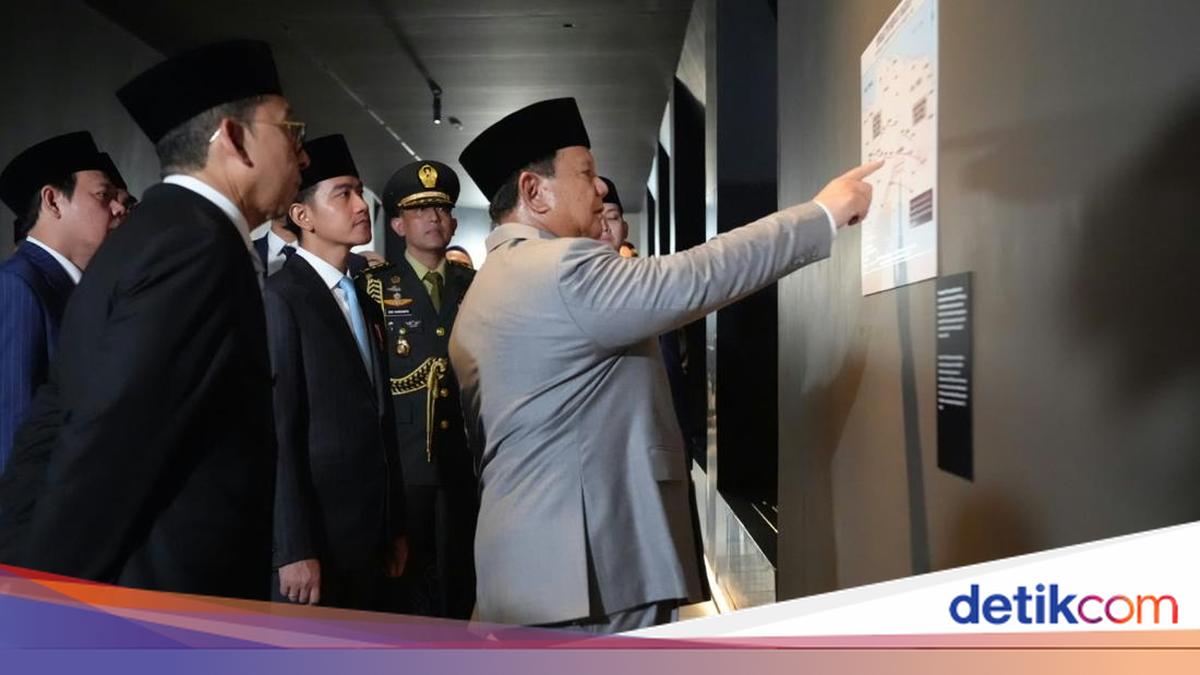
Coinciding with Pancasila Sanctity Day, the President of the Republic of Indonesia, Prabowo Subianto, accompanied by the Minister of Culture, Fadli Zon, inaugurated the revitalisation of the Pancasila Sanctity Museum in the Lubang Buaya area, East Jakarta. According to Fadli, this revitalisation is a strategic step to strengthen the museum’s role in preserving the nation’s collective memory while serving as a historical education centre for the public.
The inauguration was marked by the signing of a plaque by President Prabowo Subianto. Prior to the ceremony, the President and Vice President, alongside Fadli Zon, toured the exhibition space, which features historical dioramas, documentary videos, and immersive rooms.
“In the name of God, on this morning, Thursday, 1 October 2026, with the grace of Almighty God, I, Prabowo Subianto, President of the Republic of Indonesia, hereby inaugurate the renovation of the Pancasila Sanctity Museum,” President Prabowo stated in a written release.
Fadli emphasised that the museum serves as a silent witness to the nation’s journey in defending its state ideology. The updated exhibition now offers a more immersive learning experience through the use of video mapping, light walls, interactive touch panels, digital maps, audio narratives, and multimedia.
The revitalisation process, which has been underway since last year, introduces significant updates to the exhibition layout, enriched with a more comprehensive narrative and storyline. Consequently, the historical timeline was developed in direct collaboration with historians to ensure that historical information is presented accurately and in its entirety.
“In this area, which also includes the Lubang Buaya well site, the public can learn about the traces of events when the Pancasula ideology was attempted to be replaced by the PKI’s communist ideology. Furthermore, the exhibition is equipped with digital and immersive technology to provide a more modern visual experience,” he explained.
The revitalisation process did not alter the authentic collections or dioramas. Instead, the focus was on updating the presentation methods to make historical events more digestible for the general public, particularly the younger generation.
A total of 34 original dioramas in the Pancasila Sanctity Museum have been maintained as a core part of the historical narrative. These are presented alongside 15 dioramas from the Paseban Museum, which summarise key events related to the 30 September 1965 movement. Following the improvements, the exhibition space is now divided into seven areas on the first floor and four areas on the second floor.
Adopting an ‘in-situ’ museum concept, the visitor path begins at the Pancasila Sanctity Museum building before guiding visitors to several historical sites within the Lubang Buaya area.
On the ground floor of the main building, visitors are greeted by a 3D relief installation of the Garuda Pancasila, which invites them to understand the process of the birth and formulation of Pancasila by the nation’s founders, the dynamics of global communism, and the history of its entry into the country. This information is presented through interactive digital media combining text, visuals, and audio.
All narratives and exhibition materials were compiled based on investigations of documents, archives, newspapers, books, and various validated historical references. The compilation was a collaborative effort between the Ministry of Culture and the TNI History Centre to present accurate and communicative historical information.
Fadli also highlighted the addition of new facilities, specifically the Relic Room located in the rear area of the Paseban.
This room is dedicated specifically to displaying original items left behind by the Revolutionary Heroes, such as clothing worn by generals, watches, and other memorabilia.
The inauguration of the museum’s revitalisation also served as a momentum for renaming the ‘PKI Treachery Museum’ to the ‘Pancasila Sanctity Museum’. This change aims to transform the museum’s narrative paradigm, placing emphasis on the resilience, glory, and sanctity of Pancasila as the nation’s philosophy of life.
This paradigm shift was implemented while maintaining a commitment to not erasing existing historical records, ensuring that educational values and the nation’s collective memory remain intact.
“As of today, the Pancasila Sanctity Museum, with its new face and facilities, is officially open to the general public. The central government will continue to coordinate and provide support to the Commander of the TNI, as the institution overseeing the museum’s management. It is hoped that this museum will continue to serve as a reminder to all citizens that Pancasila is the binding power, the foundation of the state, and the philosophy of life for the Indonesian people,” he concluded.
With the inauguration of the revitalised museum, the Ministry of Culture is committed to making museums more than just repositories for historical artefacts. The strengthening of narratives, exhibition layouts, and the use of digital technology is expected to transform the museum into a centre for education, a venue for reflection, and a bridge for instilling national values that remain relevant for present and future generations.