
A New Era for Indonesia's Social Assistance Distribution: Digital Data to Reveal Assets and Eligibility
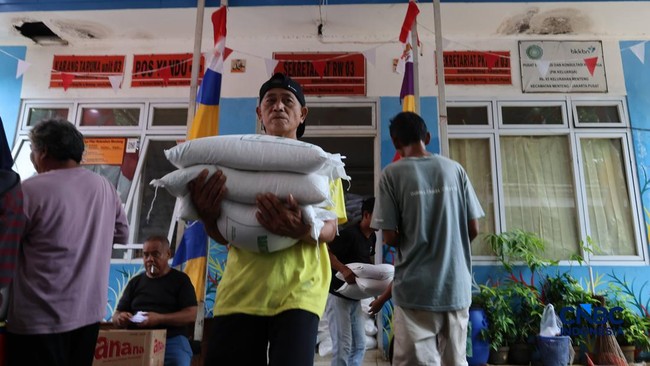
The Indonesian government has begun preparing a new scheme for the distribution of social assistance (bansos) to the public, leveraging digital technology to verify the eligibility of recipients.
Currently, the government has commenced the re-registration process for 2027 social assistance through ‘Perlinsos Digital’, specifically for the Family Hope Program (PKH) and Non-Cash Food Assistance (BPNT). To date, Perlinsos Digital has reached approximately 5.5 million registrants. The government aims to increase this number to 48 million registrants by the end of 2026 through expanded access, strengthened regional socialisation, and active community participation.
In the process of improving data for 2027 potential recipients, the government is providing opportunities for citizens to perform self-registration via perlinsos.kemensos.go.id by preparing their National Identity Number (NIK) from their ID card, their PLN electricity meter number, and undergoing facial verification.
For citizens requiring assistance, the government has prepared ‘Perlinsos Agents’, such as PKH facilitators, neighbourhood heads (RT/RW), or neighbours acting as ‘Perlinsos Friends’, including state officials such as civil servants, the TNI (National Armed Forces), and the Polri (National Police).
The Minister of Home Affairs, Muhammad Tito Karnavian, has encouraged the expansion of these Social Protection Agents to ensure that social assistance distribution is more precisely targeted. These agents serve as volunteers or facilitators who assist those in their local environment in accessing digital social protection services, particularly for families, neighbours, or residents facing difficulties.
According to the Minister, the presence of Perlinsos Agents is a vital component in accelerating the validation process, especially for communities with limited access or the ability to use digital devices. “They need to be assisted by others whom we call agents. These agents are then trained and use smartphones to perform the task. The speed is incredibly high; in just five to seven seconds, once the face is displayed, the data from the Civil Registry (Dukcapil) immediately appears,” Tito stated in a release on Sunday.
Under this mechanism, Civil Registry (Dukcapil) data serves as the primary database because it contains biometric data, such as fingerprints, facial recognition, and retina scans. This allows the validation process to be completed in seconds while simultaneously helping to update recipient data periodically.
This Dukcapil data will subsequently be integrated with data from other ministries and agencies to obtain a more comprehensive overview of the recipients’ conditions. The Minister of Home Affairs cited examples of integration with the National Land Agency (BPN) to verify land ownership and with the police to identify vehicle ownership.
He noted that such integration is necessary to profile target populations and ensure their eligibility as social assistance recipients. The expansion of Perlinsor Agents will also be tailored to the characteristics of each region. In Bali, for instance, agents are drawn from Posyandu (integrated healthcare centre) cadres.
“We are all moving forward; the agents are trained first. After that, a system is created for each region according to its specific character. Once the community is gathered, they simply present their faces to the smartphone, and it will be determined whether they are eligible for social assistance,” he added.
In addition to validating identity and eligibility, the system can also provide information regarding the types of assistance received, whether in cash or non-cash forms. To support the implementation of this system in the regions, the Ministry of Home Affairs is providing support through the Directorate General of Dukcapil and related teams. “We at the Ministry of Home Affairs, along with the Directorate General of Dukcapil and the relevant teams, are fully prepared to assist with training and system preparation,” he emphasised.
Source: jawawa.id (https://jawawa.id/newsitem/a-new-era-for-indonesias-social-assistance-distribution-digital-data-to-reveal-assets-and-eligibility-1791082283)
Originally published by CNBC Indonesia (https://www.cnbcindonesia.com/news/20261003224135-4-773089/era-baru-penyaluran-bansos-ri-data-digital-bisa-ungkap-aset-kelayakan), translated from Indonesian