
A New Era Begins: A Glimpse of the World's Future Energy Map
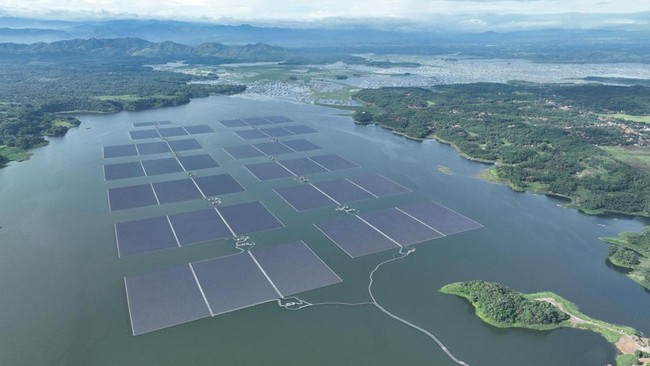
The transformation of the global energy landscape is accelerating faster than a decade ago. Coal, which has long been the backbone of global energy supply, is beginning to lose its share, whilst solar and wind energy continue to expand their role in the global energy mix.
Coal remains one of the world’s largest energy sources today, but its position is gradually eroding. OPEC projections indicate coal’s share of global energy demand could fall from 26.5% in 2024 to 13.6% by 2050. Over the same period, solar and wind energy are expected to record the most aggressive growth among all energy sources.
This shift illustrates the direction of the energy transition underway across various nations. Oil maintains its position as the world’s primary energy source, while natural gas retains its role as a transition fuel. Meanwhile, investment in solar and wind power plants continues to rise, driven by falling technology costs and increasingly stringent carbon emission reduction targets.
The Organization of the Petroleum Exporting Countries (OPEC) reports that global energy demand through 2050 will still be supported by fossil fuels, albeit with a changing composition. Oil will remain the world’s largest energy source, whilst coal experiences the deepest decline among all sources. In 2024, oil accounted for 30.6% of global energy demand, a figure expected to dip only slightly to 29.8% by 2050. This means oil will remain the world’s primary fuel for the next quarter century, sustained by transport needs, the petrochemical industry, and economic growth in developing countries.
Coal faces a different fate. Its share of global energy consumption, which stood at 26.5% in 2024, is projected to shrink to 13.6% by 2050. This nearly 13 percentage point drop is the largest among all energy sources, driven by decarbonisation efforts, net-zero emission targets, and the increasing competitiveness of renewable energy.
Natural gas, however, is holding steady, with its share rising from 22.7% to 23.7% over the same period. Many countries are using gas as a transition fuel due to its lower carbon emissions compared to coal. The construction of gas-fired power plants in Asia and the Middle East is also supporting demand. Nuclear energy is gaining more ground as well, with its share increasing from 4.8% to 6.6% by 2050, as concerns over energy security and rising electricity demand prompt several nations to reconsider building new-generation nuclear reactors.
The most dramatic surge comes from solar and wind energy. Their combined share of global energy demand was just 3.5% in 2024, but is projected to soar to 13.5% by 2050. Falling technology costs, improved energy storage capacity, and massive investment across various countries are making renewables the fastest-growing segment.
Nevertheless, the dominance of fossil fuels is not over. Oil, coal, and gas still controlled around 80% of global energy demand in 2024, and this figure is expected to decline to 67% by 2050. The world is moving towards cleaner energy, but the journey is gradual. For decades to come, fossil fuels will remain the foundation of the global energy system, even as renewables continue to narrow the gap.
As for Indonesia, the government’s Electricity Supply Business Plan (RUPTL) for 2025-2034 targets an additional 42.6 GW of new and renewable energy capacity, representing 61% of total planned capacity additions. Solar energy receives the highest priority allocation, with plans to add 17.1 GW. This electricity expansion is expected to absorb a massive investment value of IDR 1,682 trillion. The implementation of the RUPTL is a crucial instrument in the emissions roadmap, targeting a reduction of 126.5 million tonnes of carbon dioxide equivalent in greenhouse gas emissions. Currently, around 60% of Indonesia’s active power plants are coal-fired, meaning any disruption to coal supply directly impacts electricity supply and, consequently, economic growth.