
A New Disaster from the Strait of Hormuz: Dead Fish and Contaminated Drinking Water
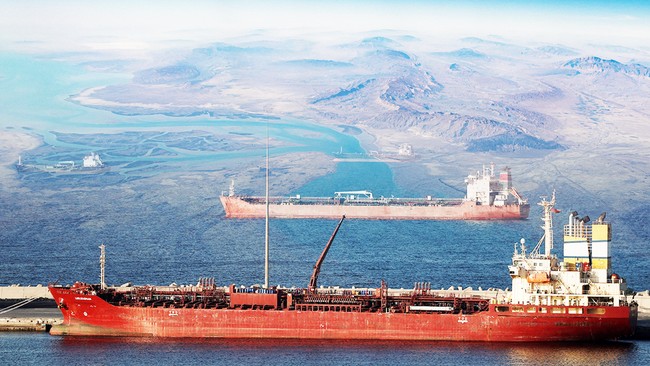
Jakarta, CNBC Indonesia – The Strait of Hormuz has long been known as one of the world’s most important energy routes. Roughly one-fifth of global oil and gas trade passes through the narrow waters separating Iran from Oman.
However, a war that has lasted more than six months means the threat at Hormuz no longer stops at oil supplies and energy prices. The conflict is beginning to create ecological risks that could potentially last far longer than the war itself.
Escalation occurred again in early September.
The United States destroyed five Iranian oil tankers after Iran repeatedly attempted to attack US warships with ballistic missiles. Iran then claimed to have attacked 10 vessels around Hormuz in retaliation.
Trade flows subsequently plummeted. According to Reuters, only four commodity ships passed through Hormuz on Monday (14/9/2026), compared with an average of around 125 vessels per day before the war.
Behind the conflict lies an issue that is rarely discussed: Hormuz is the gateway to the entire Persian Gulf ecosystem.
Ship Attacks Trigger Oil Spill Risk
The attacks on the tankers have raised another risk, namely marine pollution from oil spills.
There are no verified figures yet on the volume of oil spilled from the five Iranian tankers destroyed by the US. Consequently, the scale of environmental damage from the latest attacks cannot yet be calculated precisely.
The risk, however, is significant. Scientific American notes that the Persian Gulf is relatively shallow and semi-enclosed, with water exchange to the open sea occurring mainly through the Strait of Hormuz. This makes pollutants harder to disperse than in open seas.
Water currents from Hormuz move along the Iranian coast before circulating towards the countries on the southern side of the Gulf.
With such an interconnected water system, an oil spill could spread across borders to Iran, Kuwait, Bahrain, Qatar, Saudi Arabia and the United Arab Emirates.
Fish and Coral Reefs Under Threat
The conflict in the Strait of Hormuz threatens the Persian Gulf ecosystem, which is home to coral reefs, mangroves, seagrass beds, fish, turtles, dugongs and whale sharks.
The situation was already under pressure even before the war. According to Scientific American, around 90% of coral reefs in the Persian Gulf are estimated to have experienced bleaching due to marine heatwaves since the late 1990s.
Oil exposure could worsen this pressure. Hydrocarbons can disrupt fish reproduction, damage the eggs and larvae of marine organisms, interfere with turtle navigation and destroy mangroves.
Another threat comes from more than 1,500 commercial vessels stranded since Hormuz was closed. Ships left stationary for long periods can become breeding grounds for algae, barnacles and mussels on their hulls.
When these ships resume sailing, these organisms could be carried to other ports and trigger the spread of invasive species.
Scientists have even warned that this situation could become a “bio-invasion super-spreader event”, particularly for regions with similar marine conditions such as India and Singapore.
The risk is heightened because these vessels have been stranded far longer than would normally be the case. A study in the journal Biological Invasions noted that ships usually spend only 1-3 days at ports in the Gulf region.
During the conflict, however, stranded ships have been idle for at least 40 times longer than the average dwell time. Yet biofouling can enter a rapid growth phase after around 10 days, while the IMO recommends immediate action for ships that have remained stationary for 18-30 days.
Fishers and Coastal Economies Also Hit
Damage to the ecosystem is ultimately not merely a biodiversity issue, but also has social and economic impacts. Coral reefs, mangroves and seagrass beds support the fisheries sector by serving as spawning and nursery grounds for fish.
If these habitats are disrupted, declining fish populations could depress catches and fishers’ incomes. The risk could also extend to aquaculture and food supplies for coastal communities.
Economic losses could grow even larger if invasive species begin to take hold. Once established, foreign organisms can be difficult to eradicate and impose long-term costs on fisheries, aquaculture, ports and maritime infrastructure.
There is one further risk that is critically important to Gulf countries: clean water.
The six Gulf Cooperation Council (GCC) countries produced around 7.2 billion cubic metres of desalinated water in 2023, according to the GCC Statistical Center. Saudi Arabia is the largest producer with around 3 billion cubic metres, followed by the United Arab Emirates with 1.9 billion cubic metres.
Given this heavy dependence on seawater, pollution along the coast could affect the operation of desalination facilities. In other words, a conflict initially viewed as an energy issue could develop into a risk to fisheries, coastal incomes and even water security.
Can the Hormuz Ecosystem Recover?
Recovery of the Persian Gulf ecosystem depends heavily on the extent of the pollution and the types of habitat affected. Surface oil can be cleaned up relatively quickly, but hydrocarbon residues can persist far longer in sediments, mangroves and coastal areas.
Experience from the 1991 Gulf War shows that impacts can last for decades.
Therefore, recovery requires more than simply removing oil from the sea surface; it also demands monitoring of water and sediment quality, habitat rehabilitation and oversight of fish stocks.
As for the threat of invasive species, prevention is paramount. Ships stranded for long periods need to be inspected and cleaned before returning to sea so that attached organisms do not spread to other ecosystems.
In other words, trade and oil prices may return to normal relatively quickly once the conflict subsides. The ecological costs, however, could persist far longer.
Source: jawawa.id (https://jawawa.id/newsitem/a-new-disaster-from-the-strait-of-hormuz-dead-fish-and-contaminated-drinking-water-1789480372)
Originally published by CNBC Indonesia (https://www.cnbcindonesia.com/research/20260915142520-128-768119/bencana-baru-datang-dari-selat-hormuz-ikan-mati-air-minum-tercemar), translated from Indonesian