
A New Chapter in Payment System Sovereignty
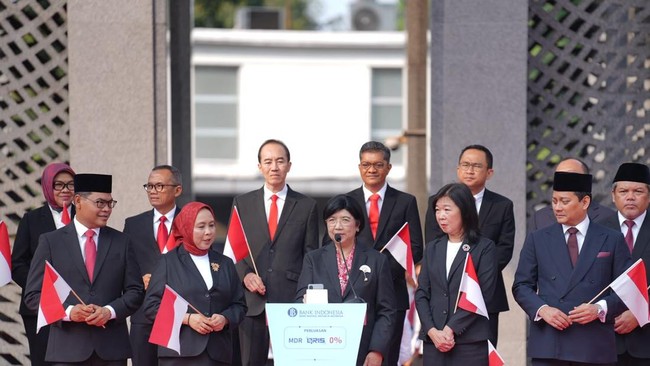
The launch of the Indonesia Credit Card (KKI) by Bank Indonesia (BI) and the Indonesian Payment System Association (ASPI) on 17 August 2026 deserves further interpretation. The credit-based payment instrument appears to have a substantial agenda. KKI can directly connect credit funding sources with the QRIS ecosystem, process domestic transactions through national payment infrastructure, and gradually build a more independent alternative for Indonesia’s payment system.
KKI has fundamental differences from conventional credit cards. First, the network infrastructure is entirely processed domestically through the National Payment Gateway (GPN), so it does not require international principal networks. Second, transaction data remains entirely within Indonesian jurisdiction without circulating on overseas servers. Third, transaction costs are more efficient because international intermediaries are eliminated, removing cross-border fees to foreign principals.
In the initial stage, KKI is implemented digitally (without a physical card) and embedded in mobile banking applications as one of the funding source options when consumers scan QRIS. BI is developing KKI for the general public in three phases. Phase 1 (August 2026) marks the initial issuance of digital-based KKI integrated as a domestic QRIS funding source (scan and tap). Phase 2 involves developing digital KKI features for online transactions on e-commerce and online payment gateways. Finally, KKI will be issued physically to support integrated transactions, with one EDC machine able to accept all KKI variants from various issuing banks. The creditworthiness assessment process, limit determination, and KKI billing mechanism follow the risk management regulations for card-based payment instruments applicable in banking.
The launch momentum coincided with the 81st anniversary of Indonesian independence. The symbolism is interesting, but the policy substance is far more important. Payment sovereignty in the digital era is not merely about the logo on a card. It concerns who controls the infrastructure, how transactions are processed, how costs are formed, how data is protected, and how much economic added value can be retained domestically.
The decision to place KKI on top of the QRIS ecosystem is a very sensible one. QRIS has already built digital payment habits in society. The system allows various funding sources to be used through a single scan code. BI itself has positioned QRIS as the national digital payment standard based on QR codes. In the first half of 2026, QRIS users reached 65.77 million, with 6.23 million new users. The number of merchants reached 44.86 million, more than 90 percent of which are MSMEs. Meanwhile, QRIS transaction volume in the first half of the year reached 12.55 billion transactions with a value of around Rp1.12 quadrillion, growing 93.92 percent year-on-year. These statistics show that QRIS is not merely a payment alternative but has transformed into an important infrastructure in daily economic activity.
With such a strong foundation, KKI does not need to build a new ecosystem from scratch. What is being done is adding a credit funding source to the existing QRIS payment channel. Eight payment service providers were reported to have issued KKI at the time of its launch: BCA, Bank Mandiri, BNI, BRI, CIMB Niaga, Permata, Bank Mega, and BSI.
What is KKI’s strategic advantage? This instrument appears capable of bridging two ecosystems previously seen as separate: digital payments and financing (credit). Consumers gain a new alternative funding source through a practical transaction channel, merchants gain broader market access without needing to invest in EDC machines, while issuing banks gain a credit distribution channel integrated with the QRIS ecosystem.
KKI would lose its strategic meaning if it were treated merely as a competing product to internationally networked credit cards. Product competition certainly exists, but the larger agenda is to build payment infrastructure capable of working according to the needs of the Indonesian market. This can be read from how BI defines KKI: a payment instrument with credit facilities processed domestically through national payment system infrastructure. Thus, the KKI design can be interpreted as part of the agenda for sovereignty and efficiency of Indonesia’s payment infrastructure. The more economic transactions move to digital channels, the greater the importance of cost efficiency, security, interoperability, infrastructure resilience, and data governance.
Within that framework, KKI is not merely about which card consumers use, but about how Indonesia manages its domestic transaction channels independently.
KKI carries one characteristic that distinguishes it from QRIS payments with cash funding sources (deposits). KKI’s working mechanism is credit-based (debt), where transactions are made now while the payment obligation arises later. This is why discussing KKI is not sufficient from a technological perspective alone. There is a behavioural dimension that is equally important. Credit is not additional income. Credit merely shifts the timing of payment. This simple sentence should be the foundation of KKI education. When credit access becomes easier and payments become less physically tangible, the psychological boundary between ‘able to buy’ and ‘able to pay later’ becomes very thin. In cash payments, a person sees money move from their hands. In digital payments, the reduction in balance feels abstract.