
A New Chapter in German Politics: Far-Right Politician Becomes First to Lead a State Parliament
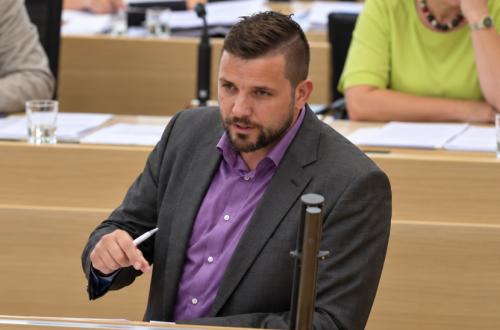
A new chapter has opened in German politics after Tobias Rausch, a politician from the far-right Alternative für Deutschland (AfD), was elected President of the Parliament of the State of Saxony-Anhalt. The vote, held on Tuesday (6 October 2026), makes Rausch the first far-right politician to hold this office in Germany since the end of the Second World War in 1945. The result has also reignited debate about the growing influence of far-right groups within the country’s democratic institutions.
The election, held in the parliament building in Magdeburg, quickly sent political shockwaves as far as Berlin. Rausch received not only the backing of his own party and of the groups that had previously declared they would vote for him, but also a number of additional votes whose source remains unknown. The controversy has led to suspicions that some members of the Christian Democratic Union (CDU), the party led by Chancellor Friedrich Merz, helped the AfD win one of the highest posts in the state legislature.
According to the official announcement from the Saxony-Anhalt Parliament, Rausch received 48 votes in favour, 29 against and five abstentions. Eighty-two of the 83 members attended the session forming the ninth parliament, and all votes were declared valid. The result confirmed that Rausch, aged 35, was elected through a secret ballot.
The problem is that the AfD holds only 39 seats, while the left-wing populist party Bündnis Soziale Gerechtigkeit und Wirtschaftliche Vernunft (BSW) has five. The BSW had earlier said it would support Rausch, arguing that the party winning the election was entitled to a parliamentary leadership post. Rausch therefore received at least four votes more than the combined total of AfD and BSW seats, although the origin and distribution of that support cannot be confirmed because the ballot was secret.
Reuters reported on Wednesday (7 October 2026) that the outcome had put pressure on the government of Chancellor Merz. The most sensitive question is no longer simply how the AfD won the post, but whether the political barrier that Germany’s mainstream parties have maintained against the far right is beginning to lose its strength. The suspicion of involvement by CDU members has deepened the controversy, given that the party has consistently rejected political cooperation with the AfD.
Rausch’s claims and the missing four votes
The controversy sharpened after Rausch claimed that CDU members had lent him their support. In an interview with the portal Nius, as reported by Deutschlandfunk on Wednesday (7 October 2026), Rausch said he had held political discussions with several parties before the vote. He stated that he had approached some CDU members, and that some members of the party had also come to meet him.
Rausch went further, suggesting that these contacts did not end with the election of the parliamentary president. When asked by the German news agency dpa whether AfD candidate Ulrich Siegmund could also count on CDU support in the election for the state’s head of government, which is expected in December, Rausch said the matter had been discussed beforehand. He did not, however, name the members of parliament concerned or present any evidence of such an agreement.
Rausch’s statements cannot be independently verified, as the secrecy of the ballot is protected by parliamentary procedure. CDU leaders have not confirmed the claims of any political understanding with members of their party. The CDU parliamentary group leader in Saxony-Anhalt, Sven Schulze, had previously said he did not know where the additional votes for Rausch came from, and stressed that no member of his group had indicated an intention to vote for the AfD candidate.
At federal level, the report on the party’s response has been attributed to a spokesperson rather than to the federal parliamentary leader, Jens Spahn. The statement was not attributed to any named individual in this report, and the party’s general leadership has described the allegations about its members’ support as speculative.
The CDU leadership in Saxony-Anhalt had earlier advised its members to abstain. However, the final result showed only five abstentions among those present. This has prompted debate over whether some CDU members declined to follow the instructions of their parliamentary leadership, although how individual members voted cannot be proven.
Chancellor Merz condemned the situation and warned of the growing influence of extremist forces in Germany’s democratic institutions. According to reports from Reuters and Deutschlandfunk on Wednesday (7 October 2026), Merz stated that support for the AfD could damage political credibility and was incompatible with the values of the CDU. He also cautioned, however, that the identity of the voters is unknown, so no conclusions about the involvement of members of his party should be drawn without evidence.
Lars Klingbeil, leader of the Social Democratic Party (SPD), described the AfD’s success in securing support for the post as a breach of a political taboo. He called on the CDU and the BSW to explain the process that allowed Rausch to be elected. The controversy adds pressure to the relationship between the CDU and the SPD, which are partners in Germany’s federal coalition government.
Source: jawawa.id (https://jawawa.id/newsitem/a-new-chapter-in-german-politics-far-right-politician-becomes-first-to-lead-a-state-parliament-1791435138)
Originally published by Republika (https://news.republika.co.id/berita/tmkn3h451/sejarah-baru-jerman-politisi-partai-kanan-jauh-pertama-kali-pimpin-parlemen-daerah), translated from Indonesian